Aquamarine
Also known as: Blue beryl, Sea-blue beryl
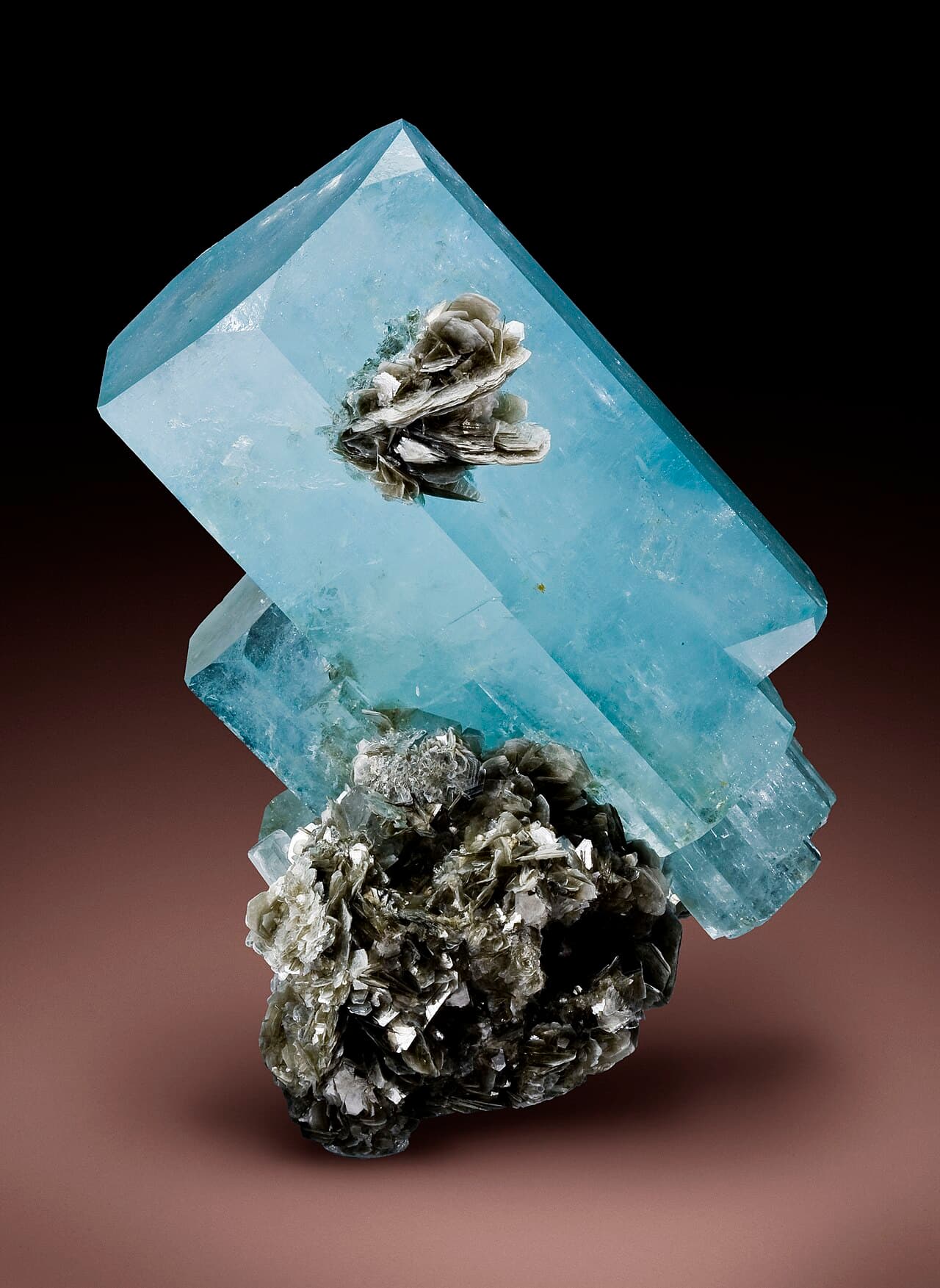
Aquamarine is the blue to blue-green gem variety of beryl, the same mineral family that gives us emerald and morganite. Its name comes from the Latin for "water of the sea," a fitting description of its cool, transparent blue. Chemically it is a beryllium aluminum silicate, and its color is owed to traces of iron locked into the crystal structure: the right iron in the right site produces the clean blue that collectors prize, while a slightly different chemistry tilts the stone toward green. Aquamarine is hard and durable at 7.5 to 8 on the Mohs scale, with a bright vitreous (glassy) luster, and it grows in long hexagonal crystals that can reach remarkable sizes while staying clear enough to facet.
What sets aquamarine apart from many other blue gems is its combination of clarity, hardness and gentle color. Fine specimens are often remarkably clean to the eye, and because the rough can be large, aquamarine is one of the few blue stones available in big, eye-clean faceted gems at sensible prices. It is the traditional birthstone for March, long tied to the sea and to safe passage across water, and it remains a favorite for rings, pendants and collector crystals alike. Much of the aquamarine on the market has been gently heated to push out residual green or yellow and bring forward a purer blue, a stable and widely accepted enhancement discussed below.
Aquamarine at a glance
- Classification
- Mineral — blue variety of beryl
- Composition
- Be₃Al₂Si₆O₁₈ (colored by iron)
- Hardness
- 7.5–8 (Mohs)
- Luster
- Vitreous (glassy)
- Streak
- White
- Colors
- Light blue to blue-green; rarely a deeper saturated blue
- Crystal system
- Hexagonal
- Transparency
- Transparent to translucent
How to identify aquamarine
Begin with color and clarity. Aquamarine is typically a light, slightly cool blue to blue-green, transparent, and often remarkably free of visible inclusions, with a bright glassy luster when polished. In rough form the most diagnostic clue is its crystal habit: beryl grows in long, six-sided (hexagonal) prisms, frequently with flat striations running lengthwise along the crystal faces. A clear, pale-blue hexagonal crystal with that lengthwise striping is very likely aquamarine, and that distinctive shape is something most imitations cannot reproduce.
Physical properties confirm the call. Aquamarine is hard, 7.5 to 8 on the Mohs scale, so it will scratch glass easily and resist scratching by a steel blade — a quick way to rule out softer blue stones and glass imitations. It has a white streak and a moderate density that feels solid but not unusually heavy in the hand; this lighter heft is one of the simplest ways to separate it from blue topaz, which feels noticeably denser. Many aquamarines also show pleochroism, appearing slightly more or less blue when you rotate the stone and view it from different directions, a subtle effect that points toward beryl rather than glass.
Color and varieties
Aquamarine occupies the blue-to-blue-green end of the beryl color range, and the precise hue depends on how iron sits within the crystal. Iron in one structural position yields a clean blue, while iron in another lends a greenish cast, so natural stones range from pale sea-green to a soft sky blue. Most untreated aquamarine leans toward blue-green or a delicate, light blue; deeply saturated blue stones are comparatively scarce in nature and are correspondingly valued. Because the color is generally gentle rather than vivid, larger stones often show their blue more convincingly than tiny ones, where the tone can look almost colorless.
Within beryl, aquamarine sits beside its relatives: green-to-yellow stones are heliodor or golden beryl, pink is morganite, and intense green colored by chromium or vanadium is emerald. The boundary between a blue-green aquamarine and a green beryl is partly a matter of trade convention. Heat treatment is the key variety-defining process for aquamarine: gentle, controlled heating drives off the yellow and green components that come from iron, shifting greenish or yellowish rough toward pure blue. This treatment is stable, permanent and effectively undetectable, and it is so routine that most blue aquamarine on the market has been heated, with no loss of durability or value relative to similar untreated color.
Meaning and properties
Aquamarine's long association with the sea has given it a reputation as a stone of calm, courage and safe travel. Ancient Mediterranean sailors are said to have carried it as a talisman for protection on the water and for a peaceful voyage, and across later traditions it has been linked to clear communication, soothing of fear, and steady, level-headed courage. In modern crystal-working practice it is often used as a calming meditation stone and connected with the throat, the realm of honest expression. As the March birthstone it also carries the gentle symbolism of renewal that the early spring suggests.
These meanings are cultural, historical and spiritual rather than scientifically demonstrated medical effects. Aquamarine is a lovely and meaningful stone to wear and to keep, but it does not cure, treat or prevent any physical or mental health condition and is not a substitute for professional medical or psychological care.
Value: what aquamarine is worth
Aquamarine value is led by color, then by clarity, cut and size. The most prized stones show a pure, moderately saturated blue with no gray or excessive green; the deeper and cleaner the blue, the higher the value, while very pale, washed-out stones sit at the bottom of the range. Because fine aquamarine rough tends to be exceptionally clean, the market expects eye-clean gems, and visible inclusions reduce value more than they would in an included stone like emerald. A skilled cut that maximizes the face-up blue also matters, since the color is delicate enough that proportions can make or break a stone's appearance.
Size interacts with color in an unusual way: because aquamarine grows large and clean, big eye-clean gems are available without the steep per-carat jumps seen in scarcer stones, yet a small stone with truly fine blue can still outvalue a large pale one. Heat treatment to improve color is standard and does not by itself lower value, but honest sellers disclose it. As always, no single localities or price figures are offered here; for a specific stone, color quality, clarity and cut are the reliable levers to judge, ideally with the treatment status confirmed.
Real vs. fake aquamarine
The most common impostor is simply blue glass, which can be convincingly colored and shaped. Glass is much softer than aquamarine and is given away by hardness, by tiny round gas bubbles and swirl marks visible under magnification, and by a "warmer" feel to the touch — aquamarine, like most crystals, feels cool because it conducts heat away from the skin, while glass warms quickly. Glass also lacks the pleochroism of true aquamarine, so it will not shift in blueness as you rotate it. A simple scratch test against glass, combined with a look for bubbles, separates most glass fakes immediately.
Among genuine gemstones, the two most frequent look-alikes are blue topaz and blue zircon, and both are distinguished by weighing the stone, literally. Blue topaz is noticeably denser than aquamarine, so a topaz feels heavier than an aquamarine of the same size; much blue topaz is also color-treated by irradiation, which is undetectable to the eye but is reflected in topaz's lower price, so a suspiciously cheap, vividly blue "aquamarine" deserves scrutiny. Blue zircon is denser still and has much stronger dispersion, throwing off more colored fire than the relatively quiet aquamarine, and it often shows obvious doubling of the back facet edges when viewed through the table. For an important purchase, a gemological report that confirms the species and notes any treatment is the surest protection.
Care
Aquamarine is hard and reasonably tough, which makes it well suited to everyday jewelry, but it is not indestructible. Its hardness of 7.5 to 8 resists scratching from ordinary dust and most other gems, yet a sharp knock against a hard surface can still chip a faceted edge, so a protective setting helps for ring stones. Clean it with warm water, mild dish soap and a soft brush, then rinse and dry it; this gentle routine is safe for both treated and untreated stones and removes the skin oils and grime that can dull the stone's bright luster.
Avoid harsher methods. Steam cleaning and prolonged high heat are best skipped, because strong heat could in principle alter the color, and ultrasonic cleaners are risky for any stone that might contain liquid inclusions or fine fractures, which can fracture further under vibration. Keep aquamarine away from harsh household chemicals and store it separately from harder gems such as sapphire or diamond, which could scratch it, and away from softer stones it could scratch in turn. Prolonged, intense sunlight is also better avoided as a precaution against any slow color change.
Aquamarine look-alikes
Frequently asked questions
Is aquamarine a real gemstone?
Yes. Aquamarine is a natural gemstone, specifically the blue to blue-green variety of the mineral beryl (the same family as emerald). It is hard and durable at 7.5 to 8 on the Mohs scale and is the traditional birthstone for March.
Why is most aquamarine heat-treated?
Gentle heating drives off the yellow and green components that iron can produce, shifting greenish or yellowish rough toward a purer blue. The treatment is stable, permanent and effectively undetectable, so it is routine and accepted; honest sellers still disclose it, and it does not reduce the stone's durability.
How can I tell aquamarine from blue topaz?
Weigh the stone for its size. Blue topaz is denser than aquamarine, so a topaz feels heavier than an aquamarine of the same dimensions. Much blue topaz is also irradiated to its color and sells for less, so a very cheap, vividly blue stone is often topaz rather than aquamarine.
Is aquamarine valuable?
Its value is led by color: a pure, moderately deep blue with good clarity and a clean cut commands the most, while very pale, washed-out stones are inexpensive. Because aquamarine rough is often large and clean, eye-clean gems are widely available, so buyers can expect good clarity for the money.
What is the spiritual meaning of aquamarine?
Aquamarine's name is Latin for 'water of the sea', and nearly all of its symbolism follows from that: it is treated as a stone of calm, clarity and courage, associated with the sea, with soothing the emotions and with clear, honest speech. Roman and later sailors carried it as a talisman for safe passage and calm waters — the oldest and most consistent piece of aquamarine lore. These are cultural and spiritual traditions, not medical claims; aquamarine treats nothing, but the sea association is genuinely ancient and shapes how the stone is given and worn.
What does wearing aquamarine mean?
Traditionally it signals calm and constancy — which is why aquamarine is the classic March birthstone gift and a common 19th-anniversary stone. In folklore, wearing it was thought to steady the wearer, aid clear speaking and protect travellers on water. Practically, wearing it means you have chosen a durable everyday gem: beryl at Mohs 7.5–8 handles daily wear far better than the softer blue stones it is often confused with.
What are the benefits of wearing aquamarine?
The honest split: the traditional benefits — calm, courage, clearer communication, protection at sea — are folklore, and we would rather say that plainly than imply otherwise. The real, checkable benefits are gemological. At Mohs 7.5–8 with no problematic cleavage in normal wear, aquamarine survives rings and daily jewelry better than turquoise, opal or apatite; its colour is stable in light; and large clean stones are unusually affordable for their size compared with sapphire.
What does blue aquamarine symbolize?
Sea, sky and calm. The deeper the blue, the more the stone is prized — most aquamarine leans greenish-blue in the rough and is heat-treated toward pure blue — and that blue carries the symbolism of tranquillity, clarity and truthfulness. In wedding tradition it doubles as the 'something blue', and as March's birthstone it stands for the same qualities: steadiness, honesty and calm under pressure.
Is yours aquamarine? Find out from a photo
Photograph your gemstone in good light and get an identification with an honest confidence level, the look-alikes to rule out and the at-home tests that confirm it.
Identify my gemstone freeOn Android? Get the free rock identifier app
Related
More gemstones in the field guide
Keep exploring
More on gemstones: the full list of crystal and gem types, how to identify gemstones and the polished-stone identifier.
Last updated 2026-08-29. Identification guidance is educational — confirm important results with the diagnostic tests described or a qualified expert.