Chrysoberyl
Also known as: Cymophane (cat's-eye variety), Chrysolite (historical, ambiguous)
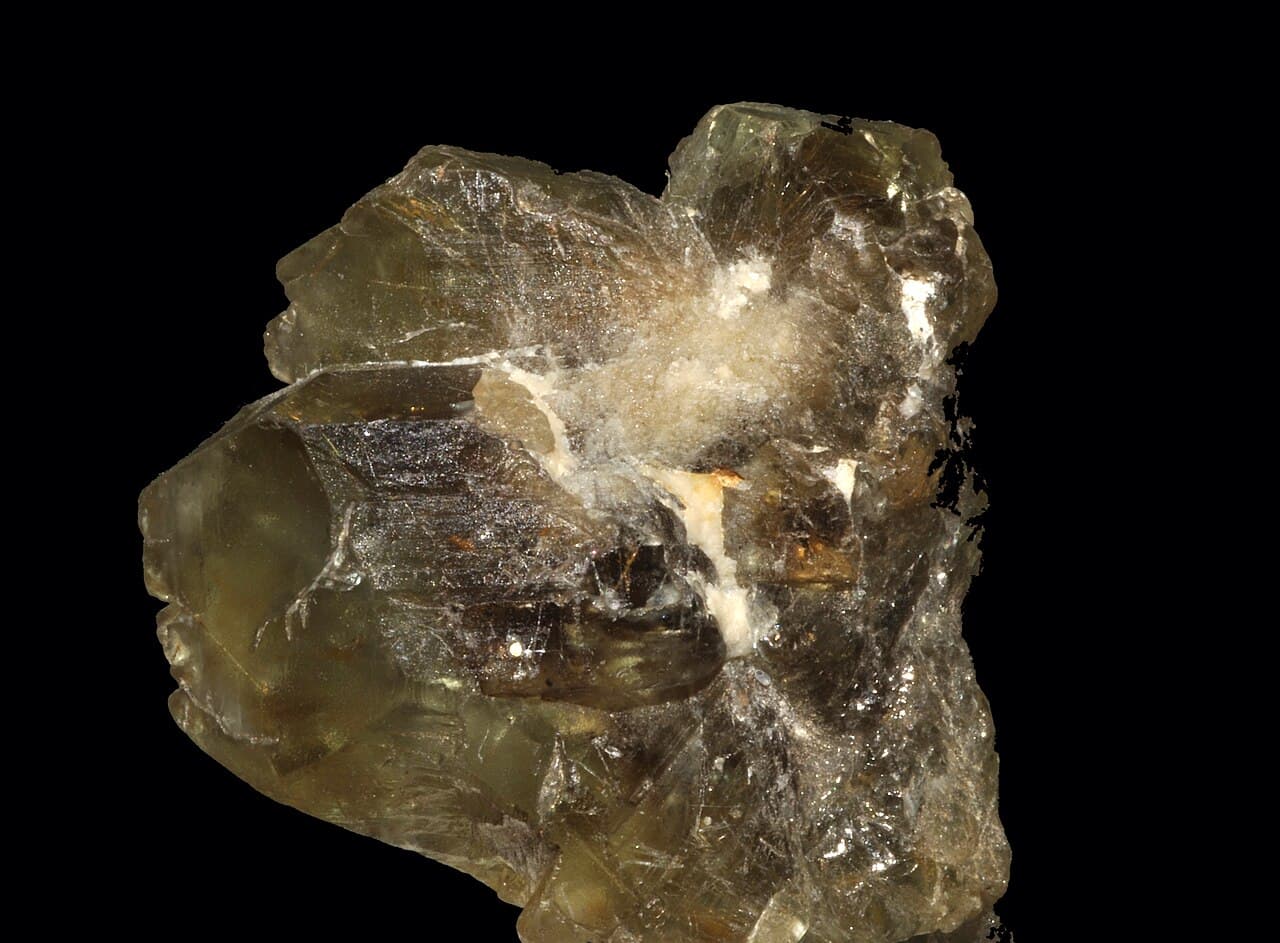
Chrysoberyl is a beryllium aluminum oxide with the formula BeAl₂O₄, and despite its name it is not a member of the beryl family at all — the resemblance is in the word only. What makes chrysoberyl notable is its exceptional hardness: at 8.5 on the Mohs scale it is one of the hardest of all gem materials, surpassed only by diamond, corundum (ruby and sapphire), and a few rarer substances. In its ordinary form chrysoberyl is a transparent gem in warm tones — yellow, greenish-yellow, golden, honey-brown, and brown — with a bright glassy luster. It is far less famous than its two extraordinary varieties, but as a durable, brilliant yellow gem it has a long history of its own.
Chrysoberyl is best known for two special varieties that behave very differently from the plain stone. Cat's-eye chrysoberyl, properly called cymophane, contains countless tiny parallel inclusions that reflect light into a single sharp, mobile band — a "cat's-eye" — that glides across the surface of a polished cabochon; chrysoberyl produces the finest cat's-eye effect of any gem, and the term "cat's-eye" used without qualification traditionally means this stone. The second variety is alexandrite, the rare chromium-bearing chrysoberyl that changes color from green in daylight to red under incandescent light. Both varieties share chrysoberyl's great hardness and durability, which has made the species a prized jewelry material for centuries.
Chrysoberyl at a glance
- Classification
- Mineral — beryllium aluminum oxide (gem species)
- Composition
- BeAl₂O₄
- Hardness
- 8.5 (Mohs)
- Luster
- Vitreous (glassy)
- Streak
- White to colorless
- Colors
- Yellow, greenish-yellow, golden, honey to brown (plus color-change in the alexandrite variety)
- Crystal system
- Orthorhombic
- Transparency
- Transparent to translucent
How to identify it
The combination of color and extreme hardness is the first clue to ordinary chrysoberyl. A transparent stone in a warm yellow, greenish-yellow, golden, or honey-brown, with a bright glassy luster and a clean white streak, that resists scratching almost as well as sapphire is a strong candidate. At 8.5 on the Mohs scale chrysoberyl is harder than the common yellow gems it most resembles — citrine quartz (7) and many others — so a hardness check is genuinely useful here. Its high refractive index also gives faceted chrysoberyl an appealing brilliance and crisp facet edges that softer yellow stones cannot match.
The two famous varieties have their own unmistakable signatures. Cat's-eye chrysoberyl (cymophane) is cut as a cabochon, and when a single light is shone on it a sharp, bright line of light appears and sweeps across the dome as the stone is turned — the sharpest and most prized chatoyancy in the gem world. Alexandrite is identified by its color change: green to bluish-green in daylight, red to purplish-red under incandescent light, an effect best seen by moving the stone between cool and warm light sources. For all three forms — plain chrysoberyl, cat's-eye, and alexandrite — the underlying physical properties (hardness, luster, streak, density) are identical, because they are all the same mineral; it is the optical behavior that tells the varieties apart.
Colors and varieties
Ordinary chrysoberyl occupies the warm end of the spectrum, running from pale lemon and greenish-yellow through rich golden and honey shades to brown, with the most sought-after transparent stones showing a vivid, clean yellow or golden-green. Its color comes mainly from iron, and unlike many gems it offers no blues, pinks, or reds in its common form — those belong to the alexandrite variety alone. The bright, slightly greenish "chrysoberyl yellow" is distinctive enough that fine faceted material is valued in its own right, quite apart from the celebrated special varieties.
The two varieties are where chrysoberyl becomes extraordinary. Cymophane, or cat's-eye chrysoberyl, is usually a translucent honey-yellow to greenish or grayish stone whose value lies in the quality of its single sweeping light band; the finest examples show a "milk and honey" effect, where the cabochon appears milky on one side of the eye and honey-colored on the other. Alexandrite is the chromium-rich, color-changing variety that shifts between green and red, and a rare stone can even combine both phenomena as a color-change cat's-eye alexandrite. Chrysoberyl is generally not dyed or color-treated, so in all its forms the colors and effects you see are natural to the stone.
Meaning and properties
Chrysoberyl, and especially its cat's-eye variety, has long carried protective symbolism. In many cultures the cat's-eye stone was worn as a guardian amulet, its single shifting band of light likened to a watchful eye believed to ward off harm and bad luck, and in crystal traditions chrysoberyl is often associated with discipline, clarity of thought, confidence, and the protection of one's energy and good fortune. The golden tones of ordinary chrysoberyl have given it added associations with optimism, abundance, and warmth, while the rarer alexandrite variety adds the symbolism of change and balance.
These meanings are cultural, historical, and spiritual rather than scientifically demonstrated effects. Chrysoberyl is a beautiful and durable stone to wear and to keep, but it does not cure, treat, or prevent any physical or mental health condition and is not a substitute for professional medical care.
Value
Chrysoberyl's value depends heavily on which form is being judged. Ordinary transparent yellow-to-green chrysoberyl is a relatively affordable gem, prized for its brilliance and toughness, with the cleanest, most vividly colored, well-cut stones bringing the most. Cat's-eye chrysoberyl is valued by the quality of its eye above all: the band should be sharp, bright, perfectly centered, and straight, and it should open and close cleanly as the stone is rocked, with a strong "milk and honey" body adding desirability. A fine, sharp-eyed cymophane is far more valuable than plain chrysoberyl of similar size.
Alexandrite, the color-change variety, is in a different league entirely — it is one of the rarest and most expensive colored gemstones in the world, with value led by the strength and cleanness of its green-to-red change and rising steeply with size. Across all forms, clarity, cut, and especially size influence price, and because the value gap between ordinary chrysoberyl and fine alexandrite is so vast, accurate identification of the variety is the single biggest factor in what a stone is worth. For high-value cat's-eye and alexandrite material, an independent gemological report is well worth obtaining. No specific localities or price figures are offered here.
Real vs. fake
For ordinary yellow chrysoberyl, the main risk is confusion with other warm-colored gems rather than deliberate fakery, and hardness is the great separator: chrysoberyl at 8.5 easily outranks citrine and yellow quartz (7), most yellow glass, and many other yellow stones, so a stone that resists scratching like a sapphire yet shows chrysoberyl's color and brilliance is likely the real thing. Yellow sapphire and yellow topaz are closer in hardness and brilliance and need optical tests — refractive index and, for topaz, its cleavage and lower density — to separate confidently. Glass imitations betray themselves with bubbles, swirl marks, mold seams, and a warmer feel, and they lack chrysoberyl's high hardness and crisp facets.
The variety that attracts the most imitation is alexandrite. Synthetic color-change corundum has imitated alexandrite for over a century — it usually shifts from grayish-blue to amethyst purple rather than chrysoberyl's green-to-red — and genuine lab-grown alexandrite (true synthetic chrysoberyl) also exists and can only be separated from natural stones by a gemologist studying inclusions under magnification. Cat's-eye chrysoberyl is sometimes imitated by cat's-eye glass or by other chatoyant gems, but none match the sharpness of a fine cymophane eye. Because the differences between natural, synthetic, and simulated material carry such large value consequences, a laboratory report is the surest confirmation for any important chrysoberyl, cat's-eye, or alexandrite.
Care
Chrysoberyl is one of the toughest gems you can wear. At 8.5 on the Mohs scale it is extremely hard and highly resistant to scratching, and it lacks an easy cleavage plane, so it stands up exceptionally well to daily wear in rings, bracelets, earrings, and pendants — durability is one of the species' defining strengths. A hard, sharp blow can still chip any gem, and constant knocking will eventually abrade even a hard stone, so basic everyday caution remains worthwhile, but chrysoberyl asks far less protection than most colored gems.
Routine cleaning is simple: warm water, mild soap, and a soft brush, followed by a rinse and dry. Because of its hardness and lack of cleavage, chrysoberyl — including cat's-eye and alexandrite — is generally considered safe for ultrasonic and steam cleaning, though the gentlest and always-safe method is plain warm soapy water, which is the better choice for any stone with visible inclusions or fractures (and cat's-eye stones owe their effect to fine inclusions). Store chrysoberyl away from softer gems it could scratch, and keep it out of harsh chemicals. With minimal care, this hard, brilliant gem and its remarkable varieties will last for generations.
Chrysoberyl look-alikes
Frequently asked questions
Is chrysoberyl the same as beryl?
No. Despite the similar name, chrysoberyl is a beryllium aluminum oxide (BeAl₂O₄) and is not part of the beryl family (which includes emerald and aquamarine). They are different minerals with different chemistry, crystal systems, and properties; the names simply share the word beryl.
What are the varieties of chrysoberyl?
There are three main forms: ordinary transparent chrysoberyl, usually yellow to greenish-yellow or brown; cat's-eye chrysoberyl, or cymophane, which shows a single sharp band of light across a cabochon; and alexandrite, the rare chromium-bearing variety that changes color from green in daylight to red under incandescent light.
How hard is chrysoberyl?
Chrysoberyl is 8.5 on the Mohs scale, making it one of the hardest gem materials — harder than quartz, topaz, and most colored stones, and surpassed only by diamond, corundum (ruby and sapphire), and a few rarer minerals. This great hardness makes it very durable for everyday jewelry.
What makes a cat's-eye chrysoberyl valuable?
The quality of the eye. A top cymophane shows a sharp, bright, perfectly centered and straight band of light that opens and closes cleanly as the stone is rocked, ideally with a strong 'milk and honey' effect where one side of the eye looks milky and the other honey-colored. Sharpness and centering of the eye matter more than body color.
Is yours chrysoberyl? Find out from a photo
Photograph your gemstone in good light and get an identification with an honest confidence level, the look-alikes to rule out and the at-home tests that confirm it.
Identify my gemstone freeOn Android? Get the free rock identifier app
Related
More gemstones in the field guide
Keep exploring
More on gemstones: the full list of crystal and gem types, how to identify gemstones and the polished-stone identifier.
Last updated 2026-06-25. Identification guidance is educational — confirm important results with the diagnostic tests described or a qualified expert.