Iolite
Also known as: Cordierite (mineral name), Water sapphire, Dichroite
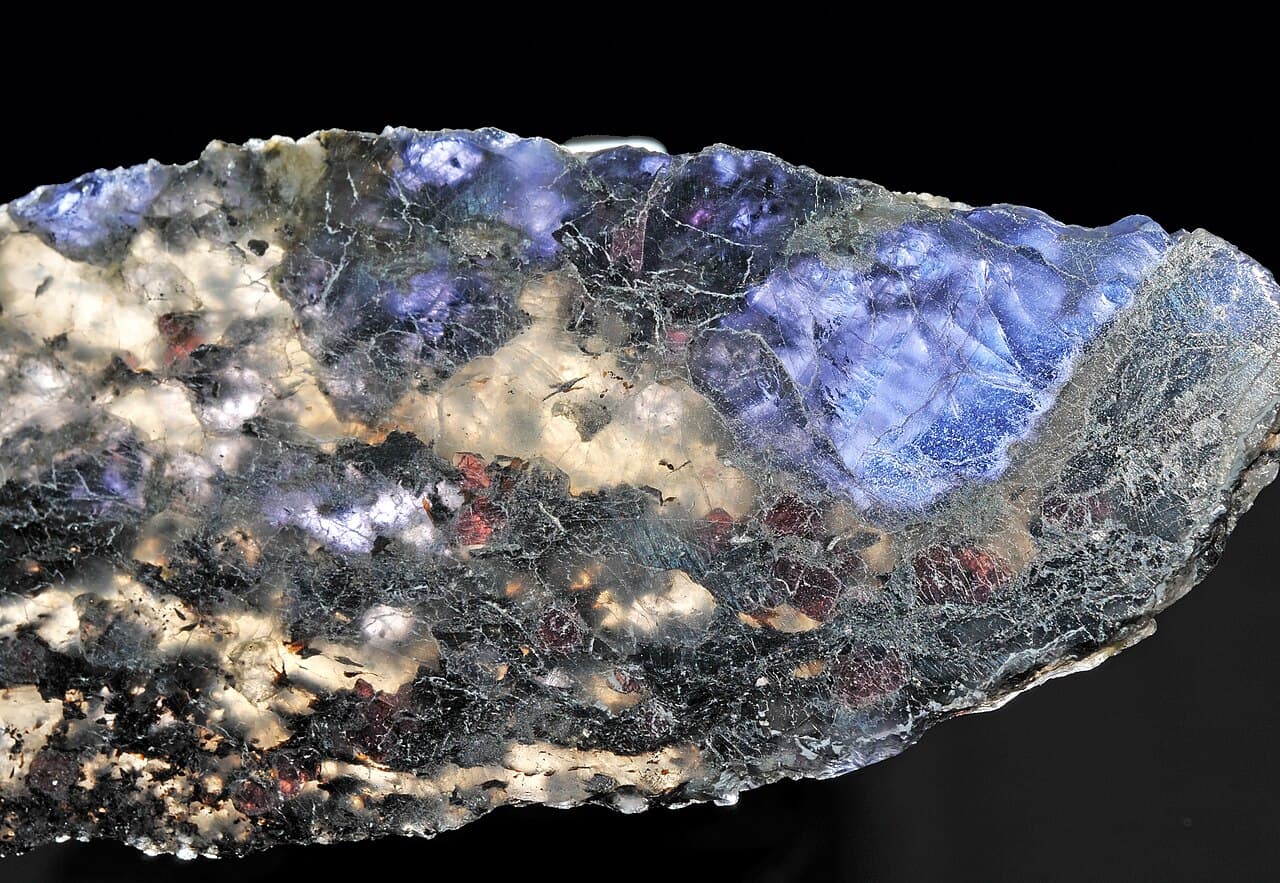
Iolite is the gem-quality variety of the mineral cordierite, a magnesium aluminum silicate, and it is best known for a beautiful violet-blue color that recalls a soft sapphire. Reasonably hard at 7 to 7.5 on the Mohs scale, it is durable enough for jewelry and is most often seen as a faceted gemstone in shades ranging from grayish blue to a rich violet-blue. The old trade name "water sapphire" captures both its sapphire-like color and its more affordable, watery character — iolite has long been valued as a less expensive alternative to fine blue sapphire.
The defining feature of iolite is its dramatic pleochroism, an optical property so strong that the mineral was historically called "dichroite," meaning "two-colored stone." Look at an iolite crystal from different directions and it appears to change color completely: a deep violet-blue from one angle, a much paler, almost watery yellowish or honey tint from another, and nearly colorless from a third. This is not a trick of the light but a genuine result of the crystal absorbing light differently along its different axes. According to long-standing accounts, this very property may have made iolite useful to Viking navigators, who are said to have used thin slices as a polarizing "sunstone" to locate the position of the sun through cloud and haze at sea.
Iolite at a glance
- Classification
- Mineral — gem variety of cordierite (a magnesium aluminum cyclosilicate)
- Composition
- (Mg,Fe)₂Al₄Si₅O₁₈ — a magnesium-iron aluminum silicate
- Hardness
- 7–7.5 (Mohs)
- Luster
- Vitreous (glassy)
- Streak
- White
- Colors
- Violet-blue to blue, often grayish; appears pale yellowish to near-colorless from other directions due to pleochroism
- Crystal system
- Orthorhombic
- Transparency
- Transparent to translucent
How to identify it
The single most reliable clue to iolite is its extreme pleochroism. Hold a faceted or rough stone and rotate it slowly while looking through it: a true iolite will swing from a strong violet-blue to a noticeably paler, watery yellowish or near-colorless tint as the viewing direction changes. This three-way color behavior (deep blue, pale yellow, and almost colorless along the three crystal directions) is so distinctive that it gave the mineral its old name "dichroite" and is rarely matched in intensity by the stones iolite is confused with. If a violet-blue gem dramatically changes color or loses most of its color when you turn it, iolite should be high on your list.
Back up the pleochroism check with hardness and density. Iolite is 7 to 7.5 on the Mohs scale, so it will scratch glass and resist a steel knife, which helps separate it from softer blue imitations. It is also a relatively light stone for its size compared with denser blue gems like sapphire or spinel, a difference an experienced hand can sometimes feel. A transparent violet-blue gem that is hard, comparatively light, and shows strong directional color change is very likely iolite rather than a denser, more uniformly colored blue stone.
Colors and varieties
Iolite's signature color is violet-blue, and the most desirable stones show a clean, saturated blue with a violet cast and good transparency. In practice much iolite leans grayish or inky, and lighter or grayer material is more common and less valuable than vivid, well-saturated blue. Because of the strong pleochroism, the same stone can look quite different depending on how it is oriented, so cutters take care to position the gem to show its richest blue face-up — a poorly oriented iolite can look washed out or gray even when the rough was a good color.
Most iolite on the market is the standard transparent violet-blue gem cordierite, and unlike many gemstones it is typically not treated to improve its color, so its appearance is usually natural. A rarer phenomenon variety, sometimes called "bloodshot iolite," contains tiny red flecks of iron-oxide minerals (such as hematite) that create reddish glints within the blue, and there are occasional iolite specimens that show a cat's-eye effect when cut as cabochons. The mineral name behind all of these is cordierite; "iolite" is simply the name used when the material is of gem quality.
Meaning and properties
In crystal traditions iolite is often called a "stone of vision" or a navigator's stone, a reputation tied directly to its lore as the Viking sun-finding gem. People associate it with inner guidance, intuition, clarity of thought, and finding one's direction in life, and it is commonly linked with the third-eye chakra and used in meditation as an aid to focus and self-understanding. Some keep iolite as a stone said to support clear-headed decision-making or to help during times of transition, leaning on its symbolism of seeing through fog toward the light.
These ideas are spiritual and cultural associations, not medically demonstrated effects. Iolite is a lovely and meaningful gem to wear and collect, but it is not a remedy for any physical or psychological condition and should never replace professional medical advice, counseling, or treatment. Enjoy iolite for its color, its remarkable optics, and the navigation legend attached to it, and turn to qualified professionals for any genuine health or wellbeing needs.
Value
Iolite is generally an affordable gemstone, and that accessibility is part of its appeal as a sapphire alternative. Value is driven mainly by color: stones with a vivid, deeply saturated violet-blue are the most desirable, while grayish, pale, or inky material is far more modest. Because the stone is strongly pleochroic, cut and orientation carry real weight — a well-cut iolite oriented to show its best blue face-up is worth more than a carelessly cut one that looks gray, so craftsmanship matters here more than for many gems. Good transparency and the absence of distracting inclusions also add to value.
Size plays a role as well: clean, well-colored iolite in larger sizes is less common and commands a premium, and unusual varieties such as the red-flecked "bloodshot" iolite or cat's-eye cabochons can carry collector interest. Because iolite is usually untreated, naturalness is generally a given rather than a price factor. There is no fixed price for iolite; when comparing stones, the one with the richer, more even blue, better clarity, and smarter cutting will be the more valuable.
Real vs. fake
The main identification challenge with iolite is not deliberate fakery so much as confusion with other blue gems — iolite is sometimes mistaken for, or substituted by, sapphire, tanzanite, blue spinel, benitoite, or even blue glass. Tanzanite in particular shares a violet-blue color and strong pleochroism, so the two can look alike to the eye. Iolite itself is usually sold as a natural, untreated stone, which is a point in its favor, but blue glass and other simulants are occasionally passed off as iolite, so a careful look is worthwhile for any stone of value.
Iolite's extreme pleochroism is the best confirmation. Genuine iolite shows a pronounced, sometimes dramatic shift between violet-blue, pale yellowish, and near-colorless as you turn it — stronger and more three-way than most of its look-alikes — and it is hard enough (7–7.5) to scratch glass while being comparatively light in the hand. Glass imitations tend to show a single flat color with little or no pleochroism, may contain tiny round bubbles or swirl marks, and can feel warmer; sapphire and spinel are markedly denser and harder. If a supposed iolite shows no directional color change, suspect a substitute and seek gemological testing.
Care
Iolite is hard enough at 7 to 7.5 to handle everyday wear and to resist scratching by ordinary dust, but it has one notable weakness: it is more brittle than its hardness suggests and can be sensitive to sharp blows. Because cordierite has distinct cleavage, a hard knock can chip or crack the stone along a flat plane, so it is wise to protect iolite from impacts, avoid wearing iolite rings during rough work, and store it where it will not be banged against harder gems. Sudden temperature changes are also best avoided.
Clean iolite gently with lukewarm soapy water and a soft brush or cloth, then rinse and dry it. Avoid ultrasonic and steam cleaners, whose vibration and heat can take advantage of the stone's brittleness and cleavage and cause damage, and keep iolite away from prolonged harsh chemicals. Store it separately from harder stones such as sapphire, topaz, and diamond, which can scratch it. With gentle handling and protection from knocks, iolite keeps its violet-blue color and glassy polish beautifully.
Iolite look-alikes
Frequently asked questions
What is iolite?
Iolite is the gem-quality variety of the mineral cordierite, a magnesium aluminum silicate. It is best known for a violet-blue color resembling sapphire — hence the old trade name "water sapphire" — and for its extreme pleochroism, meaning it shows strikingly different colors depending on the angle you view it from. It is fairly hard (Mohs 7–7.5) and is most often cut as a faceted gemstone.
Why does iolite change color when you turn it?
Iolite is strongly pleochroic: the crystal absorbs light differently along its three different directions, so it appears violet-blue from one angle, pale yellowish from another, and nearly colorless from a third. This property was so striking that the mineral was once called "dichroite," meaning two-colored stone. It is a genuine optical effect of the crystal, not a lighting trick, and it is the most reliable way to recognize iolite.
Did Vikings really use iolite to navigate?
According to long-standing accounts, Viking seafarers are said to have used thin slices of iolite as a polarizing filter — a "sunstone" — to find the position of the sun through clouds and haze and steer by it. The story rests on iolite's strong pleochroism and polarizing behavior. It is a popular and plausible piece of lore often repeated in gem references, though it is historical tradition rather than firmly documented fact.
Is iolite a good substitute for sapphire?
Many people choose iolite as an affordable alternative to blue sapphire because it offers a similar violet-blue color at a much lower price and is usually sold untreated. It is reasonably hard at 7 to 7.5 and wears well, though it is more brittle than sapphire and should be protected from sharp knocks. For everyday durability sapphire is tougher, but iolite delivers a comparable look for far less.
Is yours iolite? Find out from a photo
Photograph your gemstone in good light and get an identification with an honest confidence level, the look-alikes to rule out and the at-home tests that confirm it.
Identify my gemstone freeOn Android? Get the free rock identifier app
Related
More gemstones in the field guide
Keep exploring
More on gemstones: the full list of crystal and gem types, how to identify gemstones and the polished-stone identifier.
Last updated 2026-06-25. Identification guidance is educational — confirm important results with the diagnostic tests described or a qualified expert.