Aragonite
Also known as: Calcium Carbonate, Sputnik Aragonite, Cave Onyx (banded variety)
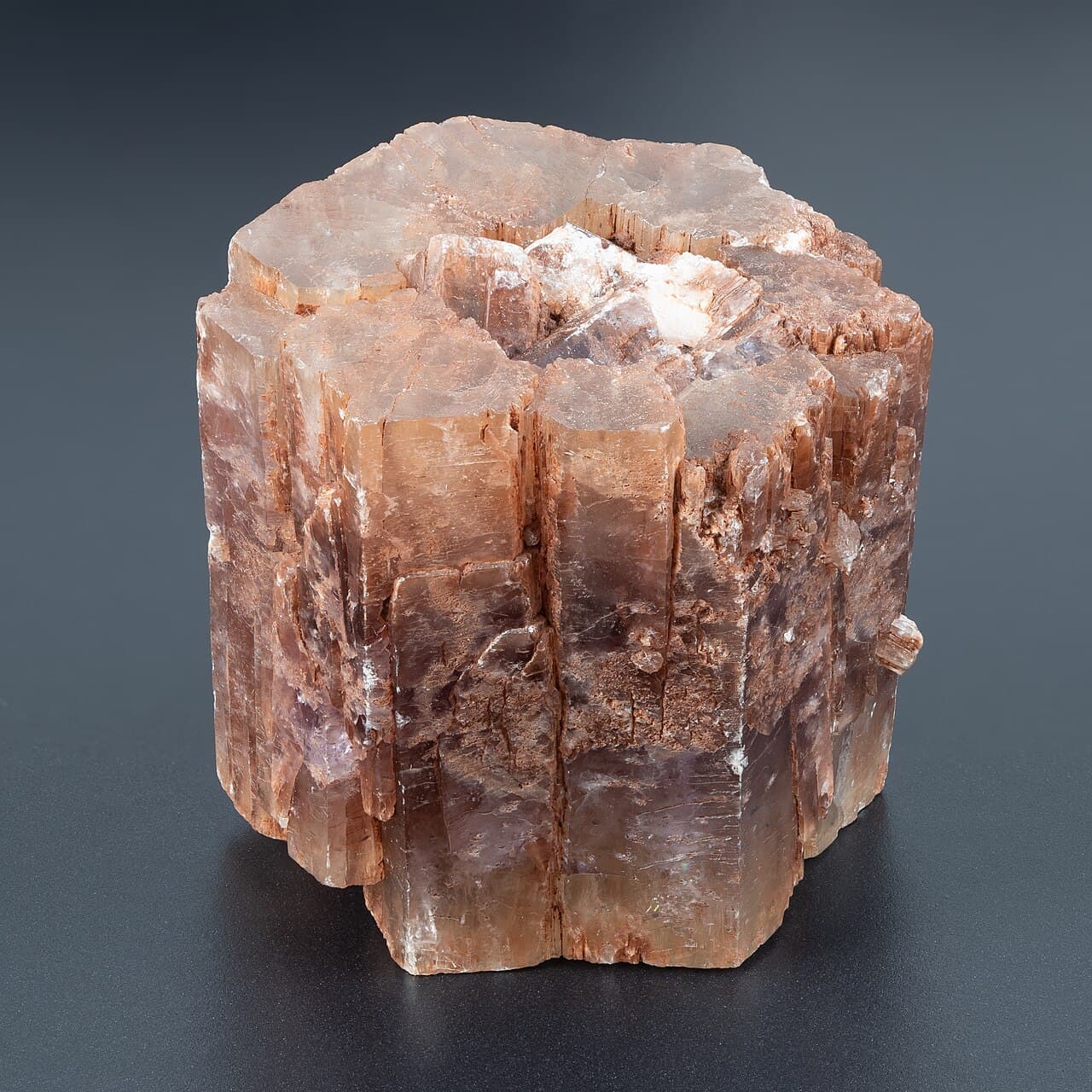
Aragonite is calcium carbonate (CaCO3), the very same chemistry as calcite, but it is a different mineral because its atoms are arranged in a different crystal structure. That makes the two minerals polymorphs: same recipe, different architecture. Aragonite is the form that nature builds in many living things, so it makes up the shimmering nacre of pearls and the shells of countless mollusks and corals, as well as crusts in hot springs, caves, and certain ore deposits. Geologically it is a bit of an overachiever that does not last forever; over long spans of time aragonite tends to recrystallize into the more stable calcite, which is why ancient shells are often calcite while younger ones keep their original aragonite.
For the rock hound, aragonite is most often recognized by its dramatic habits. The reddish-brown to orange radiating clusters known to collectors as sputnik or star aragonite are a classic sight, with long prismatic crystals shooting out in spiky bundles. There are also banded, layered forms sold as cave onyx and softly colored blue varieties. Like all carbonates, aragonite fizzes when a drop of dilute acid touches it, and it is soft enough to scratch with a knife. The real key to naming it, though, is telling it apart from its twin, calcite, which the sections below walk through step by step.
Aragonite at a glance
- Classification
- Carbonate mineral (aragonite group); polymorph of calcite
- Composition
- CaCO3
- Hardness
- 3.5 to 4 (Mohs)
- Luster
- Vitreous to resinous
- Streak
- White
- Colors
- Colorless, white, gray, yellow, orange, reddish-brown, brown, blue, green
- Crystal system
- Orthorhombic
- Transparency
- Transparent to translucent
How to identify it
Begin with the carbonate basics, then narrow down. Aragonite fizzes when a drop of dilute hydrochloric acid or ordinary white vinegar touches it, releasing carbon dioxide, and it is soft, scratched by a steel knife at 3.5 to 4 on the Mohs scale, with a white streak. Those traits tell you that you have a carbonate, most likely calcite or aragonite. The next clue is habit: aragonite very commonly forms long, slender prismatic crystals that radiate outward in star-like or spiky sputnik clusters, or it grows as needle-like sprays, coral-like branches, and banded crusts. Calcite, by contrast, more often forms blocky rhombs, scalenohedral dogtooth points, or nailhead crystals.
The cleanest way to separate the polymorphs is cleavage and optics. Calcite has perfect rhombohedral cleavage and breaks into leaning, block-shaped rhombs, and a clear piece shows strong double refraction, doubling a line viewed through it. Aragonite lacks that easy rhombohedral cleavage; it tends to break unevenly or splinter along its prisms rather than splitting into neat rhombs, and it does not show calcite's obvious doubling in the same way. So if your carbonate fizzes and is soft but forms radiating needle clusters and refuses to cleave into rhombs, you are very likely holding aragonite rather than calcite.
Colors and varieties
Aragonite comes in a friendly range of warm and cool tones. The best-known collector form is the reddish-brown, orange, or tan sputnik aragonite, in which prismatic crystals radiate into spiky stars and balls, often from Morocco and other classic localities. Pure aragonite can be colorless or white, while iron and other impurities produce yellow, honey, orange, and brown shades. There is also a soft blue aragonite popular in the decorative and metaphysical markets, and green and gray varieties occur as well. Banded, layered material in cream, brown, and amber tones is cut and sold as cave onyx or onyx marble, though mineralogically it is aragonite or a mix of carbonates rather than true onyx.
Habit is as much a part of aragonite's identity as color. Beyond the radiating sputnik clusters, it forms delicate needle sprays, flos-ferri coral-like branches in caves and mines, stalactitic and crusty coatings around hot springs, and the fine layered structure of pearls and shells, where aragonite is the natural building block of nacre. Because so many carbonate minerals share similar colors, color and even pattern alone are never enough to identify aragonite. Always confirm with the acid test for a carbonate, then use crystal habit, the lack of rhombohedral cleavage, and the comparison with calcite to settle which polymorph you have.
Meaning and properties
In crystal-healing and metaphysical traditions, aragonite, and especially the orange-brown sputnik clusters, is often described as a grounding and centering stone, and the blue variety is commonly associated in those practices with calm and clear communication. Some people keep aragonite in a workspace or meditation corner as a symbolic aid to feeling settled and organized. These associations come from spiritual, cultural, and personal belief systems rather than from scientific evidence, and aragonite should not be relied upon to treat, diagnose, or cure any condition. It is not a substitute for professional medical or mental health care.
If you enjoy the symbolic side of minerals, aragonite's striking radiating clusters and warm colors make it an appealing display and meditation piece, and you can treat those uses as a personal or spiritual practice. Keep the practical cautions in mind, though: aragonite is soft, somewhat brittle, and acid-sensitive, so its delicate crystal points chip easily and it is better admired and handled gently than worn as rugged everyday jewelry. Avoid soaking it or making elixirs from it. For any health concern, consult a qualified healthcare professional rather than depending on a crystal.
Value and what affects price
Aragonite is a relatively common mineral, so most specimens are affordable, and value is driven by the quality of the crystal display rather than rarity. The prized pieces are well-formed radiating sputnik clusters with sharp, undamaged prismatic crystals, good luster, and rich orange to reddish-brown color; large, symmetrical, intact clusters command the most interest. Delicate flos-ferri sprays and fine needle aggregates are sought after for their fragile beauty, while plain massive or crusty aragonite and common banded onyx-style material are inexpensive and widely available for decorative use.
Condition matters a great deal because aragonite's slender crystals are brittle and break easily, so clean, complete clusters with crisp points are worth considerably more than chipped or crumbling specimens. Color saturation, crystal sharpness, and the overall aesthetic balance of a cluster all push value up, and well-documented pieces from notable localities can carry a premium with collectors. As always, judge a specimen on its actual crystal quality, color, luster, and condition, and remember that decorative banded material marketed as onyx is valued as an ornamental stone rather than as a rare mineral specimen.
Real vs. fake: avoiding misidentification
Outright fakes of aragonite are uncommon because it is inexpensive, so the bigger issues are dyeing and honest misidentification. Dyed aragonite appears in the decorative market, where pale natural material is colored in vivid, uniform blues, greens, or pinks; suspiciously bright, perfectly even color on tumbled or carved pieces can indicate dye, and a hidden or freshly broken surface sometimes reveals paler natural stone underneath. Banded ornamental carbonate is also frequently sold loosely as onyx or marble, which is a naming overlap rather than a fake, but it means the label may not match the precise mineralogy.
The most important distinction to get right is aragonite versus calcite, since they share the same chemistry and both fizz in acid. Use crystal habit and cleavage: calcite cleaves into leaning rhombs and clear pieces double a line, while aragonite forms radiating needle or prismatic clusters and lacks that rhombohedral cleavage and obvious doubling. To confirm a carbonate at all, the acid test is decisive, genuine aragonite effervesces in dilute acid or vinegar, while glass and plastic imitations do not react and are often too hard. Combining the acid reaction, the soft hardness, the radiating habit, and the calcite comparison makes confident aragonite identification straightforward.
Care and cleaning
Aragonite needs gentle care because it is soft, brittle, and chemically reactive. At Mohs 3.5 to 4 it scratches easily and its slender crystal points are fragile, so store specimens apart from harder minerals, cushion delicate clusters, and support larger pieces from underneath so a knock cannot snap off a spray of needles. Clean aragonite only with a soft, dry brush or a barely damp cloth to lift dust; avoid soaking it, because as a carbonate it can be dulled or damaged by prolonged water exposure.
The firmest rule is to keep aragonite away from acids of any kind, since the same reaction that helps identify it will etch and dissolve the surface, so no vinegar, no acidic cleaners, and care around acidic household products. Because it is mildly soluble and brittle, limit water exposure, dry it promptly, and avoid sudden temperature swings that could stress the crystals. Dyed decorative pieces should also be kept dry to prevent color from bleeding. Treated with this careful, dry routine, aragonite keeps its bright luster and the crisp, spiky crystal points that make it so eye-catching.
Aragonite look-alikes
Frequently asked questions
What is the difference between aragonite and calcite?
They have identical chemistry (both are calcium carbonate, CaCO3) but different crystal structures, which makes them polymorphs. The practical differences are habit and cleavage: calcite forms blocky rhombs, cleaves into leaning rhomb shapes, and clear pieces double a line viewed through them, while aragonite forms radiating needle or prismatic star clusters and does not show that rhombohedral cleavage or obvious doubling. Both fizz in acid.
Why does aragonite fizz in vinegar?
Aragonite is calcium carbonate, and when acid touches a carbonate it reacts to release carbon dioxide gas. The escaping gas is the visible, audible fizzing or effervescence you see. Even weak household vinegar produces a reaction on fresh aragonite. This carbonate reaction confirms you have a carbonate; you then use crystal habit and the comparison with calcite to decide which polymorph it is.
Is aragonite the same material as pearls and seashells?
Often, yes. Many mollusks and corals build their shells and the lustrous nacre of pearls out of aragonite, the same calcium carbonate polymorph found in mineral specimens. Over long periods, shell aragonite can slowly recrystallize into the more stable calcite, which is why very old shells are frequently calcite while younger ones keep their original aragonite. It is a nice example of biology and mineralogy overlapping.
How should I clean and store aragonite?
Handle it gently and keep it dry. Use only a soft dry brush or a barely damp cloth, never acids, which dissolve and etch carbonates, and avoid soaking because aragonite is mildly soluble and brittle. Store it away from harder minerals so it does not get scratched, and cushion delicate radiating clusters so the slender crystal points do not snap. Keep dyed decorative pieces dry to prevent color from bleeding.
Is yours aragonite? Find out from a photo
Photograph your mineral in good light and get an identification with an honest confidence level, the look-alikes to rule out and the at-home tests that confirm it.
Identify my mineral freeOn Android? Get the free rock identifier app
Related
More minerals in the field guide
Related reading
Keep exploring
More on minerals: how to identify a mineral, the streak test and the full list of crystal types.
Last updated 2026-06-25. Identification guidance is educational — confirm important results with the diagnostic tests described or a qualified expert.