Cinnabar
Also known as: Mercury Sulfide, Mercury(II) Sulfide, Vermilion (the pigment made from it)
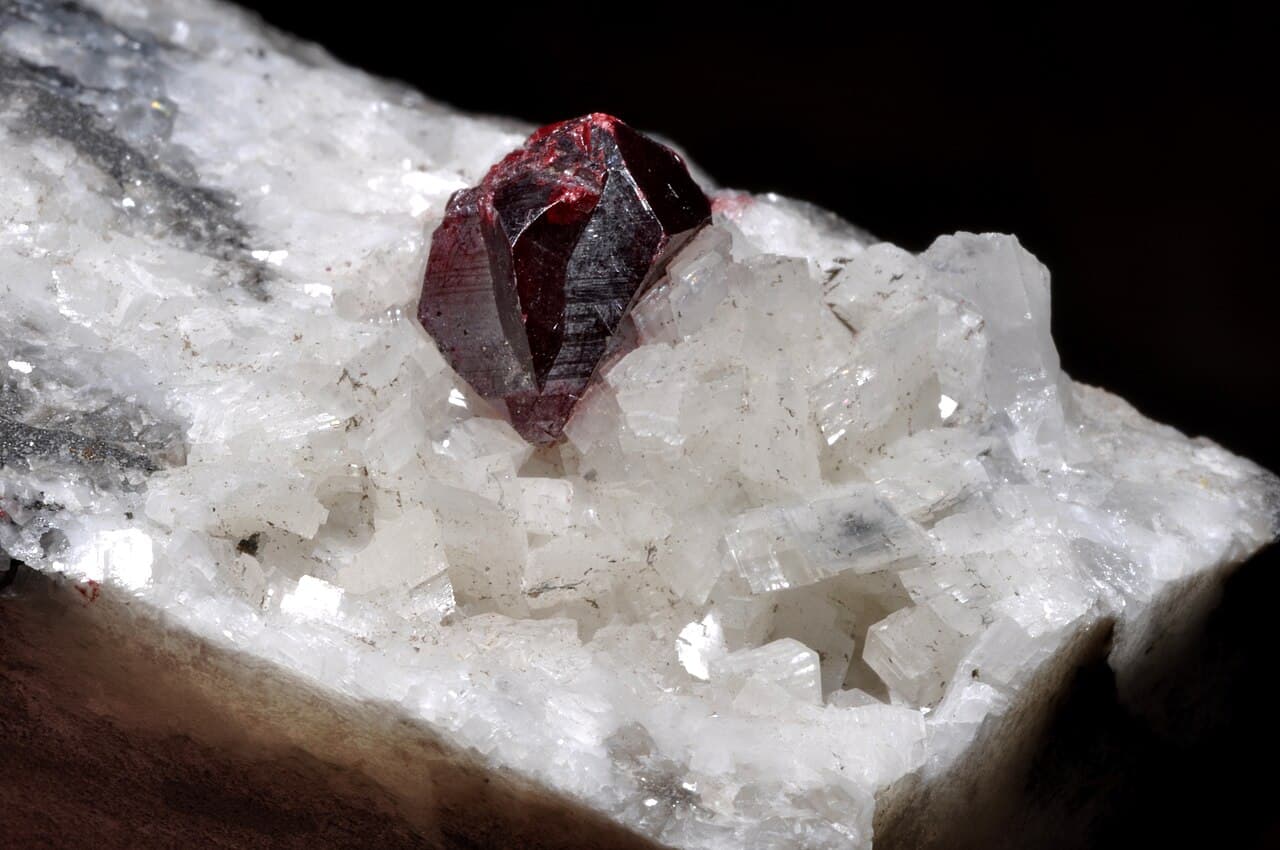
Cinnabar is mercury(II) sulfide, HgS, a strikingly beautiful and historically important mineral that is also genuinely hazardous. Its brilliant scarlet-to-vermilion red is one of the most intense colors in the mineral world, and for thousands of years cinnabar was ground into the prized red pigment called vermilion and mined as the chief ore of liquid mercury. It forms in low-temperature veins and around hot springs and volcanic activity, usually as granular crusts and earthy masses, and less often as gleaming, sharp red crystals that collectors treasure.
Beauty aside, cinnabar carries a serious warning: it contains mercury, a toxic heavy metal, so it must be handled with real care and never ingested, ground, or made into so-called elixirs. As a mineral it is soft (Mohs 2 to 2.5), surprisingly heavy for its size because of mercury's high density, and it shows an unmistakable red streak and an adamantine to dull luster. Once you know to look for a heavy, soft, scarlet mineral with a red streak, cinnabar is fairly distinctive, but its toxicity means identification should always go hand in hand with safe handling.
Cinnabar at a glance
- Classification
- Sulfide mineral; chief ore of mercury
- Composition
- HgS
- Hardness
- 2 to 2.5 (Mohs)
- Luster
- Adamantine to dull or earthy
- Streak
- Scarlet to brownish red
- Colors
- Brilliant scarlet, vermilion, and brownish red
- Crystal system
- Trigonal
- Transparency
- Transparent to opaque
How to identify it
Before testing, take the safety point seriously: cinnabar contains mercury, so do not handle raw or freshly broken material with bare hands, never grind it, wash your hands after any contact, and keep it away from children. With that in mind, the identification is fairly distinctive. Cinnabar is intensely scarlet to vermilion red, leaves a telltale scarlet-to-reddish streak on a streak plate, and feels noticeably heavy for its size because mercury makes it very dense. It is also soft, only 2 to 2.5 on the Mohs scale, so a fingernail or copper coin marks it easily.
Combine those clues rather than relying on color alone. The heavy heft, the red streak, and the low hardness together separate cinnabar from most red minerals: red jasper is much harder and far lighter, and hematite leaves a red streak but is gray to metallic and harder. Crystal faces, when present, show an adamantine, almost gemmy sparkle, while massive cinnabar is duller and more earthy. Because confirming a soft, heavy, scarlet, red-streaked mineral can mean scratching or powdering it, do that minimally and safely, and always wash up afterward.
Colors and varieties
Cinnabar's color is its calling card: a vivid scarlet that can range from a clear, bright vermilion in fine crystals to deeper brownish reds in massive, earthy material. The most coveted specimens are sharp, translucent red crystals with an adamantine sparkle, sometimes perched on a contrasting white matrix of quartz, dolomite, or calcite. More commonly cinnabar appears as red crusts, coatings, and granular masses impregnating the host rock, or as a soft red earth. Whatever the form, that saturated red is consistent enough that it has lent its name to a whole family of red pigments and lacquers.
It is worth separating the mineral from the decorative material that borrows its name. Historically, ground natural cinnabar produced vermilion paint and was used in red lacquerware, but the bright red carved "cinnabar" beads and boxes sold today are almost always carved resin or lacquer colored to imitate it, not the mineral at all. Genuine mineral specimens are about color, crystal quality, and density, while the modern jewelry trade is mostly about that imitation look, so be clear which one you are dealing with before judging a piece.
Meaning and properties
In various metaphysical and folk traditions, cinnabar's fiery red has long been linked with vitality, transformation, and abundance, and it appears in some historical alchemical and traditional-medicine lore. These associations are cultural and spiritual rather than scientific, and given that cinnabar is a toxic mercury mineral, it should absolutely never be used in any ingested, powdered, or skin-applied "healing" preparation. It is not a substitute for professional medical care, and any historical practice of consuming it was genuinely dangerous.
If the symbolism appeals to you, the safe approach is to appreciate a well-formed cinnabar specimen as a sealed display piece kept out of reach of children and pets, and to treat any symbolic meaning as a personal or cultural interest only. Do not carry it loose, make elixirs, or handle it casually. For any real health concern, consult a qualified healthcare professional rather than relying on a mineral, and most especially not on a mercury-bearing one.
Value and what affects price
For collectors, cinnabar's value is driven mainly by crystal quality, color, and aesthetics. Sharp, lustrous, translucent red crystals are far more desirable than dull, massive, or earthy material, and bright vermilion specimens outshine duller brownish-red ones. A clean cluster of well-formed crystals on a contrasting light matrix, especially from a classic locality, is the kind of piece that draws serious interest, while granular red crusts are modest by comparison.
Condition matters a great deal because cinnabar is soft and easily scratched or scuffed, so undamaged crystals with crisp faces are worth more than handled or abraded ones. The mineral's toxicity does not raise its collector value, but it does mean reputable sellers note the safe-handling caution. As always, judge a specimen on its color, crystal sharpness, luster, and condition rather than on marketing language, and be aware that carved "cinnabar" jewelry is usually imitation resin and is priced as a decorative craft item, not as a mineral.
Real vs. fake: avoiding misidentification
Keep the safety warning front of mind even here: real cinnabar is a mercury mineral, so handle suspected specimens with care, avoid bare-handed contact with broken surfaces, never grind it, and wash your hands afterward. The biggest "fake" in the marketplace is the carved red "cinnabar" jewelry, beads, pendants, and boxes that are almost always dyed resin or lacquer rather than the mineral. Genuine mineral cinnabar is heavy and dense for its size, soft (Mohs 2 to 2.5), and leaves a scarlet streak, whereas resin imitations are light, warm to the touch, and show no mineral streak.
Among natural minerals, watch for a few look-alikes. Realgar is a related orange-red sulfide that is also toxic, so treat it with the same caution; it tends toward orange and forms differently. Red jasper is much harder, opaque, and not toxic, and it will not yield a red streak the way cinnabar does. Hematite can give a red streak too, but it is gray to metallic in color and noticeably harder than cinnabar. The reliable combination is heavy heft, low hardness, and a scarlet streak together, which natural cinnabar shows and these others do not.
Care and cleaning
Cinnabar's care routine is shaped first by safety and second by its softness. Because it contains mercury, do not handle raw or broken material with bare hands, never grind, sand, or powder it, keep it well away from children and pets, and wash your hands after any contact. Store specimens in a sealed display case or box, ideally labeled, so the mineral is not casually touched, and keep it separate from foods and living spaces. If a piece sheds red dust, contain it carefully rather than brushing it loosely into the air.
For cleaning, less is more. Cinnabar is soft at Mohs 2 to 2.5, so dust it gently with a soft, dry brush or wipe with a barely damp cloth while wearing gloves, and avoid scrubbing, soaking, or any chemical cleaners that could abrade the surface or react with the mineral. Avoid prolonged moisture and harsh light, and never use ultrasonic or steam cleaners. Handled minimally, kept sealed, and cleaned only with gentle dry methods, a cinnabar specimen stays both safe and vivid.
Cinnabar look-alikes
Frequently asked questions
Is cinnabar toxic or dangerous to handle?
Yes. Cinnabar is mercury(II) sulfide and contains mercury, a toxic heavy metal. Do not handle raw or freshly broken material with bare hands, never grind it or make any kind of powder, paste, or "elixir" from it, keep it away from children and pets, and always wash your hands after any contact. Display specimens sealed in a case, and never ingest it.
How can I tell if a red mineral is cinnabar?
Look for three traits together: a brilliant scarlet-to-vermilion color, a scarlet-to-reddish streak on a streak plate, and a surprisingly heavy heft for its size because mercury makes it dense. It is also soft (Mohs 2 to 2.5), so a fingernail or copper coin marks it. Red jasper is harder and lighter, and hematite is gray and harder, so the heavy, soft, red-streaked combination points to cinnabar. Handle minimally and wash up afterward.
Is the carved red "cinnabar" jewelry real cinnabar?
Usually not. Most modern carved "cinnabar" beads, pendants, and boxes are dyed resin or lacquer made to imitate the mineral's red color, not actual mercury sulfide. They are light and warm to the touch and show no mineral streak. This is generally good news for safety, since genuine cinnabar contains toxic mercury, but it means the piece is a decorative craft item rather than a true mineral.
Why was cinnabar historically so valuable?
Cinnabar served two major roles. Ground into powder it produced vermilion, one of the most prized brilliant-red pigments used in art and lacquerware for thousands of years. It was also the chief ore of mercury, the source of the liquid metal once central to many industrial and historical uses. Its intense color and economic importance made it a sought-after mineral despite its now well-understood toxicity.
Is yours cinnabar? Find out from a photo
Photograph your mineral in good light and get an identification with an honest confidence level, the look-alikes to rule out and the at-home tests that confirm it.
Identify my mineral freeOn Android? Get the free rock identifier app
Related
More minerals in the field guide
Keep exploring
More on minerals: how to identify a mineral, the streak test and the full list of crystal types.
Last updated 2026-06-25. Identification guidance is educational — confirm important results with the diagnostic tests described or a qualified expert.