Bornite
Also known as: Peacock Ore, Peacock Copper, Horseflesh Ore
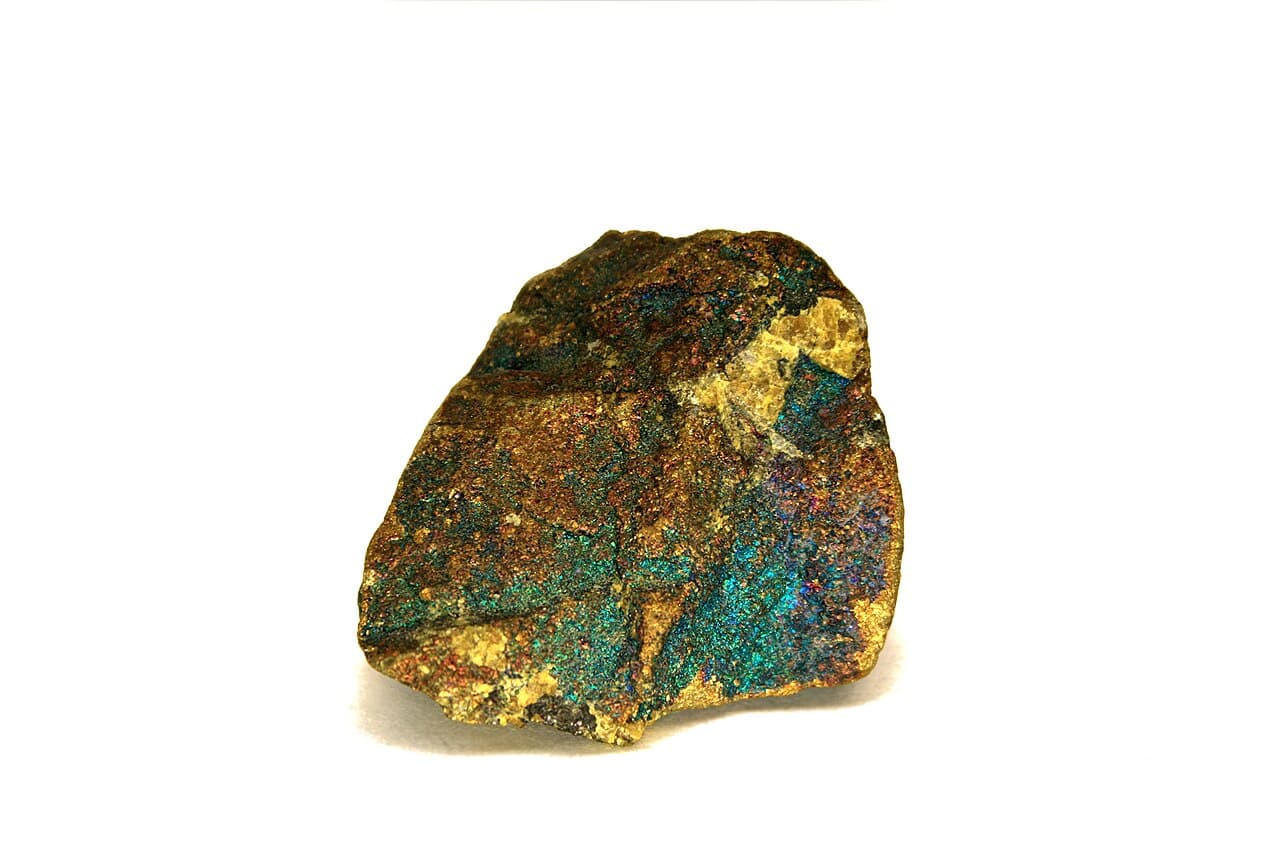
Bornite is a copper iron sulfide and a significant ore of copper, but it is far better known to collectors and gift-shop browsers as one of the two minerals sold under the trade name "peacock ore." A fresh break or a clean surface is a warm copper-bronze, sometimes likened to raw meat, which is where the old miners' name "horseflesh ore" comes from. Left exposed to air, that bronze surface quickly oxidizes into a thin film that flashes vivid purple, blue, violet, and gold. It is this rainbow tarnish, not the underlying mineral color, that gives peacock ore its name and most of its appeal, and bornite develops the iridescence faster and more readily than its brassier cousin chalcopyrite.
For identification, the most important thing to remember about bornite is that its surface color lies. The dazzling peacock sheen is just a tarnish coating; the real diagnostic clues sit underneath it and in a few simple tests. Bornite is soft, only about 3 on the Mohs scale, so a copper coin or a steel knife scratches it easily, and it leaves a grayish-black streak on an unglazed tile. It is brittle, metallic, and opaque, usually occurring as massive lumps and grains in copper ore rather than as good crystals. Pair the coppery-bronze fresh color with the soft hardness, the grayish-black streak, and the quick rainbow tarnish, and bornite becomes one of the more recognizable copper minerals, even if most people meet it only as a shiny tumbled "peacock" stone.
Bornite at a glance
- Classification
- Sulfide mineral (copper iron sulfide); an important ore of copper
- Composition
- Cu5FeS4
- Hardness
- 3 (Mohs)
- Luster
- Metallic
- Streak
- Grayish black
- Colors
- Copper-bronze to brownish on fresh surfaces; tarnishes rapidly to iridescent purple, blue, violet, and gold
- Crystal system
- Orthorhombic (pseudo-cubic)
- Transparency
- Opaque
- Magnetic
- Not magnetic
How to identify it
Start by ignoring the rainbow and looking for a fresh surface. Where bornite is freshly broken or unweathered, its true color shows: a warm coppery-bronze, sometimes with a brownish or pinkish cast that earned it the nickname horseflesh ore. From there, hardness is your friend. Bornite is soft at about Mohs 3, so a steel knife scratches it easily and even a copper coin will mark it, which already separates it from harder brassy minerals like pyrite. Then confirm with the streak: rubbed on an unglazed porcelain tile, bornite leaves a grayish-black mark. The combination of a coppery-bronze fresh color, soft hardness, and grayish-black streak does most of the work.
Use the tarnish and the texture as supporting clues rather than as the main test. Bornite oxidizes quickly, so a piece that develops a vivid, fast-forming purple-and-blue iridescence over a soft, coppery base is very likely bornite. It is brittle and shatters rather than bending, has a metallic luster, and almost always occurs as solid massive lumps and grains in copper ore instead of well-shaped crystals, so do not expect tidy geometric faces. Because the surface iridescence can be natural or artificially induced, never name the mineral on color alone; let the soft Mohs 3 hardness, the grayish-black streak, the brittleness, and the bronze fresh color carry the identification.
Colors and varieties
Bornite has two faces. On a fresh or cleaned surface it is a coppery-bronze to reddish-brown metallic mineral, the "horseflesh" color that gives it one of its oldest names. Once exposed to air and moisture, it rapidly tarnishes into the iridescent film that the market loves, flashing deep purple, blue, violet, and patches of gold. That tarnish is exactly what is being sold whenever you see a glittering "peacock ore" or "peacock copper" tumbled stone. Bornite and the related sulfide chalcopyrite are the two minerals most often sold under the peacock-ore name, and the two are routinely confused because both tarnish in similar rainbow hues.
There is an important honesty note about that color. A great deal of "peacock ore" on the tourist and decorative market, especially the pieces with a brilliant, even, all-over rainbow, is not natural bornite at all but chalcopyrite that has been treated with acid to force a bright iridescence. Acid-flashed chalcopyrite is cheap, abundant, and shinier than typical natural tarnish, so the vivid uniform peacock stones in many shops are often this treated material rather than naturally weathered bornite. As a mineral, bornite is always opaque with a metallic luster regardless of its surface hue, and because that surface can be altered or can even belong to a different mineral entirely, color is never a safe stand-alone identifier here.
Meaning and properties
In crystal-lore and metaphysical traditions, bornite, usually under its peacock ore name, is often described in those practices as a stone of joy, vitality, and fresh perspective, with its rainbow sheen linked symbolically to happiness and to the body's energy centers. Some people simply enjoy it as a cheerful, shimmering display piece. These associations are cultural, spiritual, and personal rather than scientific, and bornite should not be relied upon to diagnose, treat, or cure any condition. It is not a substitute for professional medical care, and anyone with a health concern should consult a qualified professional.
A practical safety note matters more than any folklore here. Bornite is a copper-bearing sulfide, so it should be handled as a mineral specimen, not as anything to ingest or soak. Do not make elixirs from it, do not lick or taste it, and wash your hands after handling, with extra caution for any "peacock" piece that may have been acid-treated, since chemical residue and dust are best avoided. Keep it away from food, drink, and pets, and enjoy bornite for its striking bronze-and-rainbow appearance and its genuine role as a copper ore rather than for any claimed physical benefit.
Value and what affects price
As a specimen, bornite is generally inexpensive, and most of what reaches the public is sold as cheap tumbled or decorative "peacock ore." Genuine, naturally tarnished bornite with an attractive iridescence and a clean coppery base can hold modest collector interest, and rare well-formed crystals or aesthetic associations with quartz, calcite, or other ore minerals are valued more highly. Bulk massive bornite, the form mined for copper, is common and carries little specimen value, prized mainly for its scientific interest as a copper ore.
Two cautions shape what a buyer is actually paying for. First, much material sold as peacock ore is acid-treated chalcopyrite rather than natural bornite, so a vivid, uniform, all-over rainbow should prompt the question of whether the iridescence, or even the mineral, is what the label claims; honest sellers disclose treatment. Second, condition counts, because bornite is soft and brittle, so undamaged surfaces and good luster help value while chips, dull patches, and crushed edges hurt it. Judge a piece on its true mineral identity, the naturalness of its color, and its condition rather than on a flashy trade name. No specific prices are implied here; market values vary widely.
Real vs. fake: avoiding misidentification
The biggest "is it real" problem with bornite is not a counterfeit mineral but a case of mistaken and treated identity. A large share of the brilliant, uniformly iridescent "peacock ore" sold to tourists and in gift shops is acid-treated chalcopyrite, not natural bornite, and the acid is used specifically to force a bright, even rainbow that natural tarnish rarely produces. If a natural specimen matters to you, look for patchier, more subtle iridescence over a soft coppery-bronze base, and ask the seller directly whether the piece is bornite and whether the surface has been treated.
To confirm the underlying mineral regardless of its surface color, rely on physical tests rather than the sheen. Bornite is soft (Mohs 3), so a knife scratches it readily and a fresh surface shows a coppery-bronze color; its streak on unglazed tile is grayish-black; and it is brittle and shatters. This separates it cleanly from pyrite, which is much harder (about Mohs 6) and a brassier yellow, and helps distinguish it from chalcopyrite, which is a clearer brass-yellow on a fresh break and slightly harder. Covellite and chalcocite, two other copper sulfides, can also resemble tarnished bornite; when in doubt, trust the soft hardness, the grayish-black streak, and the bronze color of a fresh break over any surface rainbow.
Care and cleaning
Bornite needs gentle, dry handling because it is soft, brittle, and a sulfide that reacts with moisture and acids. At only Mohs 3 it scratches very easily, so store specimens away from harder minerals and keep them from rubbing against grit or each other. Clean bornite with a soft dry brush or at most a barely damp cloth, then dry it promptly; never soak it, because prolonged contact with water and humidity can corrode a sulfide, dull its luster, and accelerate unwanted surface change. Never use acids or acidic cleaners on a piece you want to keep, since acid attacks the mineral, which is exactly how artificial peacock iridescence is created in the first place.
Mind the environment and the surface. Because bornite tarnishes naturally and quickly, store it in stable, dry, moderate conditions away from strong humidity swings if you want to slow further color change. Handle any acid-treated peacock piece with extra care and wash your hands afterward to avoid chemical residue, and cushion brittle specimens on padding so soft edges are not chipped or crushed. Keep the mineral away from food, drink, and pets since it is copper-bearing. With low-contact, dry storage and no harsh chemicals, bornite keeps its coppery base and iridescent film far better than a piece left damp or knocking against harder stones.
Bornite look-alikes
Frequently asked questions
Is bornite the same thing as peacock ore?
Sort of, but not exactly. "Peacock ore" is a trade name for brassy or bronzy copper sulfide that shows iridescent purple-blue tarnish, and both bornite and chalcopyrite are sold under that name. Bornite tarnishes to peacock colors readily, so genuine bornite is often called peacock ore. However, much of the brilliantly iridescent peacock ore in shops is actually chalcopyrite that has been treated with acid to force the rainbow, not natural bornite at all.
Why does bornite show purple and blue colors?
Those colors come from a thin tarnish film that forms as bornite's surface oxidizes in air and moisture, scattering light into iridescent purples, blues, and golds much like an oil film on water. Bornite oxidizes quickly, so the rainbow appears readily and naturally. The underlying mineral is still a coppery-bronze on a fresh break, which is the surface color to check when you want to confirm what is beneath the iridescence. Note that this rainbow is also commonly forced with acid on commercial peacock ore.
How can I tell real bornite from acid-treated chalcopyrite?
Look for a fresh surface and use hardness. Bornite is coppery-bronze on a fresh break and quite soft (Mohs 3), while chalcopyrite is a clearer brass-yellow and slightly harder (Mohs 3.5 to 4). Treated "peacock" chalcopyrite usually has a very bright, uniform, all-over rainbow that looks more flashy than natural tarnish. If the iridescence is patchier and the fresh color is bronze rather than brass, you likely have natural bornite; when in doubt, ask the seller whether the surface was acid-treated.
Is bornite valuable?
As a copper ore, bornite is industrially important, but as a specimen most material is inexpensive, especially the cheap tumbled peacock ore sold in gift shops. Naturally tarnished bornite with attractive iridescence, rare good crystals, or fine associations with other minerals can carry modest collector value. Because much commercial peacock ore is actually acid-treated chalcopyrite, a buyer should judge a piece on its true identity, the naturalness of its color, and its condition rather than on the trade name alone.
Is yours bornite? Find out from a photo
Photograph your mineral in good light and get an identification with an honest confidence level, the look-alikes to rule out and the at-home tests that confirm it.
Identify my mineral freeOn Android? Get the free rock identifier app
Related
More minerals in the field guide
Keep exploring
More on minerals: how to identify a mineral, the streak test and the full list of crystal types.
Last updated 2026-06-25. Identification guidance is educational — confirm important results with the diagnostic tests described or a qualified expert.