Selenite
Also known as: Satin spar (fibrous variety), Gypsum crystal, Desert rose (rosette form)
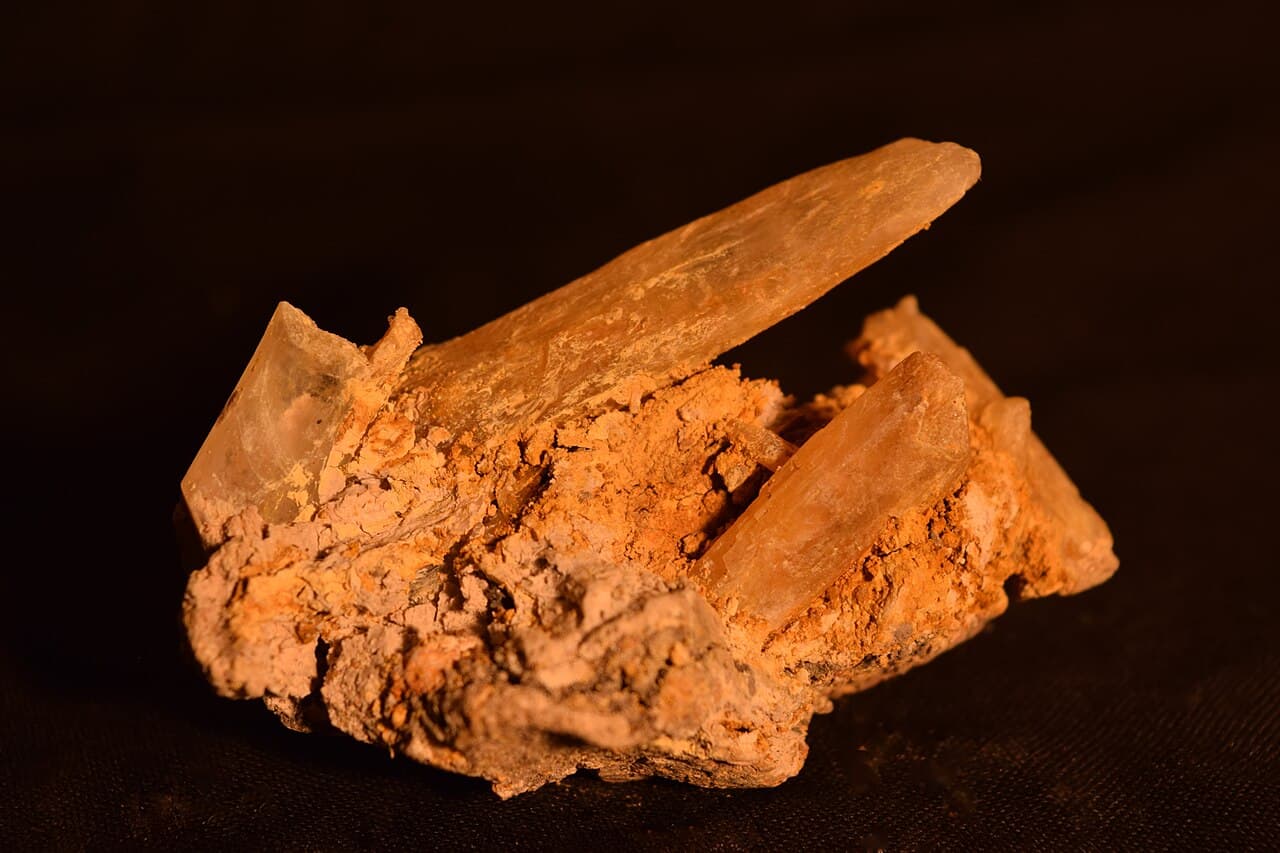
Selenite is a clear, colorless crystal variety of gypsum — hydrated calcium sulfate, CaSO₄·2H₂O. The name covers the transparent, glassy crystals of gypsum, as opposed to the fine-grained massive gypsum used to make plaster. It typically forms by evaporation: as salty water dries up in lakebeds, lagoons, and deserts, calcium sulfate crystallizes out, sometimes growing into enormous, water-clear blades.
Selenite is famous for being very soft and for its silky internal glow. It can be scratched with a fingernail, splits into thin flexible sheets, and the fibrous form known as satin spar shows a moving cat's-eye sheen and a pearly luster. Because it is calcium sulfate with water locked into its structure, it is also mildly water-soluble — a property that drives almost all of its care requirements.
Selenite at a glance
- Classification
- Mineral — a crystal variety of gypsum (sulfate class)
- Composition
- CaSO₄·2H₂O (hydrated calcium sulfate)
- Hardness
- 2 (Mohs) — scratched by a fingernail
- Luster
- Vitreous to pearly; silky in the fibrous satin-spar form
- Streak
- White
- Colors
- Colorless to white; sometimes pale orange, brown, or green from inclusions
- Crystal system
- Monoclinic (bladed, tabular, fibrous, or prismatic crystals)
- Transparency
- Transparent to translucent
How to identify selenite
The defining test for selenite is its softness. At Mohs 2 it is one of the few minerals you can scratch with a fingernail, and a steel knife or even a copper coin marks it effortlessly. If a clear, glassy crystal scratches with a fingernail it is almost certainly selenite (gypsum) rather than the much harder quartz, calcite, or glass it might superficially resemble.
Look also at how it breaks and bends. Selenite has one perfect cleavage, so it splits into thin, smooth sheets or flakes, and very thin laths are slightly flexible — they bend rather than snapping cleanly. The transparent variety is typically colorless and water-clear with a glassy luster, while the fibrous satin-spar variety shows a silky, shifting chatoyant band like a cat's-eye when polished into a wand or sphere. It is also lightweight for its size (specific gravity around 2.3), and unlike calcite it does not fizz in acid.
Colors and varieties
Pure selenite is colorless and transparent, but gypsum takes several distinct habits that are sold under their own names. Satin spar is the fibrous, silky form, usually milky-white with a fiberoptic cat's-eye glow — most 'selenite wands,' towers, and charging plates are actually satin spar. Desert rose is the rosette form, where bladed crystals grow in a flower-like cluster, often tan or sandy because they trap grains of sand as they form in arid ground. Gypsum 'flower' and the giant clear blades found in some caves are further variations of the same mineral.
Color in selenite comes from inclusions rather than the gypsum itself. Iron oxides can tint it pale orange, amber, or brown, and trapped clay or other minerals can give muddy or greenish casts. Because the crystal is so clear, even faint inclusions are easy to see, which helps distinguish natural material from dyed imitations.
Meaning and properties
In crystal-healing and metaphysical practice, selenite is one of the most popular 'high-vibration' stones, commonly associated with cleansing, clarity, calm, and the crown chakra. A frequent belief is that selenite 'cleanses' or 'charges' other crystals when they are placed on a selenite plate, and that it does not need cleansing itself.
These ideas are spiritual and cultural traditions, not scientifically demonstrated effects, and selenite has no proven ability to treat, cure, or prevent any medical condition. Anyone with a health concern should seek advice from a qualified medical professional rather than relying on a crystal. (Note that the name selenite refers to the gypsum variety and is unrelated to the dietary mineral selenium.)
What selenite is used for
Most selenite on the market is decorative and metaphysical: polished towers, wands, spheres, palm stones, and flat 'charging plates,' usually carved from satin spar for its silky glow. Lamps and tea-light holders are made from larger blocks because the mineral transmits a soft, diffuse light. Desert roses are popular as natural display pieces.
Gypsum as a whole — the same mineral species — is enormously important industrially, used to make plaster of Paris, wallboard (drywall), and as a setting retarder in cement and a soil conditioner in agriculture. The clear selenite crystals themselves were historically used as 'glass' for small windows and lanterns before cheap glass was available, exploiting their transparency and easy cleavage into sheets.
Value: what selenite is worth
Selenite is an inexpensive and abundant mineral, so most pieces are very affordable. Tumbled stones, small wands, and charging plates are low-cost, and even large polished towers remain reasonably priced compared with harder gemstones. Its low value reflects how common gypsum is and how soft and fragile the finished pieces are.
Premium pricing is reserved for exceptional natural specimens — large, flawless transparent blades, well-formed desert roses, and unusually clean satin-spar with a strong cat's-eye. Even then, value rests on size, clarity, and form rather than rarity. Because the stone is soft and easily damaged, condition has an outsized effect on what a piece is worth.
Real vs. fake selenite
Outright fake selenite is less common than with pricier stones, since real gypsum is cheap. The main issues are dyed satin spar sold as natural colored 'selenite,' and glass or resin pieces sold as crystal. Real selenite gives itself away by its softness: a fingernail or coin will scratch a hidden spot, which glass and harder stones resist. It is also lighter than glass of the same size and shows a fibrous internal structure (in satin spar) rather than the bubbles or swirl marks of glass.
Be skeptical of vividly colored 'selenite' in saturated pinks, blues, or purples — natural selenite is colorless to white or only softly tinted by inclusions, so bright uniform color usually means dye or a different mineral entirely. Genuine satin spar shows a single moving band of light (chatoyancy) along the fibers, which printed or dyed imitations cannot truly reproduce.
Care and water sensitivity
Selenite needs gentle handling because it is extremely soft (Mohs 2) and cleaves easily. It scratches from almost anything, including dust wiped across it, so store it separately and clean it only with a soft, dry brush or cloth. Thin pieces can snap or flake, and the fibrous wands can fray at the ends with rough use.
The most important rule is to keep selenite dry. Because gypsum is mildly water-soluble, soaking or repeated wetting will slowly dissolve the surface, leaving it dull, cloudy, etched, or crumbly — so never cleanse selenite in water, leave it outside in rain or dew, or use it in a bath or elixir. Don't pour water over a selenite charging plate, and don't store it in damp places, since even high humidity over time can degrade fine pieces. Clean strictly with a dry method, and keep it away from steam and ultrasonic cleaners.
Selenite look-alikes
Frequently asked questions
What is selenite?
Selenite is the clear, crystalline variety of gypsum — hydrated calcium sulfate (CaSO₄·2H₂O). It usually forms when mineral-rich water evaporates, and it is known for being very soft, often colorless and glassy, and for the silky 'satin spar' form used in most selenite wands and charging plates.
Can selenite get wet?
It is best to keep selenite dry. Gypsum is mildly water-soluble, so soaking or repeated wetting slowly dissolves and clouds the surface and can leave it crumbly. Never cleanse selenite in water, use it in a bath or elixir, or leave it in rain or damp conditions — clean it only with a dry cloth or brush.
How do I know if my selenite is real?
The quickest check is hardness: real selenite is so soft (Mohs 2) that a fingernail or copper coin scratches it on a hidden spot, while glass, quartz, and most imitations resist that. Genuine satin-spar selenite is lightweight and shows a fibrous internal structure with a single moving cat's-eye sheen, not the bubbles or swirls of glass. Be wary of bright, uniformly colored 'selenite,' which is usually dyed.
What is selenite used for?
Most selenite is used decoratively and in crystal-healing practice — as wands, towers, spheres, lamps, and charging plates, valued for its soft glow and silky luster. As gypsum, the same mineral is also used industrially to make plaster, drywall, and cement, and historically clear selenite served as window 'glass.' Its metaphysical uses, such as 'cleansing' other crystals, are spiritual beliefs rather than proven effects.
What does selenite symbolize?
Selenite is named for Selene, the Greek goddess of the moon, and is strongly associated with light, clarity and cleansing — modern crystal practice treats it as a stone for clearing a space and for 'charging' other stones, which is why selenite wands and plates are so common in crystal shops. These meanings are cultural and spiritual rather than medical, and selenite treats no condition. One genuinely practical point comes from its mineralogy rather than its lore: it is very soft and water-soluble, so keep it dry.
Is yours selenite? Find out from a photo
Photograph your crystal in good light and get an identification with an honest confidence level, the look-alikes to rule out and the at-home tests that confirm it.
Identify my crystal freeOn Android? Get the free rock identifier app
Related
More crystals in the field guide
Related reading
Keep exploring
More on crystals: the full list of crystal types, how to identify a crystal and crystals by color.
Last updated 2026-07-19. Identification guidance is educational — confirm important results with the diagnostic tests described or a qualified expert.