Aventurine
Also known as: Green aventurine, Aventurine quartz, Indian jade
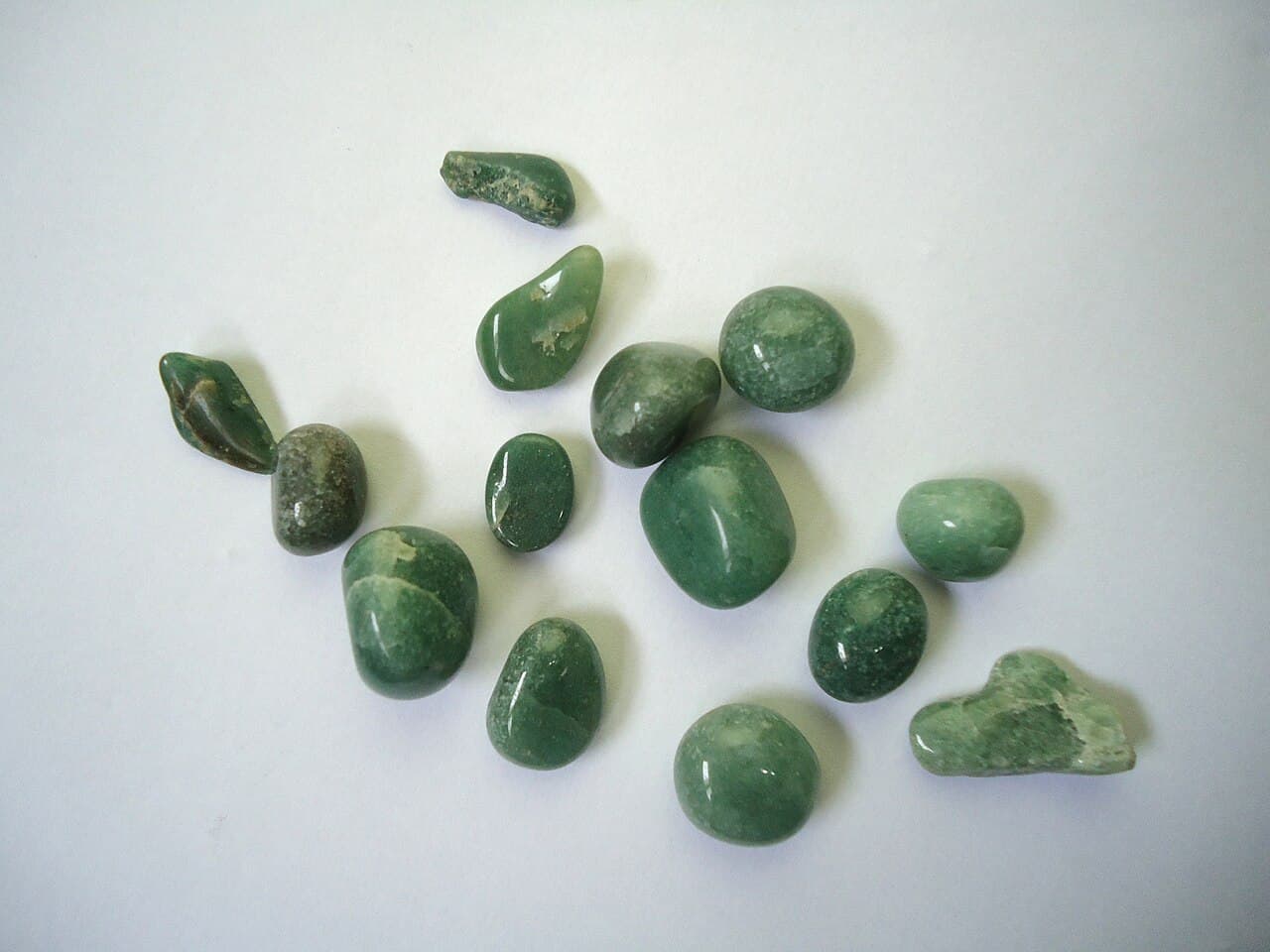
Aventurine is a compact form of quartz, made of countless tiny interlocked silica grains rather than a single clear crystal, and packed with platy mineral inclusions that give it both its color and its signature sparkle. Most aventurine is some shade of green, and the green comes from fuchsite, a chromium-rich variety of mica scattered through the stone in thin glittering flakes. Those same flakes catch and bounce the light to produce a soft, shimmering glow across the surface — an optical effect called aventurescence, which is exactly where the stone gets its name. Hard and durable at about 7 on the Mohs scale, aventurine is technically a quartzite or a very compact massive quartz, with a slightly granular, sugary look up close rather than the smooth glassiness of a clear crystal.
The single most useful thing to know about aventurine is that gentle internal shimmer. Tilt a polished piece under a light and you will see a faint, glittery sheen drift across it as flecks of mica flash on and off — a calmer, more diffuse twinkle than the bold flashes of a stone like sunstone. Because the color and the sparkle are produced by inclusions rather than the silica itself, aventurine is typically translucent to opaque rather than clear, and its green is usually a muted, leafy or olive tone instead of a vivid jewel green. Abundant, affordable and pleasant to handle, it is one of the most common tumbled stones sold, often labeled simply 'green aventurine,' and it is frequently mistaken for jade or for the blue-green feldspar amazonite.
Aventurine at a glance
- Classification
- Rock/mineral — compact quartz (quartzite) with mica inclusions
- Composition
- SiO₂ (quartz, with fuchsite or other platy mineral inclusions)
- Hardness
- 7 (Mohs)
- Luster
- Vitreous to slightly greasy; glittering aventurescence
- Streak
- White
- Colors
- Most often green; also blue, red-brown, peach, yellow and gray
- Crystal system
- Trigonal (microcrystalline/granular aggregate)
- Transparency
- Translucent to opaque
- Magnetic
- Not magnetic
How to identify it
Look first for aventurescence, the defining clue. Hold a polished piece under a bright light and slowly tilt it: you should see a soft, glittery shimmer of tiny reflective flecks moving across the surface, as countless mica platelets flash in and out of the light. This shimmer is gentle and spread out rather than a single bold flash, and it sits within the body of the stone rather than on top of it. Combine that with the typical color — a muted, leafy or olive green — and a slightly granular, sugary texture visible up close, and you have the classic aventurine signature. The stone is usually translucent to opaque, glowing softly at the edges when backlit but not clear like a gem crystal.
Confirm with quartz-family physical tests. Because aventurine is a compact quartz, it is hard, about 7 on the Mohs scale, so it will easily scratch glass and resist scratching by a steel knife — an immediate way to rule out softer green imitations and dyed substitutes. It leaves a white streak regardless of body color, feels cool and solid in the hand, has no flat cleavage planes, and breaks with a smooth, uneven to conchoidal fracture. A hard, white-streaked, translucent-to-opaque green stone that scratches glass and shows that drifting internal glitter is almost certainly aventurine rather than one of its softer or shimmer-free look-alikes.
Colors and varieties
Green is by far the most common color of aventurine, and it is the variety most people picture when they hear the name. That green is the work of fuchsite — a chromium-bearing green mica — dispersed through the quartz as fine flakes that both tint the stone and create its shimmer; the more fuchsite, the deeper and more opaque the green, ranging from pale mint through leafy medium green to a dark olive. Because the color depends on included mica rather than the silica itself, natural aventurine green tends to be soft and slightly muted rather than the saturated, gemmy green of an emerald, and that muted, leaf-like quality is itself a helpful identifying trait.
Aventurine also occurs in other colors, each owing its hue to a different included mineral. Blue aventurine is colored by inclusions of dumortierite, giving a denim-to-slate blue with a subtler sparkle; red-brown and peach aventurine get their warm tones and bright glitter from flakes of hematite or goethite (iron oxides); and there are yellow and gray varieties as well. Whatever the color, the common thread is the same — a base of compact quartz carrying enough platy inclusions to produce both the body color and the aventurescent shimmer. Be aware that some intensely colored 'aventurine' on the market, especially vivid blues and greens, is actually man-made glass (often called goldstone when it is the sparkly brown type); natural aventurine keeps a more muted, stony palette.
Meaning and properties
Green aventurine is widely known in crystal-working traditions as a 'stone of opportunity,' associated with luck, prosperity, growth and a calm, optimistic outlook. Its soft green color and gentle shimmer have earned it a reputation as a soothing, heart-centered stone, often described as encouraging confidence, emotional balance, and a willingness to seize new chances; it is a popular carry stone for people hoping to attract good fortune or to steady their nerves before something uncertain. The other colors carry their own folk associations — blue aventurine with calm and clear communication, red with vitality — but green remains the classic 'lucky' aventurine.
These meanings are cultural, historical and spiritual rather than scientifically established medical effects. Aventurine is a pleasant and meaningful stone to wear and to keep, but it does not cure, treat or prevent any physical or mental health condition and is not a substitute for professional medical or psychological care.
Value
Aventurine is an abundant and inexpensive stone, so its value rests on beauty rather than rarity. The qualities that lift a piece are a rich, even color, a lively and visible aventurescent shimmer, good translucency, and a clean, well-finished polish; a glowing medium-green cabochon full of drifting glitter is worth more than a dull, pale or muddy piece with little sparkle. Fine, evenly colored material is often carved into beads, cabochons, spheres and small figurines, and unusually attractive blue or peach pieces can carry a modest premium over common green, but in every case aventurine remains a budget-friendly ornamental stone rather than a high-value gem.
A few cautions affect value. Some material sold as aventurine is dyed pale quartz, and a great deal of brightly sparkling 'blue aventurine' or 'goldstone' is actually manufactured glass shot through with metallic flecks — both are worth far less than natural stone, and honest sellers disclose them. As always on this site, no specific prices or sources are quoted here; judge a piece of aventurine by the depth and evenness of its color, the liveliness of its shimmer, its translucency and polish, and whether it is genuine natural quartz rather than dyed material or glass.
Real vs. fake
The most common imitation is glass, and a few quick tests expose it. Manufactured 'aventurine glass' — including the brown sparkly goldstone and many vivid blue and green pieces — is given its glitter by deliberately added copper or other metallic flakes, which tend to look identical in size, evenly spaced, and almost too uniformly bright, sometimes catching the light all at once like sequins. Natural aventurine's shimmer, by contrast, is more irregular and diffuse, with mica flecks of varying size scattered unevenly through the stone. Glass is also softer than quartz and will not scratch glass back, may contain small round trapped bubbles or show mold seams, and feels warmer and lighter in the hand than genuine quartz.
Dyeing and mislabeling are the other concerns. Pale or porous quartz is sometimes dyed to imitate richer green aventurine; suspect dye when the color is improbably uniform or pools along cracks, and remember that real aventurine keeps a believable, slightly mottled green. Mislabeling is common too, since aventurine is regularly confused with jade and with amazonite — but a hardness test and the shimmer settle it: aventurine is hard quartz (Mohs 7) that scratches glass, leaves a white streak, and shows drifting aventurescence, whereas amazonite is softer feldspar with no shimmer and visible cleavage, and jade is exceptionally tough with a smooth, often greasy luster. When in doubt, the combination of a white streak, a hardness that scratches glass, and genuine internal glitter is the reliable signature of natural aventurine.
Care
Aventurine is one of the easier stones to look after, thanks to its quartz-family hardness of about 7, which lets it shrug off the everyday dust and grit that would scratch softer materials, and its lack of cleavage, which makes it reasonably tough and resistant to splitting. Clean it with warm water, mild soap and a soft cloth or brush, then rinse and dry it; this gentle routine lifts skin oils and grime and restores the soft sheen and shimmer without any risk to natural stone. Its durability makes aventurine well suited to beads, tumbled stones, cabochons and carvings that get handled often.
A few sensible precautions apply. Although quartz is generally lightfast, it is wise to keep colored or dyed material out of prolonged intense sunlight, which can fade any added color over time, and to avoid harsh household chemicals and prolonged soaking, which can attack dye and dull a polished surface. Ultrasonic and steam cleaners are usually tolerated by solid natural aventurine but are safest avoided when a piece might be dyed, fractured or actually glass. Store aventurine away from harder stones such as topaz, sapphire or diamond that could scratch it, and keep it from knocking hard against other objects so its polish and shimmer stay crisp.
Aventurine look-alikes
Frequently asked questions
What gives aventurine its sparkle?
The sparkle is an optical effect called aventurescence, caused by many tiny platy mineral inclusions scattered through the quartz. In green aventurine those flakes are fuchsite, a chromium-rich green mica; in other colors they are minerals like dumortierite (blue) or hematite (red-brown). As you tilt the stone, these flecks catch the light and produce a soft, drifting glitter.
Is aventurine a real crystal or a rock?
Aventurine is a compact form of quartz — essentially a quartzite or massive quartz made of tiny interlocked silica grains rather than one clear crystal. It is built from genuine quartz (SiO₂) and is hard and durable at about 7 on the Mohs scale, but because it is a fine-grained aggregate with mineral inclusions it looks stony and translucent-to-opaque rather than glassy and clear.
How can I tell aventurine from amazonite?
Look for the shimmer and test the hardness. Aventurine shows a drifting, glittery aventurescence and is hard quartz (Mohs 7) that scratches glass, with no flat cleavage. Amazonite has no glitter — at most a faint silky sheen — often shows a mottled white grid pattern, is softer feldspar (Mohs 6–6.5), and has flat cleavage planes that can flash when tilted. The two are a frequent mix-up because both are blue-green.
Is most 'blue aventurine' real?
Often not. A large share of intensely sparkling blue and green 'aventurine' sold cheaply is actually manufactured glass seeded with metallic flakes (the brown version is called goldstone). Natural aventurine keeps a more muted, stony color and an irregular shimmer, is hard enough to scratch glass, leaves a white streak, and may contain small natural flaws rather than perfectly uniform glitter and round bubbles.
Is yours aventurine? Find out from a photo
Photograph your crystal in good light and get an identification with an honest confidence level, the look-alikes to rule out and the at-home tests that confirm it.
Identify my crystal freeOn Android? Get the free rock identifier app
Related
Compare aventurine with look-alikes
More crystals in the field guide
Keep exploring
More on crystals: the full list of crystal types, how to identify a crystal and crystals by color.
Last updated 2026-06-25. Identification guidance is educational — confirm important results with the diagnostic tests described or a qualified expert.