Moldavite
Also known as: Vltavín, Bouteille stone, Moldau glass
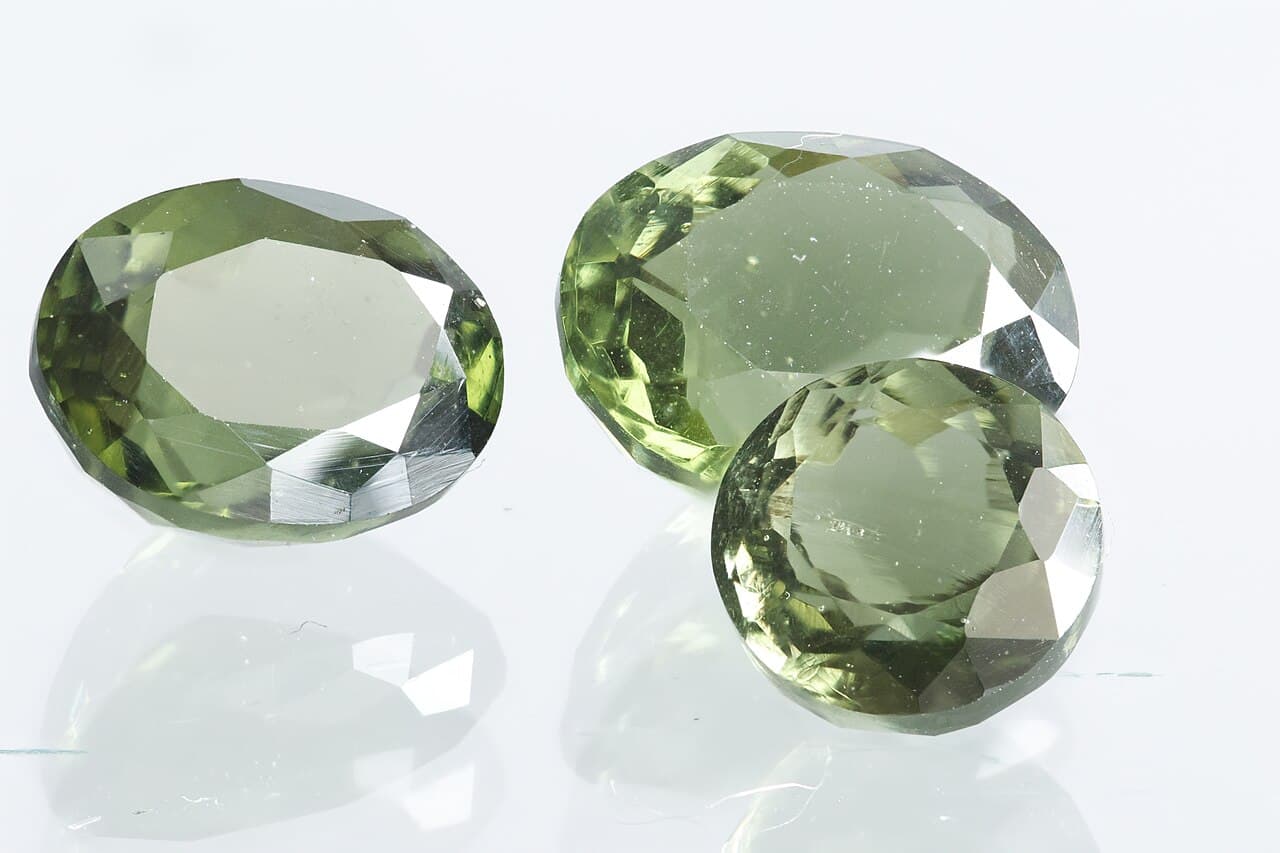
Moldavite is not a crystal at all but a tektite — a natural glass born from a meteorite impact. Roughly 15 million years ago an asteroid slammed into what is now southern Germany, blasting out the crater known today as the Nördlinger Ries. The heat of the strike melted surface rock and flung it skyward as a spray of molten droplets that cooled into glass during their flight and rained back down hundreds of kilometers away, mostly across the region drained by the Moldau (Vltava) River in the modern Czech Republic. That river gave the stone its name. Because it is glass, moldavite has no internal crystal structure — it is amorphous, like obsidian or a bottle, not ordered like quartz.
What people find so striking about moldavite is its color and texture. It ranges from a pale olive through bottle-green to a deep forest green, and good pieces are translucent, glowing when held to the light. Most natural specimens are small, irregular lumps with a wrinkled, etched, sculpted surface — pitted and matte, as if the glass had been gently eaten away over millions of years buried in soil, which is essentially what happened. That distinctive natural texture, together with the trapped round bubbles and swirling flow lines inside, is the heart of how a real piece is recognized — and, because moldavite is among the most heavily faked stones on the market, exactly what the imitations fail to reproduce.
Moldavite at a glance
- Classification
- Tektite — natural impact glass
- Composition
- Silica-rich natural glass (SiO₂-dominant; not a fixed mineral formula)
- Hardness
- ~5.5 (Mohs)
- Luster
- Vitreous (glassy)
- Colors
- Olive-green, bottle-green to deep forest-green
- Crystal system
- Amorphous (glass — no crystal structure)
- Transparency
- Transparent to translucent
How to identify moldavite
Begin with the look that no other green stone shares: an olive-to-forest-green glass with a deeply wrinkled, etched, almost sculpted surface. Genuine moldavite is matte and pitted rather than smooth, covered in fine grooves and irregular hollows produced by millions of years of slow corrosion in the ground. Hold a thin edge to a bright light and natural moldavite glows green and translucent; inside you will typically see round trapped gas bubbles and curving streaks called schlieren — flow lines frozen into the glass when it solidified in mid-air. These bubbles and swirls are a hallmark of genuine impact glass.
Then check the physical clues. Moldavite is glass, so it is amorphous: it has no crystal faces, no cleavage, and it breaks with a curved, shell-like conchoidal fracture. Its hardness is only about 5.5 on the Mohs scale, noticeably softer than quartz (7), so it will not scratch a quartz crystal and can itself be scratched by harder stones. A natural piece is also an irregular, organic lump — never a tidy geometric shape. The combination of green translucent glass, a naturally etched and pitted surface, internal bubbles and flow lines, and a modest hardness around 5.5 is what confirms moldavite.
Color and varieties
Moldavite's color sits in a fairly narrow band of greens, from a light, slightly brownish olive to a saturated bottle- or forest-green. The green is intrinsic to the glass rather than a surface coating, so it runs all the way through, though the depth of color often looks richer where the piece is thicker and paler at thin, translucent edges. Many specimens show subtle internal color variation along the schlieren — the frozen flow lines — where the molten glass swirled before it set.
Collectors often distinguish material by where it was found and by texture rather than by any formal variety system. Pieces from different parts of the strewn field can differ in their typical shade and in how heavily their surfaces are sculpted, and finely textured, strongly translucent specimens with vivid green color and crisp natural etching are the most sought after. There is no blue, red or purple moldavite: any stone offered in those colors is not natural moldavite.
Meaning and properties
Few stones have a metaphysical reputation as intense as moldavite's. Because of its dramatic origin — glass forged in a meteorite impact and fallen from the sky — it is often described in crystal traditions as a high-energy stone of rapid transformation and spiritual acceleration, sometimes nicknamed the "stone of change." Many enthusiasts report that it feels unusually "strong" to work with, and it is frequently paired in folklore with themes of awakening and the cosmos, reflecting its extraterrestrial-impact backstory.
These associations are spiritual and cultural, not medical. Moldavite is not a remedy for any physical or psychological condition, and the sensations people describe are matters of personal belief and experience rather than scientifically established effects. Enjoy moldavite for its remarkable natural history and its beauty, and never treat it as a substitute for professional medical or mental-health care.
Value: what moldavite is worth
Moldavite is genuinely scarce — it comes from a single impact event and a limited geographic strewn field, and good material has become harder to find over time — so authentic pieces command real prices and value tends to rise sharply with size, because large clean specimens are far rarer than small ones. Beyond size, value is driven by the quality of the natural texture, the depth and evenness of the green, and translucency: a vividly green, strongly translucent piece with crisp, undamaged sculpting is worth far more than a dull, cloudy or broken one.
There are no fixed prices, and because demand is high and supply is limited, the market is flooded with fakes — which makes authentication the single biggest factor in what a piece is actually worth. A verified natural specimen with documented origin is worth dramatically more than an unverified "bargain," which is very often molded glass. As a rule of thumb, when a green "moldavite" is being sold cheaply and in quantity, treat the low price itself as a warning sign rather than a deal.
Real vs. fake moldavite
Most cheap "moldavite" on the market is simply molded green glass, and the surface is the fastest tell. Manufactured glass is poured into molds, so it tends to be smooth, glossy and too perfect, sometimes with visible mold seams or rounded, blobby contours; real moldavite is matte, irregular and deeply etched with fine natural grooves and pits that molded glass cannot convincingly fake. Faked pieces are also often suspiciously uniform in shape and color and offered abundantly at low prices — the opposite of a scarce natural stone.
Look inside as well as outside. Genuine moldavite typically contains round gas bubbles and curving schlieren (flow lines); fake glass may be too clear and bubble-free, or instead show a few large, obviously blown bubbles rather than the natural pattern. Because moldavite is glass, simple hardness and fracture tests will not separate it from imitation glass — both are amorphous, break conchoidally, and sit around the same hardness — so identification leans on texture, internal features, color and, for valuable pieces, documented provenance. When in doubt, buy from a reputable source that guarantees authenticity rather than chasing the cheapest stone.
Care
Moldavite is relatively soft for a stone you might wear — about 5.5 on the Mohs scale — and, being glass, it is brittle and prone to chipping or fracturing if knocked or dropped. Treat it like fine glass: store it on its own so harder stones cannot scratch it, keep it away from hard impacts, and be especially careful with delicate, deeply sculpted pieces whose thin projections snap easily. Its natural etched texture is part of its value, so avoid anything abrasive that might polish it away.
For cleaning, warm water and a soft cloth or brush with a little mild soap are all that is needed; the fine grooves can trap dust, so a soft brush helps. Avoid harsh chemicals, ultrasonic cleaners and sudden temperature changes, which can stress the glass. Handled gently and stored apart from harder materials, moldavite will keep its color and sculpted surface intact indefinitely.
Moldavite look-alikes
Frequently asked questions
Is moldavite a crystal?
No. Moldavite is a tektite — a natural glass formed when a meteorite struck what is now southern Germany about 15 million years ago. Because it is glass, it is amorphous and has no crystal structure, unlike quartz or amethyst. It is usually grouped with crystals only because it is sold and collected alongside them.
Where does moldavite come from?
Moldavite is linked to the Nördlinger Ries impact in southern Germany. Molten rock thrown out by the strike cooled into glass and fell mainly across the region drained by the Moldau (Vltava) River in the modern Czech Republic, which is the stone's classic source and the origin of its name.
How can I tell if my moldavite is real or fake?
Check the surface and the inside. Real moldavite has a matte, irregular, deeply etched and pitted natural texture and usually contains round gas bubbles and curving flow lines (schlieren). Molded glass fakes are smooth, glossy, too uniform, sometimes show mold seams, and are sold cheaply in quantity. Because both are glass, hardness tests won't separate them — rely on texture, internal features and trustworthy provenance.
Why is moldavite so expensive?
It is genuinely rare: it comes from a single impact event and a limited area, and large clean pieces are scarce, so price rises steeply with size and quality. High demand plus limited supply also means the market is full of glass fakes, which makes verified authenticity a major part of a real piece's value.
Is yours moldavite? Find out from a photo
Photograph your crystal in good light and get an identification with an honest confidence level, the look-alikes to rule out and the at-home tests that confirm it.
Identify my crystal freeOn Android? Get the free rock identifier app
Related
More crystals in the field guide
Related reading
Keep exploring
More on crystals: the full list of crystal types, how to identify a crystal and crystals by color.
Last updated 2026-06-24. Identification guidance is educational — confirm important results with the diagnostic tests described or a qualified expert.