Prehnite
Also known as: Grape Jade, Cape Emerald
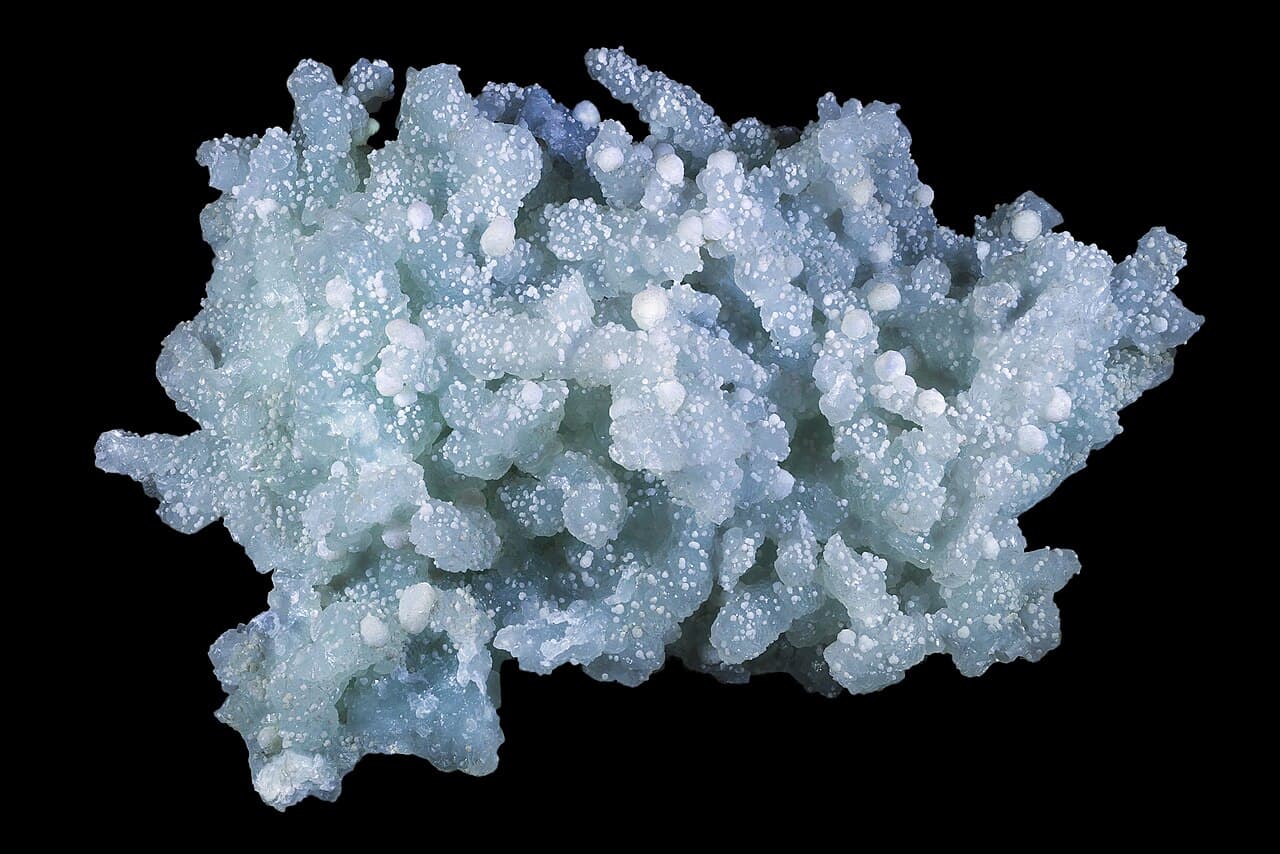
Prehnite is a calcium-aluminum phyllosilicate mineral, with the formula Ca₂Al₂Si₃O₁₀(OH)₂, prized for its soft, soothing color — usually a pale yellow-green that can deepen to a fresh apple or olive green, and occasionally drift toward gray, white, or a gentle blue-green. It rarely grows as neat single crystals. Instead it forms rounded, bubbly aggregates that pile up into botryoidal crusts and nodules, a grape-like, cauliflower texture that is one of the first things collectors notice. Translucent and faintly glowing from within, with a luster somewhere between waxy and glassy, a polished piece of prehnite can look almost like frosted sea glass or a cluster of green grapes, which is exactly how it earned its nickname "grape jade."
Prehnite is a mineral of volcanic rocks: it crystallizes in the gas cavities and cracks of basalt and other lavas, often alongside zeolites and quartz, as those rocks are altered by warm, mineral-rich water. One of its most recognizable signatures is the dark, hair-thin needles of epidote that frequently shoot through it, a combination sold and collected as "prehnite with epidote." At 6 to 6.5 on the Mohs scale it is reasonably hard, harder than glass, and that durability, together with the distinctive grape-like habit and the soft inner glow, makes prehnite far easier to recognize in the field than many of the green stones it is mistaken for.
Prehnite at a glance
- Classification
- Mineral — calcium-aluminum phyllosilicate (sheet silicate)
- Composition
- Ca₂Al₂Si₃O₁₀(OH)₂
- Hardness
- 6–6.5 (Mohs)
- Luster
- Waxy to vitreous (glassy)
- Streak
- White
- Colors
- Most often pale yellow-green to green; also gray, white, colorless and rarely blue-green
- Crystal system
- Orthorhombic
- Transparency
- Translucent, occasionally transparent
How to identify prehnite
Start with the surface and the shape. Prehnite very rarely forms sharp, freestanding crystals; instead it grows as rounded, knobby aggregates — botryoidal crusts that look like clustered grapes, a head of cauliflower, or a layer of green bubbles lining a cavity in dark volcanic rock. The color is the second clue: a characteristic soft, slightly cloudy yellow-green to apple-green, translucent enough to glow faintly when light passes through it, with a luster that sits between waxy and glassy. Where prehnite has filled a vug in basalt and is studded with the rounded bumps, the appearance is hard to confuse with anything else.
Two further checks tighten the identification. First, look for fine, dark green to black needles threaded through the stone — these are inclusions of epidote, and "prehnite with epidote" is so common and so distinctive that the needles alone strongly suggest prehnite. Second, test the hardness: prehnite is 6 to 6.5 on the Mohs scale, so it will scratch glass but is itself scratched by a steel file or quartz. That hardness, with a white streak, separates it from softer green look-alikes such as serpentine. The combination of grape-like habit, soft greenish glow, hardness near 6, and epidote needles is decisive.
Colors and varieties
Prehnite's signature color is a gentle yellow-green — think under-ripe grapes or the pale flesh of a green apple — and it can range from a barely-tinted, almost colorless stone through clear lemony greens to a richer, more saturated apple or olive green. The green is caused chiefly by traces of iron in the structure. The color is often slightly uneven and cloudy rather than glassy-clear, which is part of the stone's charm and gives the better translucent material its soft, glowing, jade-like look that underlies the "grape jade" and "Cape emerald" nicknames.
Beyond the familiar green, prehnite also occurs in gray, white, and fully colorless forms, and a desirable pale blue-green to blue material is found at a few localities. The most collected variety, however, is defined not by a single color but by what is inside it: "prehnite with epidote," in which dark green to black epidote needles radiate through the pale green host, producing a striking contrast. Whatever the shade, the identifying features stay constant — the botryoidal habit, the white streak, the waxy-to-glassy luster, and a hardness around 6 to 6.5.
Meaning and properties
In modern crystal-working traditions prehnite is often called a stone of calm, renewal, and "unconditional love," and its fresh green color leads many people to associate it with the heart chakra and with feelings of peace and emotional reset. It is sometimes nicknamed the "stone of prophecy" or a "dreaming stone," and is popularly used as a meditation aid meant to quiet a busy mind and encourage a sense of order. When paired with epidote, the combination is described in crystal lore as amplifying intentions, though that is a folk belief rather than a measurable property.
It is important to be clear that these are cultural and spiritual associations, not scientifically established medical effects. Prehnite is a lovely mineral to collect, study, and appreciate for its soft color and unusual grape-like form, but it is not a treatment for any physical or mental health condition and should never replace advice or care from a qualified professional.
What prehnite is worth
For mineral specimens, prehnite's value tends to follow the quality of the botryoidal form, the strength and evenness of the green, and the degree of translucency: clean, glowing, well-rounded "grape" clusters with good color sit at the top, especially when they line an attractive cavity in matrix. Specimens of "prehnite with epidote," in which sharp dark needles fan out through a translucent green host, are particularly sought after, and the more striking and well-defined the epidote display, the more desirable the piece.
Prehnite is also cut into cabochons and beads, and occasionally faceted when transparent enough, where its soft, slightly hazy green and gentle internal glow are valued. As with all gemstones, value depends on the interplay of color, clarity (translucency), cut, and size rather than any single figure, and condition matters: well-formed, undamaged clusters and clean, evenly colored cut stones command a clear premium over dull, fractured, or pale material.
Real vs. fake
Outright fakes of prehnite are uncommon, partly because it is not an expensive stone, but two things are worth watching for. The first is dyeing: pale or grayish prehnite is sometimes color-enhanced to deepen or brighten the green, so a suspiciously vivid, perfectly uniform color — especially with dye concentrated in cracks — is a warning sign. The second is glass and plastic imitations sold as inexpensive "crystals," which can mimic the green but usually lack prehnite's true botryoidal texture and faint inner cloudiness, often showing trapped bubbles or mold seams instead.
Simple checks help confirm the real thing. Genuine prehnite is hardness 6 to 6.5, so it will scratch glass; a piece that is easily marked by a steel point is more likely glass, plastic, or a softer green mineral. Real prehnite also tends to be cool to the touch and noticeably translucent with a soft, slightly waxy glow, and natural specimens often show the characteristic grape-like surface or genuine epidote needles, neither of which is easy to fake convincingly.
Care
Prehnite is reasonably durable at hardness 6 to 6.5, but it can be brittle and is sensitive to rough treatment, so it benefits from sensible care. Clean it gently with lukewarm water, a little mild soap, and a soft brush or cloth, then rinse and dry it. Avoid harsh chemicals and prolonged exposure to strong sunlight or heat, which over time can dull or fade the soft green color, and treat any dyed material as especially vulnerable to fading.
Skip ultrasonic and steam cleaners, since vibration and sudden heat can stress the stone and any internal fractures, and protect prehnite from hard knocks. In jewelry it is best suited to protected settings and lower-impact pieces such as pendants and earrings rather than rings that take daily wear. Store it separately, ideally wrapped in a soft cloth or in its own compartment, so harder gems do not scratch its surface.
Prehnite look-alikes
Frequently asked questions
Why is prehnite called "grape jade"?
Prehnite grows as rounded, bubbly aggregates that pile up into botryoidal clusters resembling a bunch of green grapes, and its soft, translucent yellow-green color and gentle inner glow recall jade. The combination of that grape-like form and jade-like appearance earned it the nickname "grape jade," though it is a separate mineral from true jade and is not as tough.
What are the dark needles inside prehnite?
Those fine dark green to black needles are inclusions of epidote, another mineral that often crystallizes alongside prehnite in volcanic cavities. Stones showing them are sold as "prehnite with epidote," and because the radiating needles are so distinctive and common, their presence is actually a useful clue that the green host is prehnite.
Is prehnite hard enough to wear as jewelry?
Prehnite is 6 to 6.5 on the Mohs scale, hard enough to scratch glass and durable enough for jewelry, but it can be brittle. It is best suited to protected, lower-impact pieces such as pendants and earrings rather than rings that take daily knocks, and it should be kept away from harder gems that could scratch it.
How can I tell real prehnite from glass or dyed stones?
Genuine prehnite is hardness 6 to 6.5, so it will scratch glass, feels cool to the touch, and is translucent with a soft, slightly waxy glow, often showing a grape-like surface or true epidote needles. Watch for suspiciously vivid, perfectly uniform color with dye pooled in cracks, or trapped bubbles and mold seams that point to glass or plastic imitations.
Is yours prehnite? Find out from a photo
Photograph your crystal in good light and get an identification with an honest confidence level, the look-alikes to rule out and the at-home tests that confirm it.
Identify my crystal freeOn Android? Get the free rock identifier app
Related
More crystals in the field guide
Keep exploring
More on crystals: the full list of crystal types, how to identify a crystal and crystals by color.
Last updated 2026-06-25. Identification guidance is educational — confirm important results with the diagnostic tests described or a qualified expert.