Ammolite
Also known as: Aapoak, Korite, Calcentine, Gem ammonite
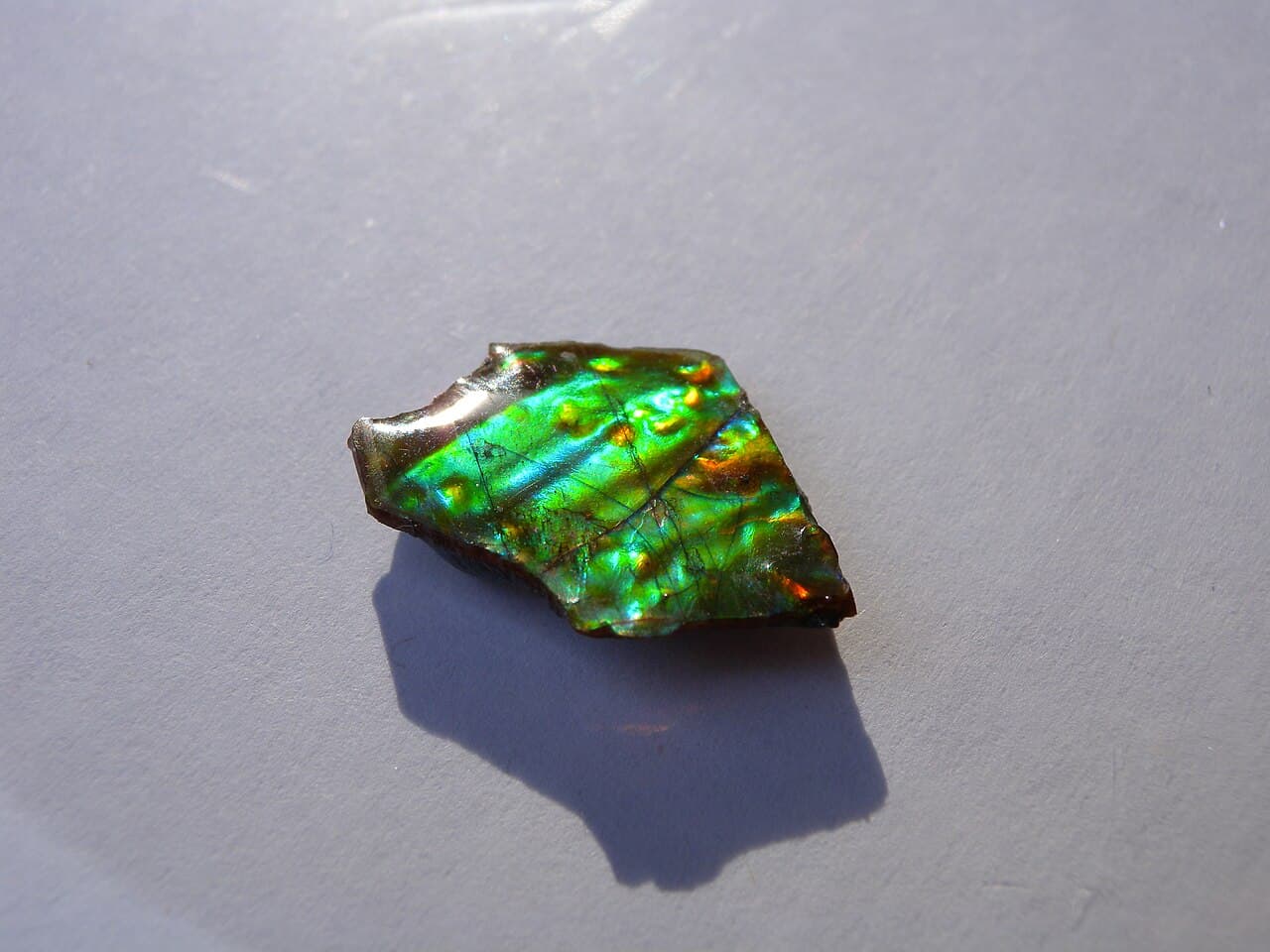
Ammolite is one of the rarest organic gemstones in the world, made from the fossilized, iridescent shell of ammonites, the spiral-shelled sea creatures that vanished alongside the dinosaurs. It is not a mineral that crystallized from the earth in the usual way, but the actual nacre, the mother-of-pearl lining, of an ancient shell that has been preserved and transformed over roughly seventy million years. Almost all gem-quality ammolite comes from a single place on the planet: the Bearpaw Formation along the eastern slopes of the Rocky Mountains in Alberta, Canada, where ammonite fossils buried in marine shale picked up the conditions needed to keep and intensify their color. Because of its narrow source and limited supply, it is recognized as one of only a handful of biogenic, or life-made, gemstones, sharing that distinction with pearl and amber.
What makes ammolite captivating is its play of color, a shifting, opal-like fire of reds, greens, golds, and the rarer blues and purples that flashes and changes as the stone is tilted under light. That iridescence comes from microscopic stacked layers of aragonite, the same carbonate material that builds a living shell, which bend and split light into spectral colors much as a soap bubble does. The trade-off for that beauty is fragility: the colorful nacre layer is paper-thin and soft, so ammolite is almost always cut and sold as a doublet or triplet, a thin slice of color backed for support and usually capped with a protective dome. Learning to recognize ammolite means learning to read both its fossil origin and the way it is typically assembled into jewelry.
Ammolite at a glance
- Classification
- Organic (biogenic) gemstone — fossilized ammonite nacre
- Composition
- Mainly aragonite, CaCO3 (with traces of other elements)
- Hardness
- 3.5 to 4.5 (Mohs)
- Luster
- Pearly to greasy; strong iridescent play of color
- Streak
- White
- Colors
- Iridescent red, orange, green, and gold most common; blue, purple, and full spectrum rarer
- Crystal system
- Orthorhombic (aragonite)
- Transparency
- Opaque
- Magnetic
- Not magnetic
How to identify it
The first and clearest clue is the play of color combined with the way the piece is built. Genuine ammolite shows a directional, shifting iridescence, sheets of red, green, and gold that move and change as you rotate the stone, often with a slightly mosaic or cracked texture where the nacre has fractured into small plates over millions of years. Look at the stone from the side or the back: most ammolite jewelry is a doublet or triplet, meaning you will see a thin bright color layer sitting on a dark backing of shale or synthetic material, frequently topped by a clear cap of quartz, glass, or spinel. That sandwich construction, a wafer-thin colorful film rather than color running all the way through, is highly characteristic and quite different from a solid gemstone.
Origin and physical properties seal the identification. Ammolite is soft, around Mohs 3.5 to 4.5, so it is easily scratched and is never as hard as quartz or feldspar look-alikes. Because it is essentially fossilized carbonate shell, it has a pearly to slightly greasy feel rather than the glassy sparkle of cut gems. Whole, uncut specimens often reveal their nature directly, showing the unmistakable coiled, ribbed spiral of an ammonite shell with the colorful nacre clinging to its surface. If you can see that spiral, or if a polished stone shows a thin iridescent layer on a dark base with the soft, slightly crazed look of ancient nacre, you are almost certainly looking at ammolite.
Colors and varieties
Ammolite is graded and prized largely by its color. Reds, oranges, and golds are the most commonly seen, while bright greens are also frequent; the blues, purples, and violets are considerably rarer and command more attention. The most valued stones are those that show several bright colors at once, sometimes called a full spectrum or rainbow ammolite, and that hold their brilliance across a wide range of viewing angles rather than going dark when tilted. Color is also described by how many directions it shines in: a stone that stays vivid as it is rotated through many positions is more desirable than one that only flashes from a single narrow angle.
Beyond color, varieties are defined mostly by how the material is cut and assembled. A solid or natural ammolite is a single piece of the fossil shell, uncommon because the nacre is so thin and brittle, and usually reserved for collector specimens or the thickest material. Far more common are doublets, a slice of ammolite bonded to a dark supporting backing, and triplets, which add a protective transparent cap of quartz, synthetic spinel, or glass over the top to shield the soft color layer and often to deepen its appearance. The cap can make colors look richer and the stone more durable, which is why most wearable ammolite jewelry uses the triplet form.
Meaning and properties
Ammolite carries a rich layer of cultural and metaphysical meaning. The Blackfoot peoples of the North American plains have long regarded the fossil shells, which they call iniskim or buffalo stones, as sacred objects connected to prosperity and the buffalo hunt, and that heritage gives the gem genuine cultural significance in its homeland. In modern crystal-healing and Feng Shui traditions, ammolite is often described as a stone of well-being, flow, and positive energy, with its seven shifting colors sometimes linked to different aspects of vitality. These associations come from spiritual belief and cultural tradition, not from scientific evidence, and ammolite should never be used to diagnose, treat, or cure any medical condition or relied upon in place of professional healthcare.
What is objectively remarkable about ammolite is its story rather than any claimed power: it is the literal remains of a creature that swam in a warm inland sea tens of millions of years ago, its shell turned to shimmering gem. Many people value it simply as a wearable piece of deep time and natural history. If you enjoy the symbolic side of gemstones, ammolite can be appreciated for that meaning and beauty while remembering that any sense of well-being it brings is personal and cultural, and that genuine health concerns belong with a qualified healthcare professional.
Value and what affects price
Ammolite's value is driven above all by color: the number of distinct colors present, their brightness, and how consistently they shine as the stone moves. Multi-colored, full-spectrum stones with strong, even iridescence sit at the top, while single-color pieces, or stones that go dark from most viewing angles, are more modest. Bright, evenly distributed reds and greens are common in better material, and the harder-to-find blues and purples add a premium. The chromatic shift, how the color stays alive as the stone rotates, matters as much as the hues themselves, so a brilliant stone that flashes from many directions outranks a duller one with the same palette.
Other factors include the size and shape of the usable color sheet, the quality and cleanliness of the cut, and how the piece is assembled. Solid natural ammolite is rarer than doublets and triplets and is valued accordingly among collectors, while the construction, backing, and protective cap of assembled stones affect both durability and appearance. The cracked, mosaic texture natural to ammolite is expected and is not a flaw, but excessive dullness, patchy color, or a thin and fragile color layer lower desirability. Because supply comes from a single small region and the colorful nacre is scarce, fine ammolite is genuinely uncommon. As always, judge any stone on its actual color, brilliance, and craftsmanship rather than on marketing labels.
Real vs. fake: avoiding misidentification
The most important thing to understand is that an assembled ammolite is not a fake. Doublets and triplets are the standard, legitimate way this fragile gem is made wearable, and a reputable seller will disclose the construction. Genuine concerns are imitations, stones sold as ammolite that are actually dyed shell, foil-backed glass, lab-made iridescent material, or unrelated assembled stones, and undisclosed treatments. Real ammolite shows a directional, slightly uneven play of color over a faintly cracked nacre texture, and uncut specimens reveal the ammonite spiral itself. Imitations often look too uniform, too glittery, or show a rainbow that does not shift naturally as the stone is tilted.
Use the gem's softness and structure as checks. Ammolite is soft and easily scratched, so material that resists a knife or feels glass-hard underneath the cap deserves suspicion, though you should never scratch-test a finished triplet through its protective layer. Examine the edges and back under good light: genuine assembled ammolite reveals a thin natural color layer bonded to a dark backing, whereas a foil or painted imitation may show flat, even color or a metallic shimmer with no fossil layer at all. Because the gem comes almost entirely from one region, certificates of origin and clear disclosure of doublet or triplet construction from a trustworthy dealer are your best protection.
Care and cleaning
Ammolite needs gentle, protective care because it is soft, thin, and often glued together. At Mohs 3.5 to 4.5 it scratches and chips easily, so store it apart from harder jewelry, ideally in a soft pouch or lined box, and put it on after applying perfume, lotion, hairspray, and makeup, since chemicals can dull the surface or attack the bonding in a doublet or triplet. Treat it as a special-occasion stone rather than something to wear during sports, gardening, or rough work, and protective settings such as bezels help shield the vulnerable edges.
Clean ammolite only with a soft, damp cloth and mild soap if needed, then dry it promptly. Never use ultrasonic or steam cleaners, harsh chemicals, or acids: vibration and heat can split the layers of an assembled stone, and acids attack the carbonate nacre. Avoid prolonged soaking in water and keep the gem away from extended direct sunlight and high heat, which can fade colors and weaken adhesives over time. With careful handling, dry storage, and gentle cleaning, ammolite keeps its extraordinary fire and remains a wearable piece of ancient sea life for a lifetime.
Ammolite look-alikes
Frequently asked questions
Is ammolite the same thing as an ammonite?
They are directly related but not identical. An ammonite is the whole fossilized shell of an extinct sea creature, while ammolite is specifically the rare, iridescent gem-quality nacre, the colorful mother-of-pearl layer, found on certain ammonite shells. In other words, ammolite is the gem made from an ammonite. Most gem ammolite comes from ammonites in the Bearpaw Formation of Alberta, Canada.
Why is ammolite usually sold as a doublet or triplet?
The colorful nacre layer of ammolite is extremely thin, soft, and brittle, so a solid piece would crack and wear out quickly. To make it durable enough for jewelry, a thin slice of color is bonded to a dark supporting backing (a doublet) and often capped with a clear protective layer of quartz, synthetic spinel, or glass (a triplet). This is the normal, accepted way the gem is made and is not a sign of a fake, as long as the seller discloses it.
How can I tell if ammolite is real?
Look for a directional, multi-colored play of color, reds, greens, and golds that shift as you tilt the stone, sitting on a faintly cracked, mosaic nacre texture. Genuine assembled ammolite shows a thin bright color layer on a dark backing when viewed from the side, and raw specimens reveal the coiled ammonite spiral. It is soft and pearly rather than glass-hard, and it lacks the flat, foil-like shimmer of glass imitations. A certificate of origin and clear disclosure of doublet or triplet construction help confirm authenticity.
Can I wear ammolite every day?
It is better treated as a special-occasion gem. At Mohs 3.5 to 4.5 ammolite is soft and easily scratched, and assembled doublets and triplets can be damaged by impact, chemicals, and heat. Protective settings such as bezels help, but it is not ideal for rings or pieces exposed to rough use. Put it on after cosmetics and perfume, store it separately, clean it only with a soft damp cloth, and avoid ultrasonic cleaners to keep it looking its best.
Is yours ammolite? Find out from a photo
Photograph your gemstone in good light and get an identification with an honest confidence level, the look-alikes to rule out and the at-home tests that confirm it.
Identify my gemstone freeOn Android? Get the free rock identifier app
Related
More gemstones in the field guide
Keep exploring
More on gemstones: the full list of crystal and gem types, how to identify gemstones and the polished-stone identifier.
Last updated 2026-06-25. Identification guidance is educational — confirm important results with the diagnostic tests described or a qualified expert.