Andalusite
Also known as: Chiastolite, Cross stone, Poor man's alexandrite
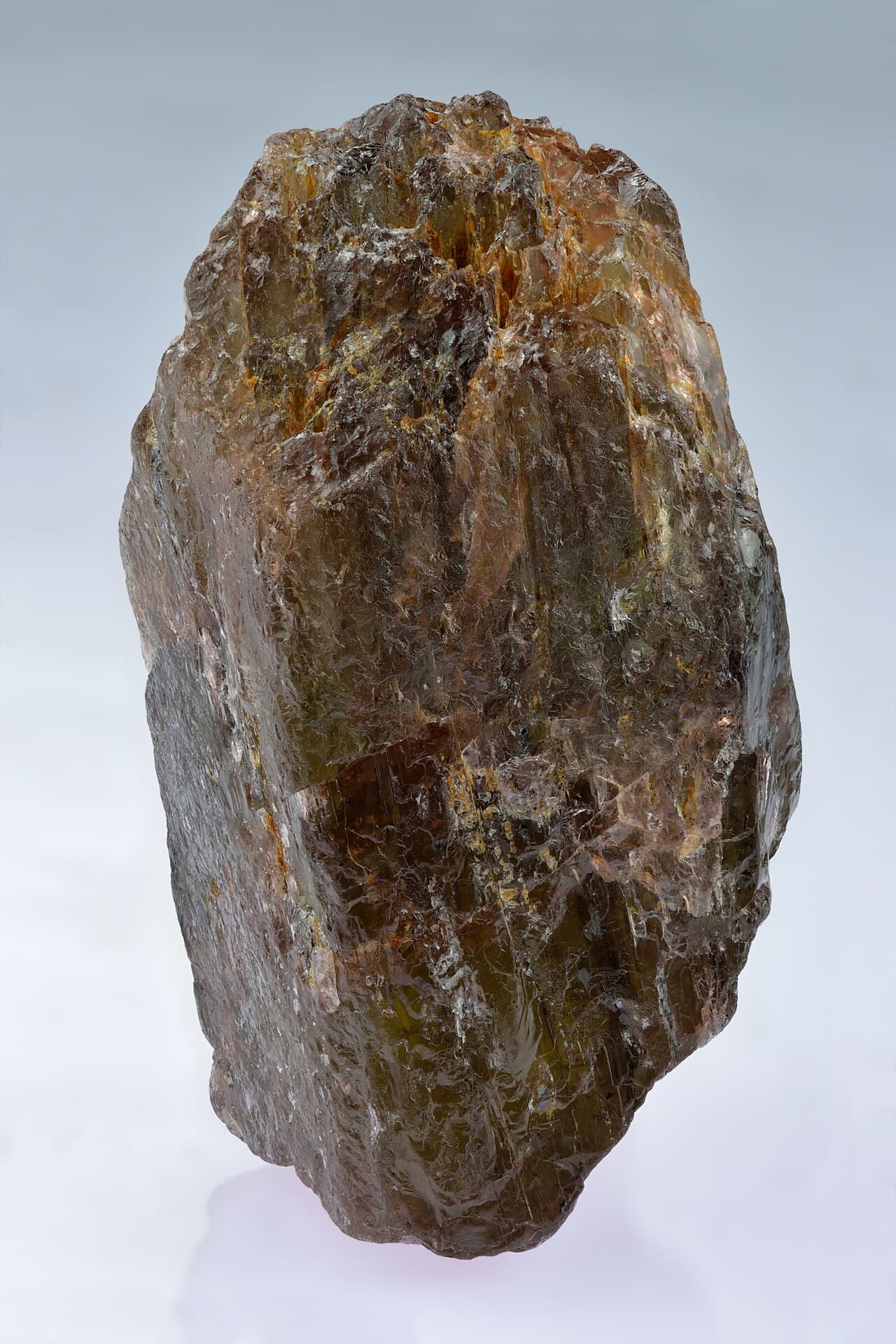
Andalusite is an aluminosilicate gemstone with the formula Al₂SiO₅, and it carries a small piece of geological trivia inside every faceted stone: it is a polymorph of kyanite and sillimanite, meaning all three share exactly the same chemistry but crystallized under different conditions of temperature and pressure. That shared recipe with wildly different results is part of what makes andalusite a teaching favorite among mineralogists and a quiet sleeper among gem collectors. Most people have never heard of it, yet it produces durable, brilliant stones in earthy greens, golds, and reddish browns that look like nothing else in the case.
What truly sets gem andalusite apart is its dramatic pleochroism—the way a single crystal flashes different colors depending on the angle you view it from. Tilt a good stone and you can catch green, brownish red, and golden-brown all dancing within the same gem, an effect cutters deliberately blend rather than isolate. A separate and very different variety, chiastolite, traps dark carbon-rich inclusions that arrange themselves into a natural cross or checkerboard pattern across the crystal's cross-section, giving rise to its old nickname "cross stone." Between the color-shifting facet-grade material and the cross-bearing opaque variety, andalusite is really two collectibles wearing one name.
Andalusite at a glance
- Classification
- Nesosilicate (aluminosilicate mineral); Al₂SiO₅ polymorph
- Composition
- Al₂SiO₅
- Hardness
- 7–7.5
- Luster
- Vitreous (glassy); dull to greasy in chiastolite
- Streak
- White
- Colors
- Brownish green, yellowish green, reddish brown, pink, gray, olive; chiastolite is gray to brown with dark cross
- Crystal system
- Orthorhombic
- Transparency
- Transparent to translucent (gem grade); opaque (chiastolite)
How to identify it
The single most telling feature of gem andalusite is its strong pleochroism. Hold a transparent stone up to good light and rotate it slowly: you should see distinct shifts among green, brownish red, and golden or honey brown. Unlike alexandrite—which changes color when you swap daylight for incandescent light—andalusite shows its different colors simultaneously from different viewing angles, so the "flash" appears as you tilt the stone rather than as you change the light source. This is why andalusite earned the nickname "poor man's alexandrite," though the mechanism is entirely different. A hardness of 7 to 7.5 (it will scratch glass easily and resist a steel knife) plus a vitreous luster and a white streak rounds out the basic identification.
For the opaque variety, chiastolite, identification is almost playful: cut or polish the crystal across its length and you reveal a dark cross or X-shaped figure formed by carbonaceous inclusions concentrated along the crystal's edges and corners as it grew. The body is usually grayish to brownish and the cross is graphite-dark. If you have a rough crystal, andalusite tends to form stubby, nearly square prisms (orthorhombic, with a nearly 90-degree cross-section), often embedded in schist. Gem andalusite is most often confused with smoky quartz, tourmaline, and sphene—see the look-alikes section for how to separate them.
Colors and varieties
Faceted andalusite is best known for warm, autumnal mixtures: brownish green, yellowish green, olive, honey gold, and reddish to pinkish brown, frequently appearing as a blend within a single stone because of the pleochroism. The most prized gem material reads as a rich green with flashes of red, a combination cutters work hard to balance by orienting the table of the stone to capture two or three pleochroic colors at once. Pure green or pure red stones are far less common than the mixed, shifting tones that give the gem its character.
The two named varieties are gem (or "common gem") andalusite and chiastolite. Chiastolite—the "cross stone"—is the opaque, inclusion-rich form valued not for transparency or fire but for the striking dark cross revealed in cross-section; it has a long history as a protective amulet and devotional object. There is also a rarer manganese-bearing relative historically called viridine, which leans distinctly green. Andalusite was first described from Andalusia in Spain, which is where the species takes its name, though Brazil, Sri Lanka, and parts of the United States supply much of today's gem and chiastolite material.
Meaning and properties
In the metaphysical and crystal-healing tradition, andalusite is often described as a "seeing stone" associated with grounding, level-headed self-examination, and looking at problems from multiple perspectives—a meaning crystal sellers tie poetically to the gem's many-angled pleochroic colors. Chiastolite, with its built-in cross, has an especially deep folk history: it was carried as a talisman of protection and spiritual balance, and the cross figure has long been read as a symbol of harmony between opposing forces. These associations are matters of belief and cultural tradition, not scientific fact.
It is worth being clear that these properties are spiritual and informational in nature. Andalusite and chiastolite have no proven medical or therapeutic effect, and crystal lore should never be used as a substitute for professional medical, psychological, or financial advice. If you enjoy the stone for its symbolism, that is a valid reason to own it—just keep the meaning in the realm of belief rather than medicine.
Value and price
Andalusite remains a collector's and connoisseur's gem rather than a mainstream jewelry stone, which keeps it relatively affordable compared with better-known gems of similar beauty and hardness. Value is driven primarily by the strength and attractiveness of the pleochroic play of color: stones that show a lively green-and-red mix command more than muted single-tone material. Clarity, cut quality (orientation matters enormously here, because the cutter must decide which pleochroic colors to feature), and size all factor in, with clean stones above a few carats being notably scarcer.
Chiastolite is valued on entirely different grounds—the clarity, symmetry, and contrast of the cross figure, plus the polish and shape of the finished piece. A crisp, well-centered cross in a cleanly polished cabochon or slice is the goal. Because prices for both varieties shift with market conditions, origin, and quality, buy from a seller who will state the variety and any treatments, and judge each stone on its own merits rather than on a fixed price expectation.
Real vs. fake
Genuine andalusite is rarely outright counterfeited, but it is often misidentified or mislabeled, sometimes innocently and sometimes to ride on the fame of alexandrite. The strongest authenticity check is the pleochroism: real andalusite shows two or three colors that shift as you tilt the stone in steady light, an effect that glass imitations and most simulants cannot reproduce. Glass "stones" will also typically show gas bubbles, rounded facet edges from molding, and a warmth to the touch that crystalline andalusite lacks. A hardness near 7.5 helps too—soft imitations scratch where real andalusite will not.
Be especially wary of any stone sold as a cheap "color-change" gem implying it behaves like alexandrite; true andalusite does not change color with the light source, it shows different colors by angle, so a dramatic daylight-to-lamp color swap suggests a different stone or a synthetic alexandrite simulant. For chiastolite, the cross should be an integral part of the stone's internal structure visible through the body, not a pattern painted, etched, or inlaid onto a flat surface. When value is significant, a report from an independent gemological laboratory removes all doubt.
Care and cleaning
Andalusite is a tough, well-behaved gem for daily wear thanks to its 7 to 7.5 hardness and absence of strong cleavage, but it still benefits from common-sense care. Clean it with warm water, mild soap, and a soft brush, then rinse and dry with a soft cloth. This gentle method is the safest choice for routine cleaning and works well for both faceted stones and chiastolite cabochons.
Avoid prolonged exposure to harsh chemicals and sudden, extreme temperature changes, which can be hard on any gemstone. Chiastolite in particular is more porous and inclusion-laden than gem andalusite, so skip ultrasonic and steam cleaners for it and stick to the soap-and-water method. Store andalusite separately from harder stones such as sapphire, topaz, and diamond so it does not get scratched, and keep it away from softer stones it could scratch in turn.
Andalusite look-alikes
Frequently asked questions
What is the difference between andalusite, kyanite, and sillimanite?
All three are polymorphs of aluminum silicate, Al₂SiO₅—they have identical chemistry but different crystal structures because each formed under different temperature and pressure conditions. Andalusite forms at lower pressures, kyanite at high pressures, and sillimanite at high temperatures. In practice you tell them apart by physical traits: andalusite is a uniform hardness of 7 to 7.5 with strong green-red pleochroism, kyanite has dramatically different hardness in different directions and is often blue and bladed, and sillimanite typically appears as fibrous or needle-like masses.
Why does andalusite show different colors when I turn it?
That effect is called pleochroism, and andalusite is famous for it. The crystal absorbs light differently along its different internal axes, so green, brownish red, and golden brown each become visible depending on the angle you view the stone from. This is different from alexandrite, which changes color based on the type of light shining on it rather than the viewing angle.
What is chiastolite and how is it related to andalusite?
Chiastolite is a variety of andalusite that contains dark, carbon-rich inclusions arranged in a natural cross or X-shaped pattern, visible when the crystal is cut across its length. It is the same mineral chemically, just grown in conditions that concentrated graphite-like material along the crystal's edges. Because of the cross figure it has long been called the "cross stone" and used as a protective amulet.
Is andalusite a good gemstone for everyday jewelry?
Yes, gem-quality andalusite is well suited to everyday wear. With a hardness of 7 to 7.5 and no strong cleavage, it resists scratching and chipping better than many softer gems. Clean it with mild soap and warm water, avoid harsh chemicals and hard knocks, and store it apart from harder stones. The more included chiastolite variety is a bit more delicate and is best treated gently.
Is yours andalusite? Find out from a photo
Photograph your gemstone in good light and get an identification with an honest confidence level, the look-alikes to rule out and the at-home tests that confirm it.
Identify my gemstone freeOn Android? Get the free rock identifier app
Related
More gemstones in the field guide
Keep exploring
More on gemstones: the full list of crystal and gem types, how to identify gemstones and the polished-stone identifier.
Last updated 2026-06-25. Identification guidance is educational — confirm important results with the diagnostic tests described or a qualified expert.