Apatite
Also known as: Asparagus stone, Blue apatite, Moroccan blue apatite
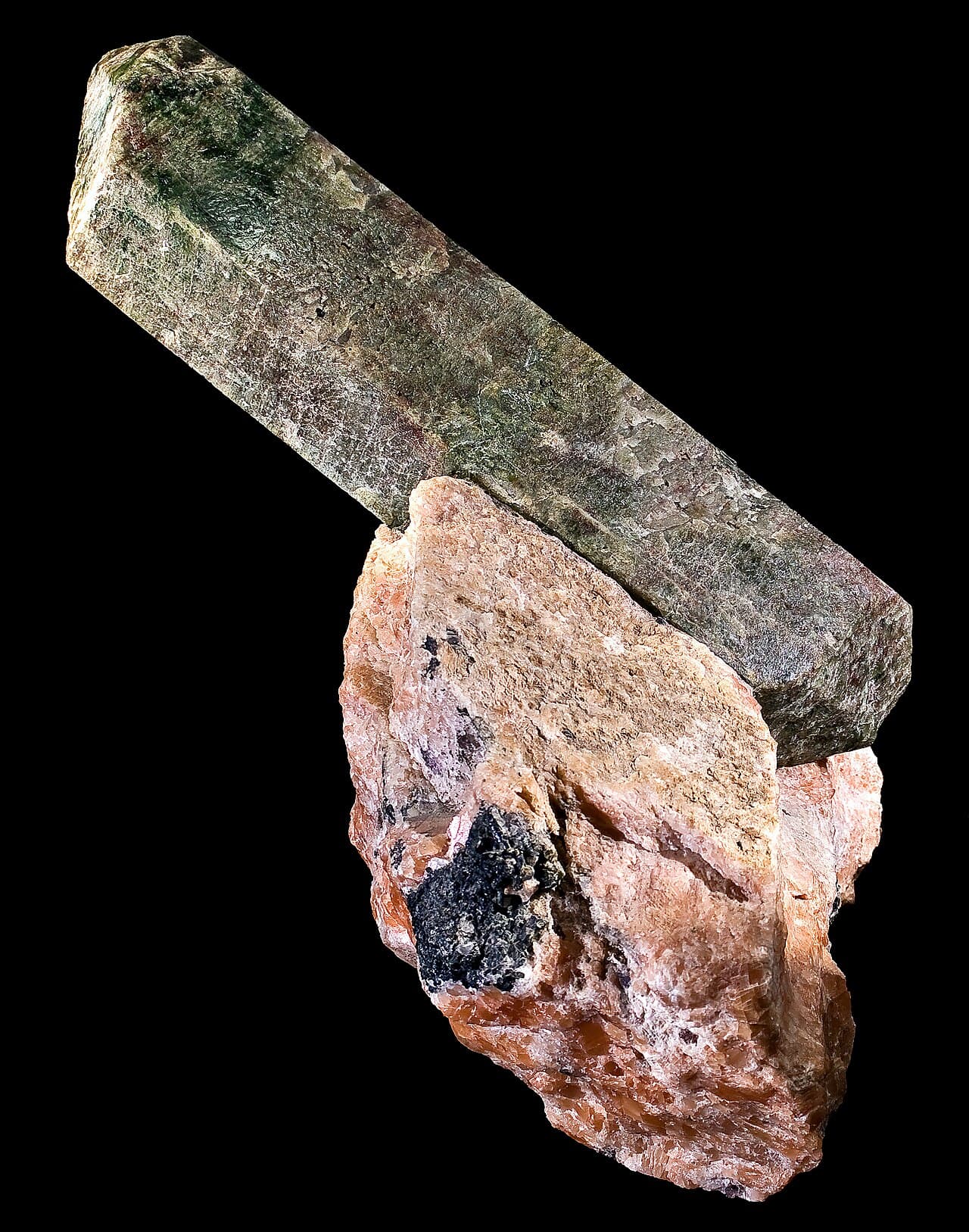
Apatite is a calcium phosphate mineral that quietly underpins much of the natural world: it is the main mineral in your own teeth and bones, the source rock for most agricultural phosphate fertilizer, and a colorful collector's stone in its own right. As a specimen and gemstone it is most loved as "blue apatite," an electric teal-to-blue crystal, but it also appears in green, yellow, violet and colorless forms. It is a glassy, vitreous mineral that grows in clean six-sided (hexagonal) prisms when crystals form well, and it is found worldwide in igneous, metamorphic and sedimentary settings.
The name comes from the Greek word meaning "to deceive," and it is well earned: apatite is so easily mistaken for other gems that early mineralogists kept misidentifying it as aquamarine, tourmaline, peridot and more. The key to seeing past the deception is hardness. Apatite is the official reference mineral for 5 on the Mohs hardness scale, sitting squarely in the middle of the scale that runs from talc at 1 to diamond at 10. That fixed, middle-of-the-road hardness is both its best identification clue and the reason it is treated as a relatively delicate stone.
Apatite at a glance
- Classification
- Mineral — calcium phosphate (phosphate group)
- Composition
- Ca₅(PO₄)₃(F,Cl,OH)
- Hardness
- 5 (Mohs) — the reference mineral for 5
- Luster
- Vitreous (glassy), sometimes greasy
- Streak
- White
- Colors
- Blue, blue-green, green, yellow; also violet, pink, colorless
- Crystal system
- Hexagonal
- Transparency
- Transparent to translucent
How to identify apatite
The single most useful test for apatite is its hardness, because apatite is the defining mineral for 5 on the Mohs scale. A piece of apatite will scratch a copper coin and is itself scratched by a steel knife blade or a piece of window glass, which both sit at roughly 5.5. This is genuinely diagnostic: the most common look-alikes — aquamarine, tourmaline and blue topaz — are all distinctly harder (around 7 to 8) and will not be scratched by a steel blade, while softer blue stones like fluorite (hardness 4) are scratched by a coin. If a teal or blue crystal scratches with steel but resists a copper coin, hardness 5 puts you very close to apatite.
Back up the hardness test with appearance. Well-formed apatite grows as glassy, six-sided prisms with a bright vitreous luster, and the gem material is often a vivid, almost neon blue-green that few other natural stones match. It has a white streak, a moderate heft, and frequently shows visible internal flaws or a slightly hazy interior, since clean apatite is uncommon. Many specimens are also strongly pleochroic, shifting between blue and yellow or near-colorless as you rotate the crystal and view it from different directions — a helpful pointer toward apatite and away from glass.
Colors and varieties
Apatite covers a wide color range, and the trade names usually follow the color. By far the most popular is "blue apatite," a saturated teal-to-blue stone owed largely to trace elements within the structure, with the brightest, electric blue-green Caribbean-like material being the most sought after. Green apatite is common too, and the soft yellow-green to brownish-green crystals carry the old nickname "asparagus stone" for their vegetable color. Violet, pink and colorless apatites also occur but are scarcer.
A few varieties stand out for the collector. Some apatite displays a cat's-eye effect (chatoyancy) when cut as a cabochon, caused by fine parallel inclusions that reflect a band of light across the dome. Color enhancement is worth knowing about: much vivid blue apatite is natural, but some material is heat-treated to deepen or shift its color, and saturated stones should be regarded as possibly treated unless a seller states otherwise. Because the color is what most buyers are paying for, the variety name and any treatment matter more here than for many other minerals.
Meaning and properties
In modern crystal-working traditions, apatite — especially blue apatite — is regarded as a stone of clarity, motivation and self-expression. It is popularly associated with the throat, with honest communication, and with focus and goal-setting, and some practitioners reach for it when they want to feel organized, inspired or freshly motivated. Its bright, watery blue lends it a calming, clearing reputation, and it is a common choice for meditation aimed at clearing mental clutter.
These associations are cultural and spiritual rather than scientifically established medical effects. Apatite is a meaningful and beautiful stone to keep and wear, but it does not cure, treat or prevent any physical or mental health condition and is not a substitute for professional medical or psychological care. It is also worth a practical note that mineral apatite is not something to grind or ingest; its place is as a specimen and ornament, not a remedy.
Value: what apatite is worth
Apatite's value is driven first by color, then by clarity, size and cut. The most prized material is the intense, electric neon blue-to-teal, with clean green and rich yellow stones following behind and pale or grayish colors at the bottom of the range. Because gem-clean apatite rough is uncommon and the crystals are often included or hazy, eye-clean faceted stones command a premium over the more typical included material, and cat's-eye cabochons with a sharp, centered eye are valued for the strength and straightness of that line.
Two facts keep apatite affordable relative to the harder gems it imitates. First, it is fragile: a hardness of only 5 and easy cleavage limit its use in everyday rings, which caps demand from the jewelry trade. Second, large clean stones tend to look paler, so size and top color rarely combine. As always, no specific localities or price figures are quoted here — for any given stone, judge it on the saturation and evenness of its color, its clarity, and the quality of the cut, and ask whether the color has been enhanced.
Real vs. fake apatite
Outright fakes of apatite are uncommon because the stone is inexpensive, but blue glass and other colored gems are sometimes sold under the apatite name, and the more frequent problem is honest misidentification — fitting for a mineral whose name means "to deceive." Hardness settles most cases at once. Apatite is the reference mineral for Mohs 5, so it is scratched by a steel blade or by glass, whereas the look-alikes it is most often confused with — aquamarine, tourmaline and blue topaz — are far harder (7 to 8) and shrug off steel entirely. A vivid "apatite" that refuses to scratch with a knife is almost certainly one of those tougher stones instead.
Glass imitations are given away the same way they are for any gem: under magnification they often show tiny round gas bubbles and swirl lines, they feel warmer to the touch than a true mineral, and they show no pleochroism, while genuine apatite is frequently strongly pleochroic and feels cool. Be alert, too, to color enhancement: some blue apatite is heated to brighten it, which is not a fake but should be disclosed. For a stone that scratches at hardness 5, shows a white streak, and shifts color as you turn it, apatite is the natural conclusion; a quick gemological check can confirm both the species and any treatment if it matters.
Care
Apatite is one of the more delicate display and jewelry stones, so handle it gently. At a hardness of only 5 it is soft enough to be scratched by ordinary household dust (which contains quartz at hardness 7), by harder gemstones, and by everyday wear, and it also has cleavage that makes a sharp knock liable to chip or split the stone. Reserve apatite jewelry for earrings, pendants and brooches rather than rings or bracelets that take regular impact, and store each piece separately, wrapped in soft cloth, so harder stones cannot scratch it.
Clean apatite the gentle way: warm water, a drop of mild dish soap and a soft brush, then rinse and pat dry. Skip the ultrasonic and steam cleaners entirely, since the vibration of an ultrasonic bath can worsen the stone's internal flaws and cleavage, and strong heat may alter the color of treated material. Keep apatite away from harsh household chemicals and from prolonged, intense sunlight as a precaution against fading, and it will keep its glassy luster and vivid color for the long term.
Apatite look-alikes
Frequently asked questions
How hard is apatite on the Mohs scale?
Apatite is the reference mineral for 5 on the Mohs hardness scale, so it sits right in the middle, between fluorite at 4 and orthoclase feldspar at 6. In practical terms it is scratched by a steel knife blade and by glass but will itself scratch a copper coin — a hardness that doubles as one of the best ways to identify it.
Why is apatite called the "stone that deceives"?
Its name comes from the Greek word for "to deceive," because apatite is so easily mistaken for other gems. Early mineralogists repeatedly confused it with aquamarine, tourmaline, peridot and other stones, since apatite occurs in so many of the same colors. The reliable tell is hardness: at Mohs 5 it is softer than nearly all of the gems it imitates.
How can I tell apatite from aquamarine?
Use a hardness test. Apatite (hardness 5) is scratched by a steel knife, while aquamarine (hardness 7.5–8) is not. Color helps too: top blue apatite is usually a more intense, neon teal, whereas aquamarine tends toward a cooler, paler sky-blue. If a blue crystal resists a steel blade, it is far more likely aquamarine than apatite.
Is apatite safe to wear in a ring?
It is best avoided in rings and bracelets. At a hardness of only 5, with cleavage that makes it prone to chipping, apatite scratches and breaks far more easily than tougher stones like quartz or sapphire. It is much better suited to earrings, pendants and brooches, where it is protected from the knocks and abrasion that everyday rings receive.
Is yours apatite? Find out from a photo
Photograph your crystal in good light and get an identification with an honest confidence level, the look-alikes to rule out and the at-home tests that confirm it.
Identify my crystal freeOn Android? Get the free rock identifier app
Related
More crystals in the field guide
Keep exploring
More on crystals: the full list of crystal types, how to identify a crystal and crystals by color.
Last updated 2026-06-25. Identification guidance is educational — confirm important results with the diagnostic tests described or a qualified expert.