Topaz
Also known as: Imperial topaz (orange-pink variety), Blue topaz (usually treated)
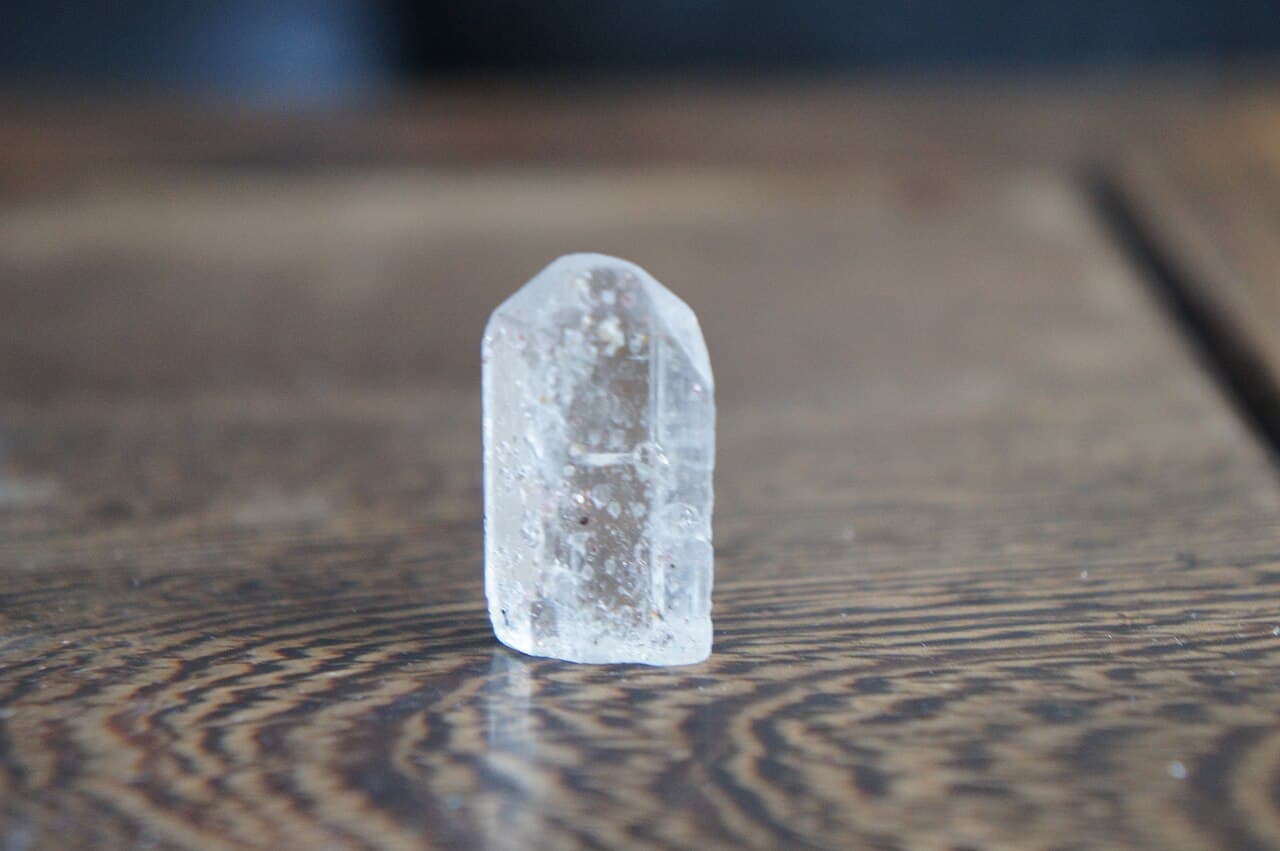
Topaz is an aluminum silicate mineral that also contains fluorine and hydroxyl, giving it the formula Al₂SiO₄(F,OH)₂. It is one of the harder gemstones, sitting at a full 8 on the Mohs scale, and it crystallizes in the orthorhombic system, frequently forming handsome elongated prismatic crystals with lengthwise striations and a wedge-like or domed termination. Pure topaz is colorless, but trace impurities and natural radiation produce a range of colors from pale blue and sherry-brown to yellow, pink and the prized warm orange-pink known as imperial topaz. As the birthstone for November, it is one of the most widely worn yellow-to-blue gems.
The single most important physical feature to understand about topaz is its perfect basal cleavage — a clean, easy splitting plane that runs across the crystal at right angles to its long axis. This one property shapes how topaz is cut, how it must be worn and stored, and how a gemologist tells it from look-alikes. It also explains why faceted topaz, despite being very hard, can chip or split from a sharp knock in a way that a cleavage-free stone of the same hardness would not. Knowing about that cleavage is genuinely useful both for identification and for caring for the stone.
Topaz at a glance
- Classification
- Mineral — silicate (nesosilicate), aluminum silicate fluoride-hydroxide
- Composition
- Al₂SiO₄(F,OH)₂
- Hardness
- 8 (Mohs)
- Luster
- Vitreous (glassy)
- Streak
- White
- Colors
- Colorless, blue (usually treated), yellow, sherry-brown, pink, and orange-pink imperial topaz
- Crystal system
- Orthorhombic — prismatic crystals with perfect basal cleavage
- Transparency
- Transparent to translucent
How to identify topaz
Topaz combines high hardness with a distinctive crystal habit, and the two together are a strong start. With a hardness of 8 it scratches quartz and glass easily and resists scratching by all but the hardest gems, so a stone that quartz cannot mark but that itself scratches quartz is already pointing toward topaz. In rough form, look for elongated prismatic crystals with vertical striations running along the length and often a slanted or domed termination at the end — a habit typical of the orthorhombic system.
The decisive diagnostic is the perfect basal cleavage. Topaz splits cleanly across the crystal perpendicular to its long axis, sometimes visible as a flat reflective plane or a partial crack inside a stone, and this clean single direction of easy splitting is something quartz and most quartz-family look-alikes simply do not have. Topaz also tends to feel cool and slightly heavy for its size, has a bright vitreous luster and a white streak. Taken together — hardness 8, prismatic striated crystals, and that one perfect basal cleavage — these traits separate topaz from the softer, cleavage-free stones it is often confused with.
Colors and varieties
Naturally, topaz is most often colorless or a pale sherry-yellow to brown, with natural blue and pink material being far scarcer. The yellow-to-brown and orange-pink stones are the historically prized colors: imperial topaz, with its warm reddish-orange to pink hue, is the most coveted variety and the benchmark by which fine topaz is judged. Pink topaz, whether natural or carefully heat-treated from suitable brown material, is also highly valued.
It is important to understand that the vivid blue topaz so common and inexpensive in jewelry today is almost always colorless topaz that has been irradiated and then heated to produce shades marketed as sky blue, Swiss blue and London blue. This treatment is permanent and accepted in the trade, but it means a bright blue topaz is essentially a color-enhanced colorless stone rather than a naturally blue gem. A mystic or rainbow topaz showing an iridescent metallic sheen is colorless topaz with a thin artificial coating. Naturally occurring saturated blue is rare, so blue color by itself tells you little about origin without disclosure or testing.
Meaning and properties
Topaz has long been linked in folklore to confidence, clarity of intention and abundance. Golden and imperial topaz in particular were historically associated with the sun, warmth and prosperity, and the stone was carried as a symbol of strength, good fortune and clear communication. As the November birthstone it is often given as a token of loyalty and steadfast affection, and crystal traditions connect it to motivation, optimism and the setting of goals.
As with all gemstone lore, these associations are cultural and spiritual rather than scientifically demonstrated. Topaz is a beautiful and meaningful stone to wear or gift, but it has no proven physical or medical effect and should never be used in place of guidance or treatment from a qualified professional.
Value: what topaz is worth
Topaz value is strongly tied to color and to whether that color is natural. Treated blue topaz is one of the most affordable transparent gems available in large clean sizes, precisely because the irradiation-and-heat process is inexpensive and reliable, so even sizable blue stones are modestly priced. Colorless and pale brown topaz are also inexpensive. This makes everyday blue topaz a great value gem rather than a high-end one.
The premium end of the market belongs to natural color. Imperial topaz, with its prized orange-pink to reddish hues, commands by far the highest prices, followed by fine natural pink and saturated natural blue. For these stones the usual gem factors compound the effect of color: good clarity, an even and saturated hue, a precise cut that manages the cleavage, and larger size all raise value. Because so much topaz on the market is treated, naturalness and credible disclosure are meaningful price drivers here, and fine imperial topaz of documented natural color sits in a very different bracket from a treated blue stone of the same size.
Real vs. fake topaz
Most confusion around topaz is not crude faking but substitution and color treatment. Historically, pale yellow citrine quartz was sold under misleading names that implied topaz, so a key habit is to separate topaz from quartz. Quartz is softer at Mohs 7 and, importantly, has no cleavage, while topaz is harder at 8 and has perfect basal cleavage — so a hardness comparison against a quartz reference, plus looking for a basal cleavage plane, distinguishes them. Topaz is also denser, feeling heavier in the hand than a similar-sized quartz.
Glass imitations of topaz, as with other gems, often betray themselves with internal round bubbles, swirl marks, warmer feel and softened facet edges, and glass lacks both topaz's high hardness and its cleavage. The other legitimate issue is treatment rather than fakery: nearly all bright blue topaz is irradiated-and-heated colorless stone, and mystic topaz is surface-coated, both of which are accepted in the trade but should be disclosed. For high-value stones, especially anything sold as natural blue, pink or imperial topaz, a gemologist's refractive index and specific gravity measurements confirm both that it is topaz and help assess whether the color is likely natural.
Care
Although topaz is very hard at Mohs 8, its perfect basal cleavage means it can chip or split from a sharp blow, so it needs more careful handling than its hardness alone suggests. Clean it with warm water, mild soap and a soft brush, then rinse and dry. Avoid ultrasonic and steam cleaners, which can cause a cleavage-prone or included stone to split, and keep topaz away from sudden temperature changes for the same reason.
Protect topaz from hard knocks, particularly on rings and bracelets where impacts are common, and consider protective settings for vulnerable stones. Prolonged strong sunlight and high heat are best avoided because some topaz colors, including certain browns and treated hues, can fade or shift with extended light or heat exposure. Store topaz separately and padded so that harder gems do not scratch it and so it does not knock against other pieces along its cleavage direction.
Topaz look-alikes
Frequently asked questions
Is blue topaz natural?
Almost never in its bright commercial form. The vivid sky, Swiss and London blue topaz sold so widely is colorless topaz that has been irradiated and then heated to develop the blue color. The treatment is permanent and accepted in the trade, but it means typical blue topaz is a color-enhanced colorless stone. Naturally saturated blue topaz does exist but is rare and far more expensive.
How can I tell topaz from citrine?
The key tells are hardness, cleavage and density. Topaz is harder (Mohs 8) than citrine quartz (Mohs 7), so topaz scratches a quartz reference but citrine does not. Topaz also has a perfect basal cleavage and feels noticeably heavier for its size, whereas citrine has no cleavage. These differences separate them even when their yellow colors look similar.
Why does topaz chip if it is so hard?
Because hardness and toughness are different things. Topaz resists scratching extremely well at Mohs 8, but it has a perfect basal cleavage — a clean plane along which it splits easily — so a sharp blow can cause it to chip or cleave even though its surface is hard. This is why topaz needs protective handling, careful setting, and storage that avoids hard knocks.
What is the most valuable color of topaz?
Imperial topaz, with its warm natural orange-pink to reddish color, is the most prized and commands the highest prices, followed by fine natural pink and saturated natural blue. Treated blue, colorless and pale brown topaz are far more affordable. Across all colors, natural origin, even saturated color, good clarity, a precise cut and larger size raise value.
Is yours topaz? Find out from a photo
Photograph your gemstone in good light and get an identification with an honest confidence level, the look-alikes to rule out and the at-home tests that confirm it.
Identify my gemstone freeOn Android? Get the free rock identifier app
Related
More gemstones in the field guide
Keep exploring
More on gemstones: the full list of crystal and gem types, how to identify gemstones and the polished-stone identifier.
Last updated 2026-06-24. Identification guidance is educational — confirm important results with the diagnostic tests described or a qualified expert.