Chrysoprase
Also known as: Chrysophrase, Australian jade (misnomer)
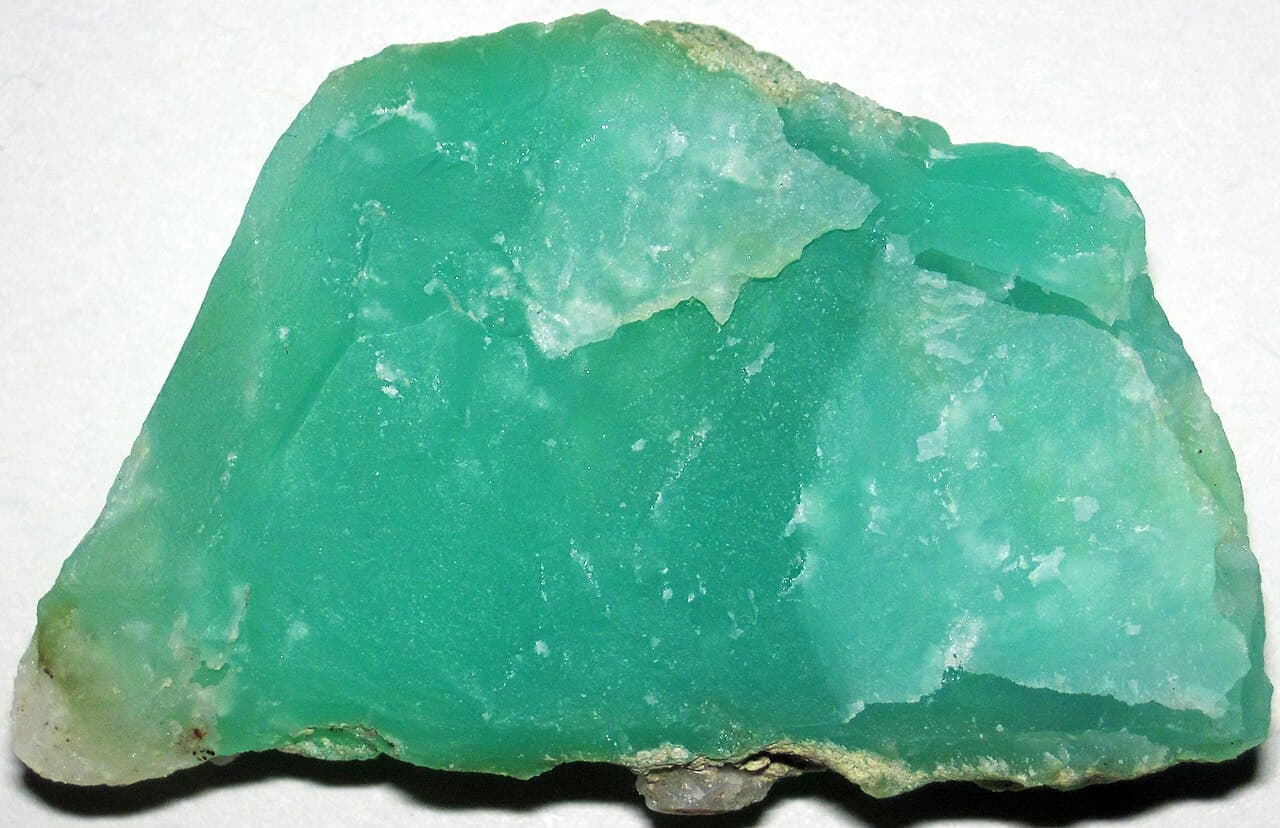
Chrysoprase is the green gem of the chalcedony family — a translucent form of microcrystalline quartz, made of silica crystals far too small to see, colored a glowing apple green to deep green. What sets it apart from nearly every other green stone is the source of that color: chrysoprase is tinted by nickel, not by chromium or iron, an unusual chromophore that produces its distinctive fresh, slightly milky green glow. It is hard and durable at about 6.5 to 7 on the Mohs scale, with a waxy-to-vitreous luster and a white streak, and unlike the opaque green jaspers it is translucent, letting light pass and glowing softly when held up to a source. Long valued as a fine ornamental and jewelry stone, it has been carved and set since antiquity.
Among the many varieties of chalcedony, chrysoprase is generally regarded as the most valuable, prized for the purity and evenness of its green. The best material is a vivid, even apple green with good translucency and no clouding or brown flecks, a color so clean it has often been compared to fine jade — which is also the source of chrysoprase's most persistent marketing problem, since it is frequently mis-sold under names like "Australian jade" despite being a quartz mineral, not jade at all. Its name comes from Greek words for "gold" and "leek," a nod to the golden-green color of a leek, and it has enjoyed waves of popularity from ancient Greece through the courts of Europe.
Chrysoprase at a glance
- Classification
- Mineral — green variety of chalcedony (microcrystalline quartz), colored by nickel
- Composition
- SiO₂ (silica, with trace nickel coloring agent)
- Hardness
- 6.5–7 (Mohs)
- Luster
- Waxy to vitreous
- Streak
- White
- Colors
- Apple green to deep green; sometimes yellow-green or with bluish tints
- Crystal system
- Trigonal (microcrystalline, massive aggregate)
- Transparency
- Translucent to semi-translucent
How to identify it
Start with color and translucency together. Chrysoprase shows a fresh, even apple green to deeper green, and crucially it is translucent — hold a piece to a strong light and it should glow softly and let light through, which immediately separates it from opaque green jaspers and from most green stones that block light entirely. The green is typically clean and uniform rather than spotted, banded or veined, with at most a faint milkiness; if a green stone is translucent, evenly colored, and waxy-to-glassy on the surface, chrysoprase should be high on your list. Its color can fade slightly under prolonged heat or strong sun, another quiet hint to its nickel-colored chalcedony nature.
Physical tests confirm it is quartz-family material. Because chrysoprase is microcrystalline quartz, it is hard, about 6.5 to 7 on the Mohs scale, so it will readily scratch glass and resist scratching by a steel knife — useful for ruling out the softer green glass and plastic imitations. It leaves a white streak whatever its body color, feels cool and solid in the hand, and breaks with a smooth conchoidal (shell-like) fracture rather than splitting along flat planes. A translucent, evenly green stone that scratches glass, leaves a white streak, and glows gently when backlit is very likely genuine chrysoprase rather than a softer imitation or a different green mineral.
Colors and varieties
Chrysoprase's color comes from trace nickel dispersed through the silica — a genuinely unusual cause of color, since most green gems owe their hue to chromium or iron. The amount and distribution of nickel govern the shade, which ranges from a pale, almost minty green through the classic bright apple green to a rich, deep green; the most prized material is a saturated, even apple-to-deep green with strong translucency and no brown or gray clouding. Because the color sits in the stone as fine nickel-bearing matter rather than as visible bands, fine chrysoprase tends to read as a single clean, glowing green, which is exactly what makes it so desirable.
A few related and look-alike greens are worth knowing. "Prase" is a more general term for dull leek-green chalcedony or quartz, less vivid than true chrysoprase. "Chrome chalcedony" (sometimes traded as mtorolite) is a separate green chalcedony colored by chromium rather than nickel, with a slightly different, often deeper green. Lemon or yellow-green chalcedony and the rarer bluish-green "chrysoprase" material also appear in the trade. The important point for identification is that genuine chrysoprase is the nickel-colored, translucent, evenly apple-green member of the chalcedony family — improbably bright, perfectly uniform "chrysoprase" sold very cheaply is often dyed green chalcedony or agate rather than the natural stone.
Meaning and properties
Chrysoprase has long been regarded as a joyful, heart-centered stone, its fresh green color associated with growth, renewal, optimism and emotional balance. Across various traditions it has been linked to abundance, friendship and hope, and in ancient times it was thought to bring good fortune and was a favored gem for signets and ornaments. In modern crystal-working practice it is often described as a stone for encouraging contentment, easing a heavy heart, and fostering a sense of openness and renewal — associations that suit its bright, life-affirming green and its reputation as one of the loveliest of the chalcedonies.
These meanings are cultural, historical and spiritual rather than scientifically demonstrated medical effects. Chrysoprase is a beautiful and meaningful stone to wear and to keep, but it does not cure, treat or prevent any physical or mental health condition, and it is not a substitute for professional medical or psychological care.
Value: what chrysoprase is worth
Chrysoprase is the most valued of the chalcedonies, and color is the heart of its worth. The qualities that lift a piece are the purity, saturation and evenness of the green, and the degree of translucency: a vivid, even apple-to-deep green with good translucency and no brown flecks, gray clouding or visible matrix commands the most interest, while pale, dull, mottled or heavily included material sits well below it. Clean, glowing, uniformly colored stones free of cracks and dead spots are the most desirable, and a fine even green can carry a real premium precisely because flawless, saturated material is uncommon. Top-grade chrysoprase has historically rivaled some better-known green gems on appearance alone.
Cutting and treatment also factor in. Skilled lapidary work matters because a well-cut cabochon shows off the color and translucency to best effect, so a thoughtfully oriented stone can be worth more than careless material of the same quality. Dyeing and impregnation are concerns at the cheaper end, where pale or porous green chalcedony may be dyed to mimic fine chrysoprase, so honest sellers disclose any treatment, and natural, untreated stone of good even color is preferred. As always on this site, no specific prices or sources are quoted here; judge a piece of chrysoprase by the purity and evenness of its green, its translucency, the quality of its cut and polish, its soundness, and whether the color is natural.
Real vs. fake chrysoprase
Because fine chrysoprase commands real value, it attracts both imitation and treatment, so a careful eye pays off. The most common concern is dyed green chalcedony or agate sold as chrysoprase: suspect dye when the green is improbably bright or perfectly uniform, when color pools or concentrates along cracks and pores, or when a vividly colored "chrysoprase" is offered very cheaply. Glass and plastic imitations are easier to catch — they are softer and will not scratch glass, often show molding seams or trapped air bubbles, and feel warmer and lighter than stone, whereas genuine chrysoprase is hard quartz that scratches glass and leaves a white streak.
Mislabeling against jade is the most persistent trap. Chrysoprase is frequently sold as "Australian jade," "Cape May jade" or similar, but it is a quartz mineral, not jade at all; true jade (jadeite or nephrite) has a different feel and structure and, in nephrite's case, a tougher, more fibrous character. Chrysoprase's even, slightly milky apple green, its white streak, and its quartz hardness help distinguish it, and reputable dealers call it chrysoprase rather than any kind of "jade." When in doubt, look for the true signature: a translucent, evenly green chalcedony with a white streak, a hardness that scratches glass, and a clean, glowing nickel-green color that is part of the stone rather than a surface dye.
Care
Chrysoprase is reasonably easy to care for, thanks to its quartz-family hardness of about 6.5 to 7, which lets it resist everyday dust and grit, and its lack of cleavage, which makes it tough against chipping. Clean it with warm water, mild soap and a soft cloth or brush, then rinse and dry it; this gentle routine lifts skin oils and grime and keeps the green looking fresh without any risk to natural, untreated stone. Its durability suits it to rings, pendants, cabochons and beads, though as a colored gem it rewards a little more attention than a plain pebble would.
One precaution is specific to chrysoprase: its color can fade with prolonged exposure to strong sunlight or heat, so it is best stored away from intense light and not left baking in a sunny window or subjected to high heat. Avoid harsh household chemicals and prolonged soaking, which can dull the surface and attack any dye in treated material, and keep dyed pieces especially out of strong light. Ultrasonic and steam cleaning are generally tolerated by solid natural stone but are safest avoided when a piece might be dyed, fractured or assembled. Store chrysoprase away from harder stones such as topaz, sapphire or diamond that could scratch it, and keep it from knocking hard against other objects so its polished surface stays bright.
Chrysoprase look-alikes
Frequently asked questions
What gives chrysoprase its green color?
Chrysoprase is colored by trace nickel dispersed through the silica. This is unusual, since most green gems owe their color to chromium or iron; nickel produces chrysoprase's distinctive fresh, slightly milky apple-to-deep green glow. The color can fade somewhat under prolonged heat or strong sunlight, a quiet sign of its nickel-colored chalcedony nature.
Is chrysoprase the same as jade?
No. Chrysoprase is a green variety of chalcedony, which is microcrystalline quartz, while jade is either jadeite or nephrite — different minerals entirely. Chrysoprase is frequently mis-sold as "Australian jade," but that name is a misnomer; reputable dealers call the stone chrysoprase. Its white streak, quartz hardness and even, slightly milky green help tell it from true jade.
Is chrysoprase valuable?
Chrysoprase is generally considered the most valuable of the chalcedonies. Its worth depends mainly on color and translucency: a vivid, even apple-to-deep green with good translucency and no brown flecks or clouding is the most prized, while pale, dull or mottled material is worth much less. Fine, saturated, flawless stones are uncommon, so they can carry a real premium.
How can I tell chrysoprase from dyed chalcedony?
Look at the color and price. Natural chrysoprase shows an even, slightly milky green that is part of the stone, while dyed green chalcedony or agate tends to be improbably bright or perfectly uniform, with color pooling along cracks and pores, and is often sold very cheaply. Genuine chrysoprase is hard quartz that scratches glass and leaves a white streak.
Is yours chrysoprase? Find out from a photo
Photograph your crystal in good light and get an identification with an honest confidence level, the look-alikes to rule out and the at-home tests that confirm it.
Identify my crystal freeOn Android? Get the free rock identifier app
Related
More crystals in the field guide
Keep exploring
More on crystals: the full list of crystal types, how to identify a crystal and crystals by color.
Last updated 2026-06-25. Identification guidance is educational — confirm important results with the diagnostic tests described or a qualified expert.