Hematite
Also known as: Haematite, Specularite (specular variety), Kidney ore
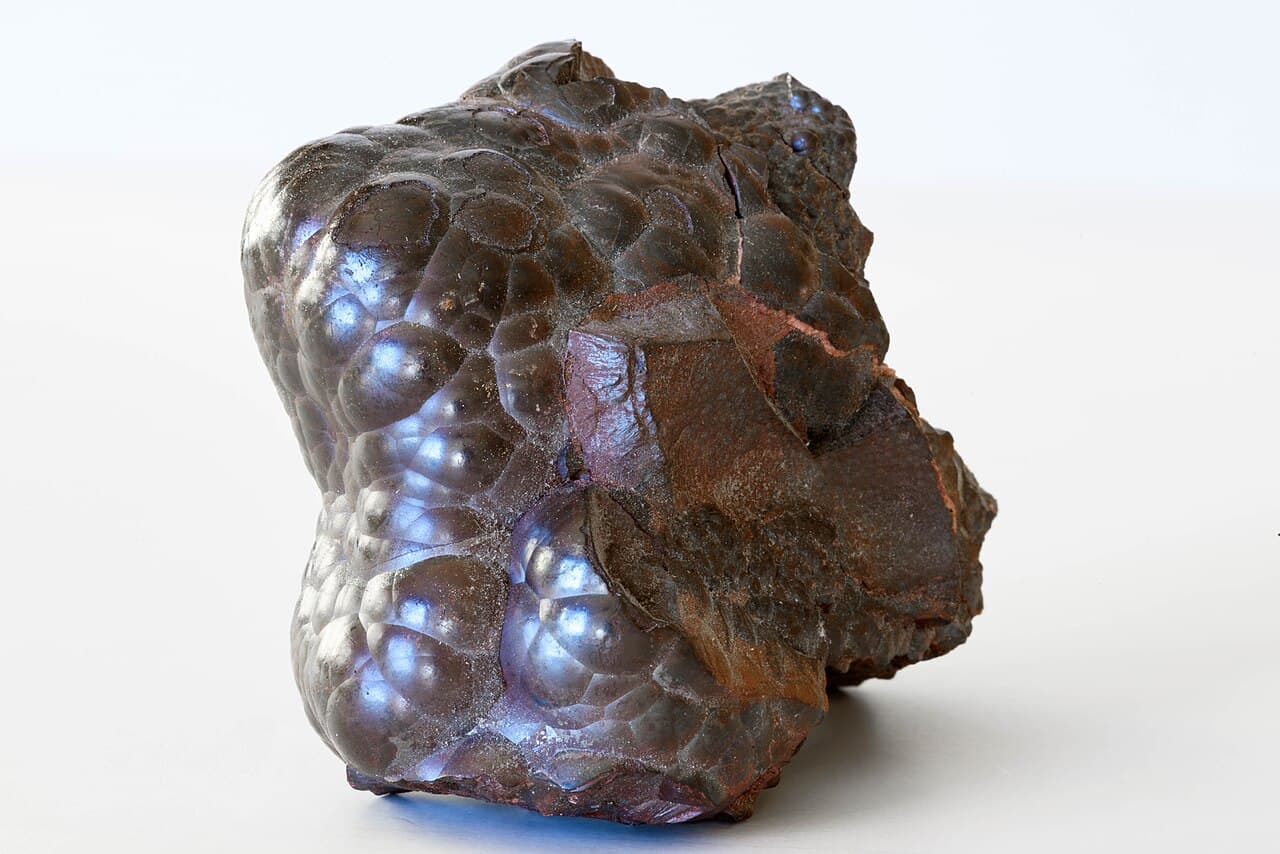
Hematite is iron oxide (Fe₂O₃) and the most important ore of iron on Earth. It is a heavy, often metallic-gray to red-brown mineral whose single most diagnostic feature is its streak: no matter what color the specimen looks on the outside, hematite always leaves a distinctive rusty red to red-brown mark when scratched. That red is the same iron-oxide pigment behind red ochre, the rust on iron, and the reddish color of countless rocks and soils.
Hematite appears in strikingly different forms, from mirror-bright silvery crystals to dull, earthy red masses, which can make it confusing at first glance. It is also notably dense and heavy for its size. Polished black hematite is popular in jewelry and beads, but shoppers should know that the strongly magnetic "hematite" sold for magnetic bracelets is almost always a man-made material, not natural hematite.
Hematite at a glance
- Classification
- Mineral — iron oxide (the oxide class); the chief ore of iron
- Composition
- Fe₂O₃ (iron(III) oxide)
- Hardness
- 5–6.5 (Mohs)
- Luster
- Metallic (specular varieties) to dull or earthy
- Streak
- Red to reddish-brown (diagnostic)
- Colors
- Steel-gray to silvery black, and red to red-brown in earthy forms
- Crystal system
- Trigonal (hexagonal)
- Transparency
- Opaque
- Magnetic
- Not strongly magnetic; at most weakly attracted to a strong magnet (strongly magnetic "hematite" jewelry is synthetic)
How to identify hematite
The streak test is the heart of any hematite identification and almost never fails. Rub the specimen on an unglazed porcelain tile: hematite leaves a rusty red to red-brown streak even when the mineral itself looks silvery-gray or black. This single test separates hematite from nearly every metallic look-alike, most of which streak gray or black.
After the streak, weight and hardness narrow it down. Hematite is dense and feels heavy in the hand, and it is moderately hard (5–6.5) — hard enough to scratch glass in its compact forms, though crumbly earthy hematite can feel much softer because the grains rub loose. It is opaque in all forms, so no light passes through.
Magnetism is a useful confirming test. Unlike magnetite, natural hematite is at most weakly attracted to a strong magnet and usually shows no obvious pull at all. If a metallic, red-streaking specimen is strongly magnetic, suspect magnetite (or a man-made magnetic material) rather than pure hematite.
Colors and forms of hematite
Hematite is unusually varied in appearance, which is the main reason beginners misjudge it. The same mineral can look like a polished mirror or like dried red mud, so it helps to learn its named forms.
Specular hematite (specularite) is the flashy variety: silvery to steel-gray, with a bright metallic, almost mirror-like sheen, often made of countless tiny sparkling platelets. Polished black hematite jewelry comes from this dense, metallic material.
Kidney ore (botryoidal hematite) forms smooth, bulging, rounded masses that look like clustered kidneys or bunches of grapes, typically dark gray to reddish with a metallic-to-silky surface and a radiating fibrous interior when broken. Earthy or "red ochre" hematite, by contrast, is dull, soft and brick-red to red-brown, and it readily stains your fingers — this is the pigment form used in paints and dyes. Hematite also occurs as thin red coatings that color sandstone, quartz and many other rocks red. Whatever the outward form, the red streak ties them all together as one mineral.
How hematite forms and where it is found
Hematite forms wherever iron meets oxygen, which makes it one of the most widespread minerals on the planet. It precipitates from iron-rich waters, crystallizes from hot hydrothermal fluids, forms as iron-bearing minerals weather and rust at the surface, and occurs as a pigment dispersed through sedimentary rocks. Its red iron-oxide stain is responsible for the color of red sandstones, red soils and many desert landscapes.
On a vast scale, hematite is a major component of banded iron formations — ancient layered rocks that record a time when oxygen first built up in Earth's oceans, and which today make up the world's largest iron-ore deposits. It is commonly found with quartz, magnetite and other iron minerals, and the same mineral lends Mars much of its rusty-red color, earning Earth's hematite a place in planetary science as well.
Meaning and uses
In crystal and metaphysical traditions, hematite's heavy, metallic feel has made it a popular "grounding" and protective stone, often associated with stability, focus and absorbing stress. These ideas are cultural and spiritual rather than scientifically established medical effects, and hematite is not a substitute for medical care — magnetic-hematite bracelets in particular are marketed with health claims that are not medically proven (and most are synthetic material, not natural hematite).
Practically, hematite's importance is industrial: it is the world's principal ore of iron and the raw material behind most of the steel around us. In powdered form it is a classic pigment (red ochre and "rouge"), used in paints, polishing compounds and, historically, in cosmetics and cave art. Polished specular hematite is also cut into beads, cabochons and the dark, mirror-bright jewelry sold simply as "hematite."
Value and care
Hematite is abundant and inexpensive. As a collector's mineral, value comes from form and quality rather than rarity: bright, well-crystallized specular hematite, attractive botryoidal kidney ore, and the rare rosette clusters known as "iron roses" are the most sought-after, while common earthy red masses are worth very little. Polished jewelry pieces are priced for their luster and finish.
Hematite is reasonably hard and chemically stable, so it does not suffer the decay that plagues pyrite. It can be cleaned with water and a soft cloth, but earthy varieties will shed red powder and stain, and the metallic polish on jewelry can be dulled by abrasion or scratched by harder stones. Synthetic magnetic "hematite" is a different, man-made product; if magnetism matters to you, test before you buy, since genuine hematite is at most weakly magnetic.
Hematite look-alikes
Frequently asked questions
What is hematite?
Hematite is iron oxide (Fe₂O₃), the world's most important iron ore. It is a heavy mineral that ranges from silvery, metallic specular crystals to dull red earthy masses, and it is identified above all by its red to red-brown streak.
Is hematite magnetic?
Natural hematite is not strongly magnetic — at most it is weakly attracted to a powerful magnet, and often shows no pull at all. That distinguishes it from magnetite, which is strongly magnetic. The strongly magnetic "hematite" sold in bracelets and clasps is a synthetic, man-made material rather than true hematite.
Why does hematite leave a red streak if it looks black?
Streak shows the color of a mineral's powder, not its surface. Hematite is iron oxide, the same compound as rust, so even silvery-black specular hematite grinds down to a fine red-brown powder. That red streak is its most reliable identifying feature.
What is hematite worth and what is it used for?
Hematite is common and inexpensive; collector value depends on form, with bright specular hematite, botryoidal kidney ore and "iron rose" rosettes the most prized. Industrially it is the main ore of iron and steel and a classic red pigment (red ochre), and polished hematite is used in beads and jewelry.
What does hematite symbolize?
Hematite is treated as a grounding and protective stone, associated with stability, focus and courage — a meaning that follows from both its heavy, metallic feel and its blood-red streak. That streak gave the mineral its name, from the Greek haima meaning blood, and tied it to blood and vitality in ancient traditions. These associations are cultural and spiritual rather than medical; in particular, the magnetic 'hematite' bracelets sold with health claims are usually a synthetic material rather than true hematite, as covered in the magnetism question above.
Is yours hematite? Find out from a photo
Photograph your mineral in good light and get an identification with an honest confidence level, the look-alikes to rule out and the at-home tests that confirm it.
Identify my mineral freeOn Android? Get the free rock identifier app
Related
More minerals in the field guide
Keep exploring
More on minerals: how to identify a mineral, the streak test and the full list of crystal types.
Last updated 2026-07-19. Identification guidance is educational — confirm important results with the diagnostic tests described or a qualified expert.