Serpentine
Also known as: New jade, Korean jade, Serpentinite (rock form)
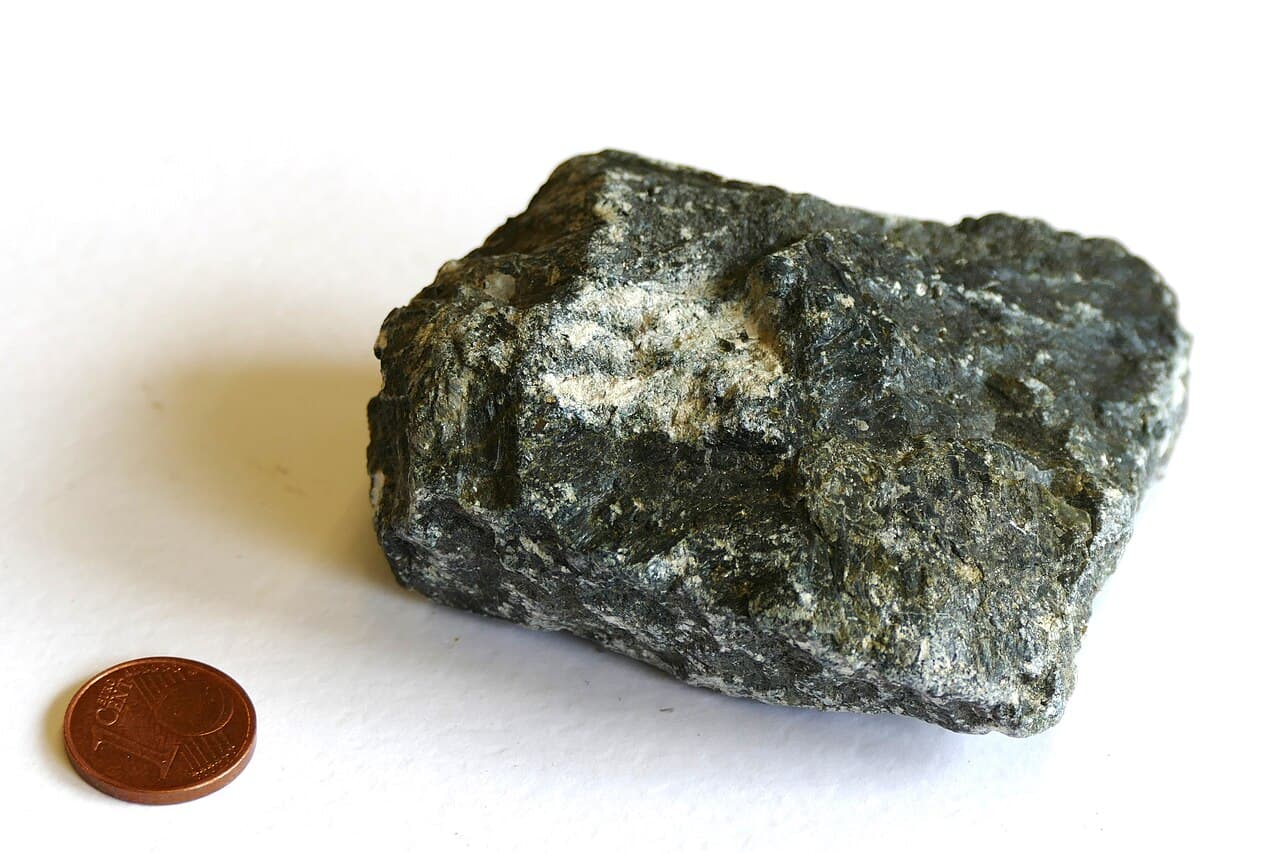
Serpentine is not a single mineral but a group of closely related hydrous magnesium silicates — chiefly antigorite, lizardite, and chrysotile — that share a similar chemistry and a distinctive look. The name comes from the Latin serpentinus, "of a serpent," a nod to the mottled, veined, snakeskin pattern of greens that runs through most specimens. Colors range across many shades of green, from pale apple and olive to deep forest green, often blotched or streaked with yellow-green, white, gray, brown, or near-black, and the surface usually has a soft waxy, greasy, or silky sheen rather than a hard glassy sparkle. Massive serpentine is fairly soft and feels slightly smooth or soapy, which together with its green, mottled appearance makes it easy to recognize.
These minerals form when magnesium-rich rocks from deep in the Earth — peridotite and other ultramafic rocks — are altered by hot, watery fluids in a process called serpentinization. The result is serpentinite, a rock made largely of serpentine minerals that is common in old ocean-floor slices and mountain belts and is the basis of many ornamental "green marble" stones. Serpentine has been carved and polished for thousands of years and is widely sold today under trade names like "new jade" or "Korean jade" — which is one reason it is among the most common stones mistaken for, or substituted for, true jade. One member of the group, the fibrous variety chrysotile, is a form of asbestos, so raw fibrous material should never be cut or ground.
Serpentine at a glance
- Classification
- Mineral group — hydrous magnesium silicates (antigorite, lizardite, chrysotile)
- Composition
- Mg₃Si₂O₅(OH)₄ (general; varies by member)
- Hardness
- About 2.5–5.5 (Mohs), variable and generally soft
- Luster
- Greasy, waxy, or silky; sometimes dull
- Streak
- White
- Colors
- Many shades of green — apple, olive, forest — often mottled with yellow-green, white, gray, brown, or black
- Crystal system
- Monoclinic (most members)
- Transparency
- Translucent to opaque
- Magnetic
- Usually not magnetic (associated magnetite can attract a magnet)
How to identify it
Serpentine is most easily recognized by its overall look: a green stone with a mottled, patchy, or veined "snakeskin" pattern and a soft waxy, greasy, or silky luster rather than a hard glassy shine. The green can be almost any tone, but it is usually mixed and uneven, with lighter and darker zones, pale veining, or dark specks running through it. Massive serpentine is also fairly soft and often feels slightly smooth or soapy to the touch, and a steel knife or even a fingernail (on the softest material) will scratch many specimens, which immediately separates serpentine from much harder green stones.
Hardness is the key test that distinguishes serpentine from the stone it most often imitates. True jade — both jadeite and nephrite — is hard and exceptionally tough, around 6 to 7 for jadeite and 6 to 6.5 for nephrite, so it resists a steel knife; serpentine is softer and more variable, roughly 2.5 to 5.5, and is more easily scratched and carved, which is exactly why it is the classic, less expensive jade substitute. A green, mottled, waxy stone that scratches relatively easily, gives a white streak, and feels a touch greasy or soapy is very likely serpentine rather than jade. Where present, the silky fibrous variety (chrysotile) is a further clue, but raw fibrous material should not be cut or abraded.
Colors and varieties
Green in all its shades is the signature of serpentine, from soft apple and yellow-green through olive to deep forest and bottle green, very often blotched, streaked, or veined with white, gray, brown, or near-black so that the stone looks mottled like snakeskin. The exact color comes mainly from iron and other elements in the magnesium silicate structure. Some material is fairly uniform and translucent enough to take a high polish, while other pieces are opaque and heavily patterned, prized precisely for their swirling green markings.
The serpentine group has several named members and varieties. Antigorite and lizardite make up most massive, carvable serpentine, while chrysotile is the fibrous, silky variety that is a form of asbestos. The translucent, fine green ornamental stone often sold as "new jade" or "Korean jade" is bowenite, a tough, gemmy variety of serpentine, and "williamsite" is a clear, oily-green antigorite valued by collectors. Mixed with white carbonate veining, serpentine becomes the popular ornamental "verde antique" or "serpentine marble." Across all these forms the diagnostic features hold: green and mottled, a waxy to greasy luster, a white streak, and a softness well below that of true jade.
Meaning and properties
In modern crystal-working traditions serpentine is regarded as an earthy, grounding stone associated with renewal, calm, and a connection to nature, and its green color leads many people to link it with the heart and with feelings of balance and growth. These are cultural and spiritual associations drawn from folklore and personal practice, not measurable physical effects of the mineral, and serpentine's deeper importance is geological — it is a record of water reacting with rocks from the Earth's mantle.
A safety point is essential here. Most polished, massive serpentine jewelry and carvings are safe to own and handle, but the serpentine group includes chrysotile, a fibrous form of asbestos, and serpentine rock can contain asbestiform fibers. The real hazard is inhaling dust, so raw or fibrous serpentine should never be cut, ground, sanded, or tumbled dry, and any such work must be done wet with proper protection. As with any mineral, serpentine is something to appreciate, study, and collect rather than a treatment for any physical or mental health condition, and it is no substitute for advice from a qualified professional.
Value
Serpentine is an affordable, abundant ornamental stone, valued chiefly for color, translucency, pattern, and workmanship rather than rarity. Even, richly colored, translucent material — especially the gemmy bowenite sold as "new jade" — sits at the top end, along with well-executed carvings and cabochons with attractive, swirling green markings. Plainer, opaque, or heavily fractured pieces are common and inexpensive. Because so much serpentine is sold under jade trade names, buyers pay a premium for fine color and translucency, but it remains far cheaper than genuine jade.
An important point for value is honest disclosure: serpentine is frequently marketed as "new jade," "Korean jade," "Suzhou jade," or simply "jade," yet it is not true jadeite or nephrite and is worth considerably less. A green carving offered as "jade" at a surprisingly low price is very often serpentine. As with all stones, value depends on the interplay of color, translucency, pattern, size, and craftsmanship rather than any single figure, and accurate identification — serpentine versus genuine jade — is the single biggest factor separating a modest price from a high one.
Real vs. fake
With serpentine the central issue is not synthetic fakery but mislabeling — most often serpentine being sold as the much more valuable jade. The clearest test is hardness: true jade (jadeite around 6 to 7, nephrite around 6 to 6.5) resists a steel knife, while serpentine is softer and more variable (about 2.5 to 5.5) and is more easily scratched. A green "jade" piece that a steel point scratches, that feels slightly greasy or soapy, and that carries a low price under names like "new jade" or "Korean jade" is very likely serpentine.
A few honesty issues also affect serpentine sold on its own merits. Pale or gray material is sometimes dyed to deepen or fake a green color, so watch for unnaturally vivid, perfectly even color, dye concentrated in cracks, or color that rubs off on a cloth. Serpentine is also occasionally confused with other green stones such as green aventurine, prehnite, and green marble, which can be separated by hardness, luster, and pattern. Genuine serpentine shows a natural, slightly uneven mottled green, a waxy to greasy luster, a white streak, and a softness clearly below that of true jade.
Care
Serpentine is relatively soft and benefits from gentle care. Because much of it falls well below jade in hardness, it scratches and dulls more easily than harder gem materials, so keep serpentine away from harder stones and abrasive surfaces, remove serpentine jewelry before rough work, and store each piece separately so it is not marked by metal or other gems. Avoid sharp knocks, since some carved or veined material can chip along weaker zones.
Clean serpentine simply, with warm water, a little mild soap, and a soft cloth or soft brush, then rinse and dry it promptly; avoid harsh chemicals, acids, and prolonged soaking, and skip ultrasonic and steam cleaners, whose vibration and heat can harm softer or fractured pieces. The most important rule is a safety one: never cut, grind, sand, drill, or dry-tumble raw or fibrous serpentine, because the dust can contain asbestos fibers — finished, polished pieces handled normally are fine, but any shaping work must be done wet with proper protection.
Serpentine look-alikes
Frequently asked questions
Is serpentine the same as jade?
No. Serpentine is a group of magnesium silicate minerals that is often sold as a jade substitute under names like "new jade," "Korean jade," or "Suzhou jade," but it is not true jadeite or nephrite. The simplest way to tell them apart is hardness: real jade resists a steel knife (jadeite about 6 to 7, nephrite about 6 to 6.5), while serpentine is softer and more variable (about 2.5 to 5.5) and scratches more easily. Serpentine also looks waxier and costs much less.
Why is serpentine green and mottled like a snake?
Serpentine gets its many shades of green mainly from iron and other elements within its magnesium silicate structure, and its mottled, veined, snakeskin pattern comes from the way it forms — by hot, watery fluids altering magnesium-rich mantle rocks into a patchy mix of serpentine minerals. That blotchy green appearance is the source of the name, from the Latin for "serpent," and is one of the easiest ways to recognize the stone.
Is serpentine dangerous because of asbestos?
Finished, polished serpentine carvings and jewelry handled normally are generally safe. The hazard is specific: the serpentine group includes chrysotile, a fibrous form of asbestos, and the danger comes from inhaling dust. For that reason raw or fibrous serpentine should never be cut, ground, sanded, drilled, or dry-tumbled — any shaping must be done wet with proper protection — but simply owning or wearing a polished piece poses little risk.
How hard is serpentine and can it be used in jewelry?
Serpentine is fairly soft and variable, roughly 2.5 to 5.5 on the Mohs scale, which is why it has been carved into ornaments for thousands of years and is widely used in cabochons, beads, and carvings. Because it is softer than most gemstones, serpentine jewelry scratches and dulls more easily, so it is best kept away from harder stones, stored separately, and protected from knocks and abrasion.
Is yours serpentine? Find out from a photo
Photograph your mineral in good light and get an identification with an honest confidence level, the look-alikes to rule out and the at-home tests that confirm it.
Identify my mineral freeOn Android? Get the free rock identifier app
Related
More minerals in the field guide
Keep exploring
More on minerals: how to identify a mineral, the streak test and the full list of crystal types.
Last updated 2026-06-25. Identification guidance is educational — confirm important results with the diagnostic tests described or a qualified expert.