Morganite
Also known as: Pink beryl, Rose beryl, Pink emerald (a discouraged trade term)
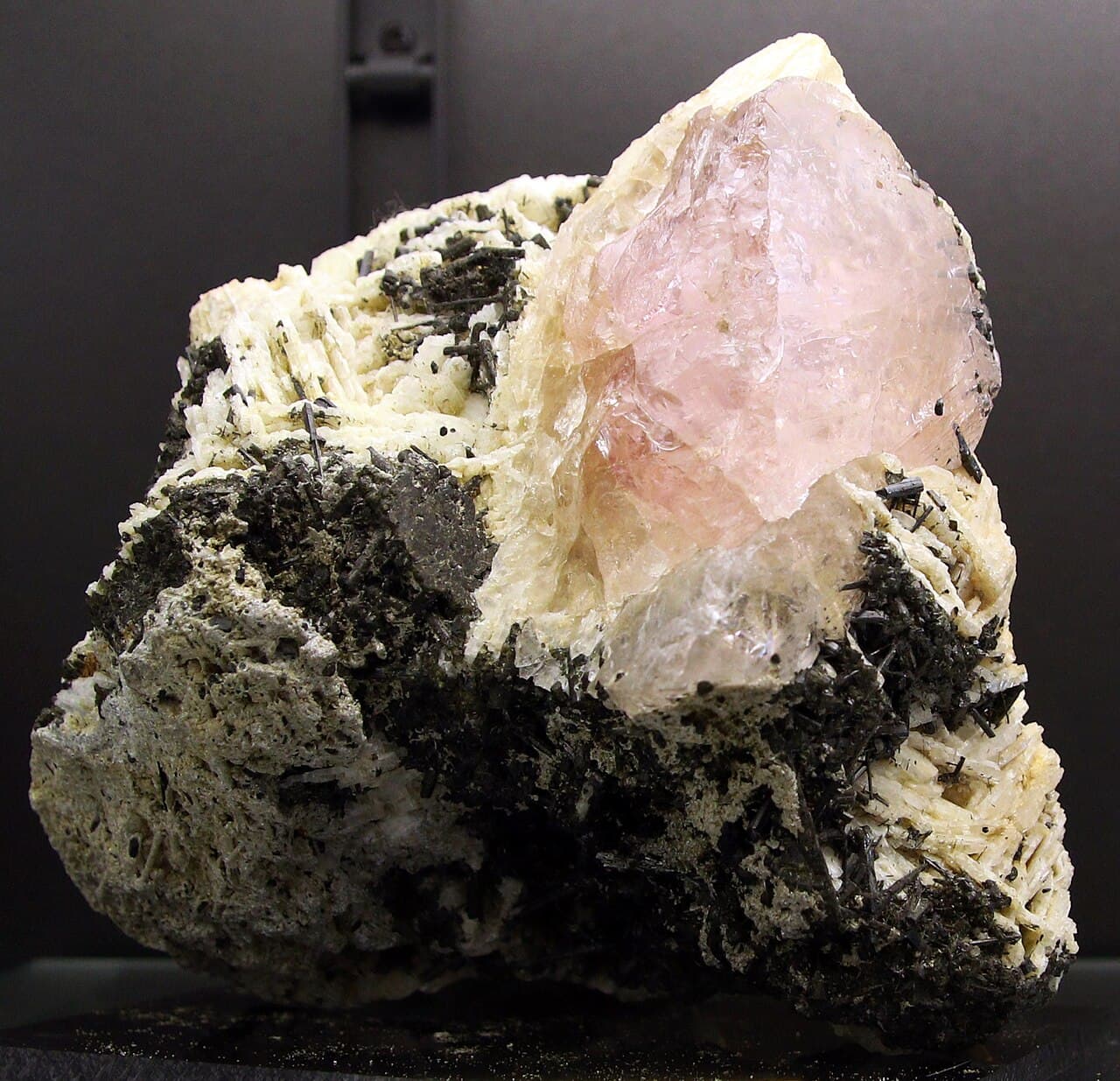
Morganite is the soft pink to peach-orange gem variety of beryl, the same mineral family that produces emerald (green) and aquamarine (blue). Chemically it is a beryllium aluminum silicate, and its gentle blush color comes from traces of manganese held within the crystal. It is a hard, durable stone at 7.5 to 8 on the Mohs scale, with a bright vitreous (glassy) luster, and like its beryl relatives it grows in six-sided (hexagonal) crystals that can reach large, clean sizes. Named in 1911 in honor of the financier and gem collector J. P. Morgan, it is a comparatively modern entry to the gem world that has become a wildly popular choice for romantic, blush-toned jewelry.
What draws people to morganite is its quiet, feminine color and its excellent toughness for everyday wear. Fine morganite is often remarkably clean to the eye, and because the rough can be large, sizable eye-clean gems are attainable without the steep prices of scarcer pink stones. Most morganite on the market has been gently heated to drive off a faint orange or yellow tint and bring forward a purer, cooler pink — a stable, permanent and widely accepted treatment. Its blend of soft color, real durability and approachable size has made morganite a favorite for engagement rings, pendants and collector crystals alike.
Morganite at a glance
- Classification
- Mineral — pink variety of beryl
- Composition
- Be₃Al₂Si₆O₁₈ (colored by manganese)
- Hardness
- 7.5–8 (Mohs)
- Luster
- Vitreous (glassy)
- Streak
- White
- Colors
- Soft pink, rose, salmon, peach-orange
- Crystal system
- Hexagonal
- Transparency
- Transparent to translucent
How to identify morganite
Start with color and clarity. Morganite is a gentle, slightly cool pink to peach-orange, transparent, and frequently very clean to the eye, with a bright glassy luster when polished. In rough form the most telling clue is its crystal habit: like all beryl, it grows in six-sided (hexagonal) prisms, often broad and tabular, sometimes with lengthwise striations on the faces. A clear, pale-pink hexagonal crystal is very likely morganite, and that distinctive shape is something most pink imitations cannot reproduce.
Physical properties confirm the call. Morganite is hard at 7.5 to 8 on the Mohs scale, so it scratches glass easily and resists scratching by a steel blade, which immediately separates it from softer pink stones such as rose quartz (hardness 7, but cloudier) and from glass imitations. It has a white streak and a moderate density that feels solid but not unusually heavy in the hand. Many morganites also show pleochroism, appearing as two slightly different pinks — often a paler and a more saturated tone — as you rotate the stone and view it from different directions, a subtle effect that points toward beryl rather than glass.
Colors and varieties
Morganite occupies the pink end of the beryl color range, and its hue is owed to manganese in the crystal. Natural stones run from a delicate, almost colorless pink through rose to salmon and a warm peach-orange. The color is generally soft rather than vivid, so larger stones tend to show their pink more convincingly than tiny ones, where the tone can look nearly colorless. There is no single "correct" morganite color; market taste swings between the cooler, purer pinks and the warmer peach tones depending on fashion.
Within beryl, morganite sits beside its relatives: blue is aquamarine, green colored by chromium or vanadium is emerald, and yellow-to-golden is heliodor or golden beryl. Heat treatment is the key variety-defining process for morganite — gentle, controlled heating removes a yellow or orange component to leave a cleaner pink. This treatment is stable, permanent and effectively undetectable, and it is so routine that much of the pink morganite on the market has been heated, with no loss of durability. The trade term "pink emerald" is sometimes used to market morganite, but it is misleading and discouraged, since morganite is not emerald.
Meaning and properties
Morganite's soft pink color has earned it a reputation as a stone of love, compassion and emotional calm. In modern crystal-working traditions it is strongly associated with the heart, with gentle, unconditional affection, and with easing anxiety or grief, and it is a popular choice for those seeking a sense of tenderness, reassurance or emotional healing. Its rising use in engagement rings has only deepened these romantic associations, tying the stone to commitment and open-hearted connection.
These meanings are cultural and spiritual rather than scientifically demonstrated medical effects. Morganite is a beautiful and meaningful stone to wear and to keep, but it does not cure, treat or prevent any physical or mental health condition and is not a substitute for professional medical or psychological care.
Value: what morganite is worth
Morganite value is led by color, then by clarity, cut and size. Buyers generally pay the most for a clean, moderately saturated pink — strong enough to read clearly face-up without being pale or washed out — while taste also rewards attractive peach and salmon tones. Because fine morganite rough tends to be exceptionally clean, the market expects eye-clean gems, so visible inclusions reduce value more than they would in an included stone. A well-judged cut matters too, since the color is delicate enough that proportions can make or break how much pink a stone shows.
Size interacts with color in a notable way: because morganite grows large and clean, big eye-clean gems are available without the steep per-carat jumps seen in scarcer pink stones, yet a smaller stone with truly fine, saturated color can still outvalue a larger pale one. Heat treatment to improve color is standard and does not by itself lower value, though honest sellers disclose it. No specific localities or price figures are offered here; for any given stone, color quality, clarity and cut are the reliable levers to judge, ideally with the treatment status confirmed.
Real vs. fake morganite
The most common impostor is pink glass, which can be convincingly colored and shaped. Glass is softer than morganite and is given away by hardness, by tiny round gas bubbles and swirl marks under magnification, and by a warmer feel to the touch — morganite, like most crystals, feels cool because it conducts heat away from the skin, while glass warms quickly. Glass also lacks pleochroism, so it will not show morganite's subtle shift between two pinks as you rotate it. A simple scratch test against glass, combined with a look for bubbles, separates most glass fakes immediately.
Among genuine gemstones, the frequent natural look-alikes are rose quartz, kunzite and pink topaz. Rose quartz is softer (hardness 7) and almost always cloudy or translucent rather than transparent and faceted, so a clear, eye-clean pink gem is unlikely to be rose quartz. Kunzite shows strong pleochroism and, more tellingly, has near-perfect cleavage that makes it prone to splitting — a fragility morganite does not share — and its color is often a more violet pink. Pink topaz is denser and feels heavier for its size, and much pink topaz is treated. Laboratory-grown beryl and assembled doublets also exist; for an important purchase, a gemological report that confirms the species and notes any treatment is the surest protection.
Care
Morganite is hard and reasonably tough, which makes it well suited to everyday jewelry, including engagement rings, but it is not indestructible. Its hardness of 7.5 to 8 resists scratching from ordinary dust and most other gems, yet a sharp knock against a hard surface can still chip a faceted edge, so a protective setting is wise for ring stones. Clean it with warm water, mild dish soap and a soft brush, then rinse and dry; this gentle routine is safe for both treated and untreated stones and removes the skin oils and grime that dull the stone's bright luster and can make its pale color look flat.
Avoid harsher methods. Steam cleaning and prolonged high heat are best skipped, since strong heat could in principle alter the color, and ultrasonic cleaners are risky for any stone that might contain liquid inclusions or fine fractures, which can spread under vibration. Keep morganite away from harsh household chemicals and store it separately from harder gems such as sapphire or diamond, which could scratch it, and away from softer stones it could scratch in turn. Prolonged, intense sunlight is also better avoided as a precaution against any slow fading of the pink.
Morganite look-alikes
Frequently asked questions
Is morganite a real gemstone?
Yes. Morganite is a natural gemstone, specifically the pink to peach-orange variety of the mineral beryl — the same family as emerald and aquamarine. It is hard and durable at 7.5 to 8 on the Mohs scale and gets its color from traces of manganese in the crystal.
Why is most morganite heat-treated?
Gentle heating drives off a yellow or orange component to leave a cleaner, purer pink. The treatment is stable, permanent and effectively undetectable, so it is routine and accepted across the trade; honest sellers still disclose it, and it does not reduce the stone's durability or its value relative to similar untreated color.
How can I tell morganite from rose quartz?
Look at clarity and test hardness. Morganite is typically transparent and eye-clean and is hard enough (7.5–8) to resist a steel blade, while rose quartz is softer (7) and almost always cloudy or translucent rather than clear. Morganite also shows pleochroism — two slightly different pinks as you turn it — which rose quartz does not.
Is morganite durable enough for an engagement ring?
Yes. At 7.5 to 8 on the Mohs scale, morganite is hard and tough enough for daily wear, which is a large part of why it has become so popular for engagement rings. A protective setting and routine gentle cleaning help guard the faceted edges from the occasional hard knock that any ring stone can take.
Is yours morganite? Find out from a photo
Photograph your gemstone in good light and get an identification with an honest confidence level, the look-alikes to rule out and the at-home tests that confirm it.
Identify my gemstone freeOn Android? Get the free rock identifier app
Related
More gemstones in the field guide
Keep exploring
More on gemstones: the full list of crystal and gem types, how to identify gemstones and the polished-stone identifier.
Last updated 2026-06-25. Identification guidance is educational — confirm important results with the diagnostic tests described or a qualified expert.