Seraphinite
Also known as: Gem Clinochlore, Serafina, Seraphite
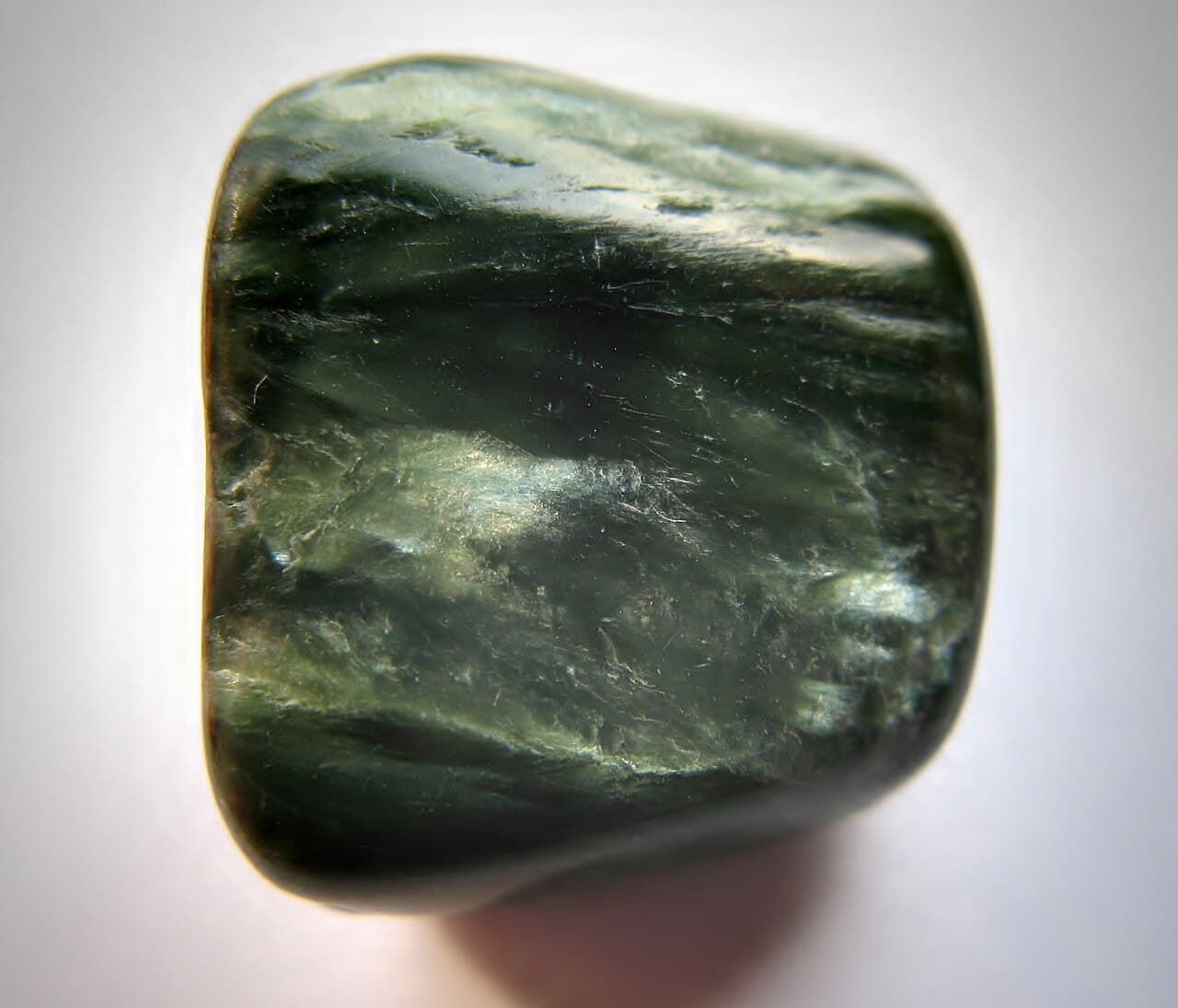
Seraphinite is the trade name for a gem-quality form of clinochlore, a magnesium-iron silicate that belongs to the chlorite group of minerals. Its claim to fame is not its color alone but its remarkable internal pattern: against a deep forest-to-bottle-green background, fine silvery fibers fan out in soft, feathery plumes that catch the light as the stone is turned. Those shimmering, wing-like sprays reminded early sellers of the feathers of a seraph, the angelic beings of religious tradition, and the name stuck. Practically all the seraphinite on the market comes from a single remote source, the Korshunovskoye deposit in the Lake Baikal region of eastern Siberia, Russia, which makes it a relatively scarce and geographically distinctive stone.
What sets seraphinite apart from most green stones is a combination of softness and shimmer. It is a soft material, sitting low on the hardness scale, so it is almost always cut into rounded cabochons, beads, and carvings rather than faceted gems, and it takes a satiny rather than glassy polish. The silvery feathering is a true optical effect called chatoyancy, produced by parallel mica-like fibers reflecting light, and it is the single most reliable clue that a green cabochon is genuine seraphinite. Learning to read that feathered shimmer, together with the stone's softness and silky luster, is the key to telling it apart from the many other green ornamental stones it can resemble.
Seraphinite at a glance
- Classification
- Phyllosilicate (chlorite-group mineral); gem variety of clinochlore
- Composition
- (Mg,Fe)5Al(Si3Al)O10(OH)8
- Hardness
- 2 to 4 (Mohs)
- Luster
- Silky to pearly, sometimes greasy or dull
- Streak
- Pale green to greenish white
- Colors
- Deep forest green to olive and gray-green, with silvery to white feathery sheen
- Crystal system
- Monoclinic
- Transparency
- Translucent to opaque
How to identify it
The first and best clue is the pattern. Genuine seraphinite shows fine, silvery or white fibers that spread out across a dark green background in feathery fans, plumes, or wing-shaped sprays, and that silvery sheen shifts and shimmers as you tilt the stone under a light. This chatoyant, feather-like figure is the defining feature; a flat, evenly colored green stone with no shimmer is almost certainly something else. Because the fibers are oriented mica-like flakes of chlorite, the effect is directional, so rotate the piece in good light and watch the bright plumes sweep across the surface.
Back up the visual clue with hardness and feel. Seraphinite is soft, generally Mohs 2 to 4, so it is easily scratched and its polished surface tends to look satiny or silky rather than glassy. It feels relatively light and smooth, and because it is fragile it is virtually always seen as cabochons, beads, tumbled stones, or small carvings rather than faceted gems or rings meant for hard daily wear. Put the three traits together, deep green color, a moving silvery feathered sheen, and a soft, silky-polished surface, and you can confidently call a stone seraphinite and separate it from harder, glassier green look-alikes.
Colors and varieties
Seraphinite's body color ranges from a rich, dark forest or bottle green through olive to grayish and almost blackish green, all owing to its iron and magnesium content as a chlorite-group mineral. The real variation that collectors care about, though, is in the silvery feathering laid over that green. The finest pieces show crisp, well-defined plumes with strong silver-to-white contrast and a lively chatoyant shimmer, while lesser material has muddier color and a duller, less organized sheen. Some stones display long sweeping feathers, others a denser mottled or mossy shimmer across the whole surface.
Because all gem seraphinite comes from essentially one Siberian locality, there are no major regional varieties in the way other gems have, but cutters do select for the most dramatic feather patterns and orient the cabochon to maximize the silvery sweep. You will sometimes see the name spelled or sold as serafina or seraphite, and it may be described simply as gem clinochlore. Whatever the label, the green-plus-silver-feather combination is the constant, and color alone is never enough to identify it; the moving feathery sheen on a soft, silky stone is what confirms true seraphinite.
Meaning and properties
In crystal and metaphysical traditions, seraphinite is strongly tied to its angelic namesake and is often described as a stone of spiritual connection, serenity, and renewal, with its feathered pattern read as a symbol of angel wings and higher guidance. Many people in these practices keep it for meditation or quiet reflection, valuing the calming effect they associate with its soft green color and luminous sheen. These meanings come from spiritual, cultural, and personal belief systems rather than from scientific evidence, and seraphinite should not be used to diagnose, treat, or cure any physical or mental health condition.
If you enjoy the symbolic and contemplative side of crystals, seraphinite is most often used gently, held during meditation, placed in a calm corner of a room, or worn occasionally as a pendant rather than relied upon for any health outcome. Because it is soft and can contain iron-magnesium silicate dust when worked or broken, treat it as a display and contemplation stone, avoid making elixirs or putting it in drinking water, and wash your hands after handling rough or freshly cut pieces. For any real health or emotional concern, consult a qualified healthcare professional rather than depending on a crystal.
Value and what affects price
The value of seraphinite is driven above all by the quality of its silvery feathering. Pieces with bright, sharply defined, well-organized plumes and strong chatoyant shimmer against a deep, even green are the most sought after, while stones with weak, muddy, or scattered sheen and dull or grayish color are far more common and less prized. Good contrast between the silver feathers and the dark background, together with a clean, well-polished surface free of pits and cracks, lifts a piece above ordinary material. Larger cabochons and carvings that keep a strong feather pattern across the whole stone also draw more interest.
Because seraphinite essentially comes from a single remote Siberian source and is soft and tricky to cut without flaking, supply is limited and good gem-grade material is genuinely scarce, which supports its desirability among collectors of unusual stones. Condition matters a great deal: since the stone is fragile, chips, scratches, and a tired, scuffed polish all reduce value, while a crisp satiny finish enhances it. As always, judge a specimen on its actual feather quality, color depth, luster, and condition rather than on the romantic name, and remember that softness limits its use in everyday jewelry, which is part of why it is collected more as a display and pendant stone.
Real vs. fake: avoiding misidentification
The good news is that seraphinite's feathered shimmer is hard to fake convincingly, so most problems come from honest look-alikes rather than clever forgeries. Be wary of other green stones sold under the seraphinite name, dyed or printed materials, and resin or glass pieces given a green color and a painted-on sheen. A real seraphinite shows a three-dimensional, directional chatoyancy that moves as you tilt the stone, whereas a printed pattern, a static painted sheen, or the swirls in glass stay flat and do not sweep with the light. Glass and resin also tend to feel different, warmer to the touch and often with tiny bubbles inside.
Use the stone's physical traits to confirm authenticity. Genuine seraphinite is soft, so it scratches easily, takes a silky rather than glassy polish, and is almost never faceted; a hard, brilliant, faceted green gem is not seraphinite. If a green cabochon has no moving silver feathering at all, it is more likely serpentine, jade, or fuchsite than seraphinite. Combine the moving feathered sheen, the soft silky surface, the deep green color, and the cabochon shape, and you can separate true seraphinite from imitations and from the green stones most often confused with it.
Care and cleaning
Seraphinite needs gentle care because it is soft and fragile. At only Mohs 2 to 4 it scratches and chips far more easily than common gem materials, so store it separately from harder stones and metal, ideally wrapped in a soft cloth or its own pouch, and keep it from knocking against other jewelry. Clean it with nothing more aggressive than a soft, slightly damp cloth or a soft brush and mild soap, then dry it promptly; avoid prolonged soaking, since the layered chlorite structure can take up water and dull or weaken the stone over time.
Skip all harsh treatments. Do not use ultrasonic or steam cleaners, strong chemicals, acids, or abrasive cleaners, any of which can pit, etch, or fracture this delicate stone. Keep seraphinite out of prolonged direct sunlight and high heat, which can stress and dull soft minerals, and avoid wearing it for rough activities, sports, gardening, or cleaning where it can be scratched or struck. Treat it as a display piece or occasional-wear pendant rather than an everyday ring stone, and with this gentle handling its silvery feathered shimmer and satiny green surface will stay attractive for many years.
Seraphinite look-alikes
Frequently asked questions
What exactly is seraphinite?
Seraphinite is the trade name for gem-quality clinochlore, a magnesium-iron silicate in the chlorite group of minerals. It is prized for its deep forest-green color overlaid with silvery, feathery fibers that shimmer like angel wings. Almost all of it comes from one deposit in the Lake Baikal region of Siberia, Russia, which makes it a fairly scarce and distinctive ornamental stone.
Why does seraphinite have that silvery feather pattern?
The feathered shimmer is a real optical effect called chatoyancy, caused by countless fine, parallel mica-like fibers of chlorite reflecting light. Because these fibers are lined up, the bright plumes appear and sweep across the surface as you tilt the stone. That moving, wing-like sheen is the single most reliable way to recognize genuine seraphinite.
Can I wear seraphinite jewelry every day?
It is best to wear it gently and occasionally rather than every day. Seraphinite is soft, only about Mohs 2 to 4, so it scratches and chips easily and is not suited to rough daily wear in rings or bracelets. It works best as a pendant or display piece, stored away from harder stones, and protected from knocks, harsh chemicals, and prolonged soaking.
How can I tell seraphinite from serpentine or jade?
Look for the moving silver feathers and check hardness. Seraphinite shows distinctive sweeping silvery plumes against deep green and is soft with a silky polish. Serpentine is also soft but more uniformly green without the feathered shimmer, while jade is much harder and tougher, takes a glassy polish, and lacks the silver wing pattern. The combination of soft feel plus moving feather sheen points to seraphinite.
Is yours seraphinite? Find out from a photo
Photograph your crystal in good light and get an identification with an honest confidence level, the look-alikes to rule out and the at-home tests that confirm it.
Identify my crystal freeOn Android? Get the free rock identifier app
Related
More crystals in the field guide
Keep exploring
More on crystals: the full list of crystal types, how to identify a crystal and crystals by color.
Last updated 2026-06-25. Identification guidance is educational — confirm important results with the diagnostic tests described or a qualified expert.