Gabbro
Also known as: Black granite (commercial trade name), Plutonic basalt
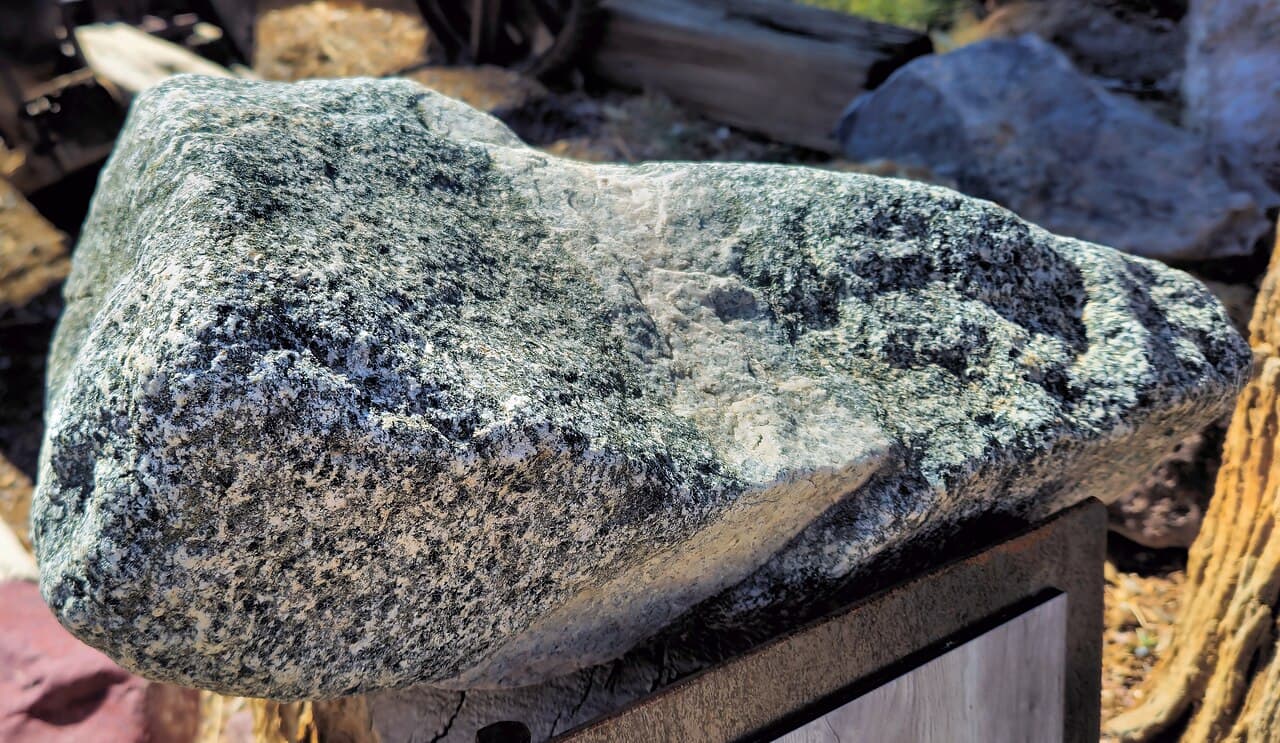
Gabbro is a dark, coarse-grained igneous rock that crystallized slowly deep inside the Earth. It shares its chemical recipe with basalt — both are mafic rocks rich in iron and magnesium and poor in silica — but where basalt cools fast at the surface and ends up fine-grained, gabbro cools over thousands of years underground, giving its mineral grains plenty of time to grow large. The result is a heavy, dense stone, usually dark green-gray to nearly black, in which you can clearly see a salt-and-pepper mosaic of interlocking crystals when you look closely.
Although geologists keep the name gabbro for this specific dark plutonic rock, you will often meet it in the stone trade under the misleading label "black granite." Polished gabbro is a popular countertop and monument stone, but it is not granite at all: true granite is a pale, quartz-rich rock, while gabbro contains essentially no quartz and is built mostly from plagioclase feldspar and dark pyroxene. Recognizing gabbro is largely a matter of pairing that dark color with a clearly coarse, crystalline texture and confirming the absence of glassy quartz grains.
Gabbro at a glance
- Classification
- Igneous rock — mafic, intrusive (plutonic)
- Rock type
- Igneous (intrusive/plutonic)
- Composition
- Plagioclase feldspar and pyroxene (± olivine); no quartz
- Hardness
- About 6, but it is an aggregate of several minerals rather than one
- Luster
- Dull to slightly glassy on fresh mineral grains; high polish when finished
- Colors
- Dark green-gray to black; some varieties show flashes of feldspar
- Texture
- Coarse-grained (phaneritic); interlocking crystals visible to the eye
What type of rock is gabbro?
Gabbro is an igneous rock — it solidified from molten rock — and specifically the intrusive or plutonic kind, meaning the magma crystallized slowly deep below the surface rather than erupting as lava. In chemical terms it is mafic: low in silica and high in iron and magnesium, which is why its minerals are dark and the rock as a whole is heavy. That slow, deep cooling is the single most important fact about gabbro, because it explains the coarse grain that distinguishes it from its fast-cooled, fine-grained twin.
The easiest way to place gabbro is to think of it as the underground version of basalt. The two have nearly identical compositions, but cooling history sets them apart: basalt chilled quickly at the surface and is fine-grained, while gabbro cooled at depth and is coarse-grained with crystals you can pick out by eye. Gabbro is neither sedimentary nor metamorphic — it is not cemented sediment, and it has not been recrystallized from a parent rock by heat and pressure. It is a primary crystallization product of mafic magma.
How gabbro forms
Gabbro forms when a body of mafic magma becomes trapped within the crust and cools very slowly instead of reaching the surface. Insulated by the surrounding rock, the magma loses heat over a long span of time, and that unhurried cooling lets the crystals grow large and interlock tightly. The minerals crystallize in sequence — typically dark pyroxene and any olivine early, with calcium-rich plagioclase feldspar growing alongside — until the whole mass has solidified into a coarse, dense rock.
Much of Earth's gabbro is hidden: it makes up a large part of the lower oceanic crust, sitting beneath the basalt that paves the seafloor, and it crystallizes in the magma chambers that feed basaltic volcanoes. It is also a key rock of large layered intrusions, where successive batches of settling crystals can build up spectacular banded layers of different minerals. Where slabs of old ocean floor have been thrust up onto land in formations called ophiolites, gabbro is exposed and can be studied directly, giving geologists a rare look at material that normally lies kilometers down.
How to identify gabbro
Start with the two defining traits: color and grain. Gabbro should read as dark — green-gray to black — and it should be clearly coarse-grained, with individual crystals large enough to see without magnification. Look closely and you will usually find a speckled, salt-and-pepper interlock of dark pyroxene and slightly paler plagioclase. The rock also feels distinctly heavy and dense for its size, a direct consequence of its iron- and magnesium-rich minerals.
The decisive test is to look for quartz, which gabbro essentially lacks. If a coarse-grained rock contains obvious glassy, gray, translucent quartz grains and pink or white feldspar and reads pale overall, it is granite, not gabbro. To separate gabbro from basalt, check the grain size again: if the dark rock is so fine that you cannot make out crystals with the naked eye, it is basalt — the volcanic equivalent — whereas gabbro's grains are plainly visible. A lighter, grayer rock dominated by white feldspar with only modest dark minerals is likely diorite, the intermediate cousin that sits between gabbro and granite in composition.
What gabbro is used for
Gabbro is hard, tough, and takes an excellent polish, which makes it valuable as a dimension stone. Cut and finished, it is sold as "black granite" for kitchen countertops, floor and wall tiles, facing panels, and especially monuments and headstones, where its deep dark color and durability are prized. Its resistance to weathering means polished gabbro surfaces hold their look outdoors for a very long time.
Beyond decorative use, crushed gabbro serves as a strong, durable aggregate for road base, concrete, asphalt, and railroad ballast, much like its fine-grained relative basalt. Some gabbroic and related layered intrusions are also important sources of metal ores — bodies of this kind host significant deposits of nickel, copper, chromium, and platinum-group elements — so gabbro can be economically important not only as building stone but as a host for valuable minerals.
Gabbro look-alikes
Frequently asked questions
What type of rock is gabbro?
Gabbro is an igneous rock — specifically an intrusive (plutonic), mafic one that crystallized slowly deep underground. It is not sedimentary or metamorphic. The slow, deep cooling is why it is coarse-grained, while its low-silica, iron-rich chemistry is why it is dark.
What is the difference between gabbro and basalt?
They have essentially the same chemical composition, but basalt cooled quickly at the surface and is fine-grained, while gabbro cooled slowly at depth and is coarse-grained with crystals visible to the eye. Gabbro is the plutonic version of basalt; basalt is the volcanic version of gabbro.
Is gabbro the same as black granite?
No. "Black granite" is a stone-trade name often used for polished gabbro, but geologically the two are different rocks. True granite is pale and quartz-rich, while gabbro is dark and contains essentially no quartz, being built mainly from plagioclase feldspar and pyroxene.
How can I identify gabbro?
Look for a dark green-gray to black, coarse-grained, dense rock with a speckled interlock of dark and paler crystals visible to the naked eye. Confirm it has no glassy quartz grains. If it is dark but fine-grained it is basalt, and if it shows clear quartz and reads pale it is granite.
Is yours gabbro? Find out from a photo
Photograph your rock in good light and get an identification with an honest confidence level, the look-alikes to rule out and the at-home tests that confirm it.
Identify my rock freeOn Android? Get the free rock identifier app
Related
More rocks in the field guide
Keep exploring
More on rocks: how to identify a rock, what kind of rock is this and the Mohs hardness scale.
Last updated 2026-06-25. Identification guidance is educational — confirm important results with the diagnostic tests described or a qualified expert.