Kunzite
Also known as: Pink spodumene, Lilac spodumene
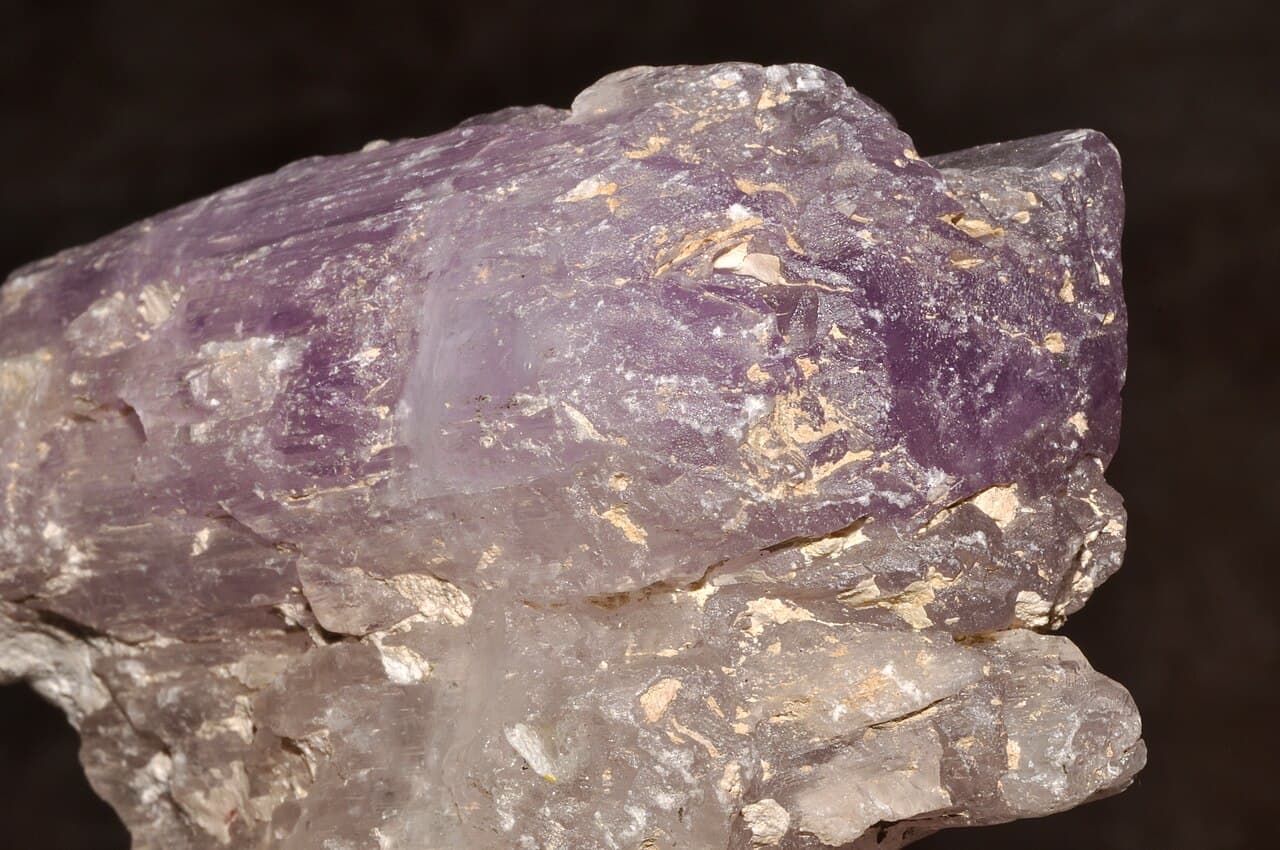
Kunzite is the pink-to-lilac gem variety of spodumene, a lithium aluminum silicate (an inosilicate, or chain silicate). Its delicate color — ranging from soft baby pink through rose to a cool violet-lilac — comes from traces of manganese, and the best stones combine that gentle hue with excellent transparency and a bright, glassy luster. Kunzite typically grows as long, flattened, vertically striated crystals, and because it is reasonably hard (about 6.5 to 7 on the Mohs scale) it is durable enough to wear, which is why it is usually encountered as a faceted gemstone rather than as rough mineral chunks.
Two features set kunzite apart and also make it a challenging stone. First, it has perfect cleavage in two directions, which makes the crystals fragile and notoriously difficult to cut — a careless knock or a wrong move at the wheel can split a stone cleanly. Second, it is strongly pleochroic, meaning it shows different color intensities depending on the angle you view it from, so a cutter must orient the gem carefully to capture the richest pink face-up. Like its mineral parent spodumene, kunzite is a lithium mineral, a fact noted here only as part of its chemistry.
Kunzite at a glance
- Classification
- Mineral — pink/lilac gem variety of spodumene (lithium aluminum inosilicate)
- Composition
- LiAlSi₂O₆ (spodumene, colored pink by trace manganese)
- Hardness
- 6.5–7 (Mohs)
- Luster
- Vitreous (glassy)
- Streak
- White
- Colors
- Pale pink, rose, to violet-lilac (color from manganese); can fade in strong light
- Crystal system
- Monoclinic (long, flattened, striated prisms)
- Transparency
- Transparent to translucent
How to identify it
The combination of a soft pink-to-lilac color, glassy clarity and obvious pleochroism is the strongest clue to kunzite. Tilt a faceted stone and watch the color shift in strength from a deeper pink in one direction to paler or near-colorless in another — that pronounced pleochroism is highly characteristic and is one reason good kunzite is usually cut as a long stone oriented to face up at its richest. Rough crystals are also distinctive: they form long, flattened prisms with strong lengthwise striations running down the faces.
Hardness and cleavage together help confirm it. Kunzite is fairly hard at 6.5 to 7, so it will scratch glass and resist a steel knife, ruling out softer pink stones. But unlike quartz, it has perfect cleavage in two directions, so it can split along flat, mirror-bright planes rather than breaking only with a curved fracture — and you may see flat cleavage faces or incipient cracks on a specimen. A transparent pink-lilac gem that is hard, strongly pleochroic, and shows flat cleavage planes and lengthwise striations is very likely kunzite.
Colors and varieties
Kunzite's color palette runs from a faint, almost watery pink through clear rose to a cooler pinkish-violet or lilac, with the manganese content driving how deep the color reads. Truly saturated kunzite is uncommon; most natural material is on the lighter side, so a stone with a strong, even pink or a rich lilac is the more prized. Because the stone is so strongly pleochroic, the apparent color also depends on viewing direction, and skilled cutting is what brings out the best face-up hue.
Spodumene comes in several gem varieties, and kunzite is the pink-to-lilac one; its green counterpart is hiddenite, and there are also yellow and colorless spodumenes. It is worth knowing that some kunzite on the market has been irradiated and/or heated to intensify the pink or violet, and that kunzite's color can be unstable — both natural and treated stones may fade with prolonged exposure to strong light. This light-sensitivity has earned kunzite the nickname of an "evening stone," best enjoyed away from constant bright sun.
Meaning and properties
In crystal traditions kunzite is treated as a tender heart stone. Its gentle pink-lilac color leads many people to associate it with love, compassion, emotional healing and the easing of heartache, and it is commonly linked with the heart chakra and used in meditation as a soothing, opening influence. People keep or wear kunzite as a calming, comforting stone said to encourage gentleness toward oneself and others and to help release stress and tension.
These associations are spiritual and cultural, not medically proven effects. Kunzite is a lovely gem to collect and wear, but it is not a remedy for any emotional or physical condition and should never take the place of counseling, medical advice or professional care. Appreciate kunzite for its beauty, rarity and the meaning people attach to it, and turn to qualified professionals for genuine health and emotional support.
Value
Kunzite's worth is driven above all by color and size. Because most kunzite is pale, stones with a strong, even pink or an attractive rich lilac are the most desirable, and color tends to deepen in larger gems, so big, well-saturated, clean stones sit at the top of the range. High transparency, an absence of visible inclusions or cracks, and skilled cutting that maximizes the face-up color all add to value, while pale, washed-out or heavily included material is far more modest.
Cutting quality carries unusual weight for kunzite because the stone is so difficult to fashion — its perfect cleavage and strong pleochroism mean a well-oriented, cleanly cut gem represents real skill and risk, and that is reflected in the price. Light-stability is a quiet factor too, since a color prone to fading affects desirability. There is no fixed price for kunzite; comparing similar stones, the one with deeper, more even color, better clarity and finer cutting will command the premium.
Real vs. fake
The most common issues with kunzite are not crude fakes but treatment and substitution. Much kunzite is irradiated and/or heated to boost its pink or violet, and because the resulting color can fade, a stone's color may not be permanent — reputable sellers should disclose treatment. Kunzite is also confused with other pink gems such as morganite, pink topaz, rose quartz and pink sapphire, sometimes innocently and sometimes not, so it pays to check the diagnostic properties rather than relying on color alone.
Use kunzite's distinctive traits to confirm it. Genuine kunzite shows strong pleochroism (a clear color shift as you tilt it), has perfect cleavage in two directions that can appear as flat, bright internal planes, and is hard enough (6.5–7) to scratch glass. Glass imitations tend to show tiny round bubbles, a single flat color with no pleochroism, and no cleavage, and they may be softer. If a "kunzite" shows no directional color change and no sign of cleavage, treat the identification with suspicion and seek gemological testing.
Care
Kunzite needs more care than its hardness alone suggests. Despite being 6.5 to 7 on the Mohs scale, its perfect two-directional cleavage makes it brittle and prone to splitting or chipping from a sharp knock, so protect it from impacts, avoid wearing kunzite rings during rough work, and set or store it where it will not be banged against harder stones. Sudden temperature changes can also stress the stone and should be avoided.
Light is kunzite's other weakness: prolonged exposure to strong sunlight can fade its pink-to-lilac color, so it is best worn for evenings or occasions and stored in the dark rather than displayed in a sunny window. Clean it gently with lukewarm water, mild soap and a soft cloth or brush, and never use ultrasonic or steam cleaners, whose vibration and heat can exploit the cleavage and crack the gem. With gentle handling and protection from strong light, kunzite will keep its delicate color and brilliance.
Kunzite look-alikes
Frequently asked questions
What is kunzite?
Kunzite is the pink-to-lilac gem variety of spodumene, a lithium aluminum silicate. Its color comes from trace manganese, it is fairly hard (Mohs 6.5–7), and it is prized as a transparent faceted gem. It is also strongly pleochroic (its color shifts with viewing angle) and has perfect cleavage, which makes it fragile and difficult to cut.
Why does kunzite fade in sunlight?
Kunzite's pink-to-lilac color, especially in irradiated or heat-treated stones, can be unstable, and prolonged exposure to strong sunlight can gradually fade it toward paler or near-colorless. For that reason kunzite is sometimes called an "evening stone" — wear it away from constant bright sun and store it in the dark to preserve the color.
How can I tell kunzite from rose quartz or morganite?
Look for pleochroism and cleavage. Kunzite shows a clear color shift as you tilt it and has perfect cleavage that can appear as flat, bright internal planes. Rose quartz is usually milky, has no cleavage and little pleochroism. Morganite is harder and breaks with a curved fracture instead of flat cleavage. A clear, color-shifting pink gem with flat cleavage planes is most likely kunzite.
Is kunzite hard to wear in jewelry?
It can be. Although kunzite is hard enough to scratch glass (Mohs 6.5–7), its perfect two-directional cleavage makes it brittle and prone to chipping or splitting from a sharp knock. Protect it from impacts and sudden temperature changes, avoid ultrasonic and steam cleaners, and keep it out of strong sunlight — earrings and pendants are gentler settings than everyday rings.
Is yours kunzite? Find out from a photo
Photograph your crystal in good light and get an identification with an honest confidence level, the look-alikes to rule out and the at-home tests that confirm it.
Identify my crystal freeOn Android? Get the free rock identifier app
Related
More crystals in the field guide
Keep exploring
More on crystals: the full list of crystal types, how to identify a crystal and crystals by color.
Last updated 2026-06-25. Identification guidance is educational — confirm important results with the diagnostic tests described or a qualified expert.