Stibnite
Also known as: Antimonite, Antimony glance
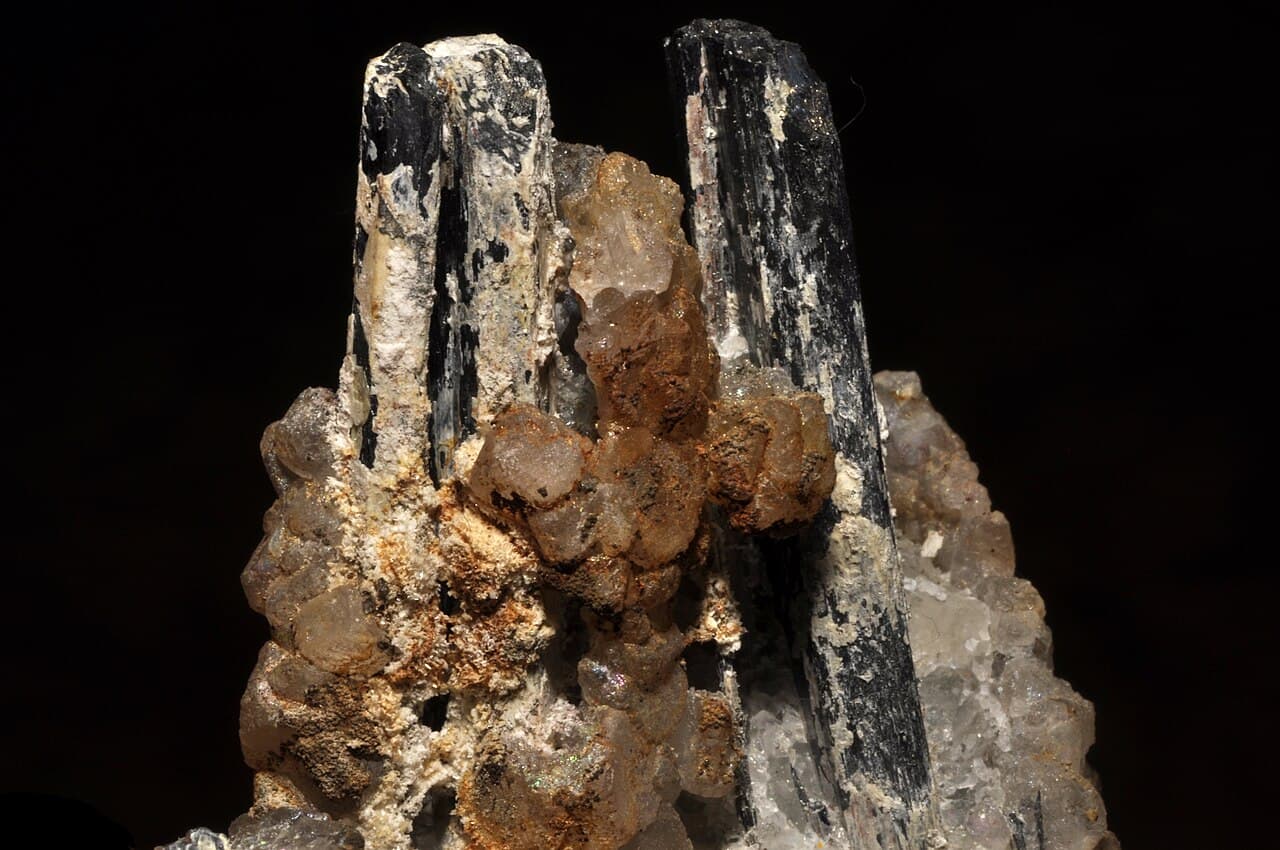
Stibnite is the most important ore of antimony — a metallic steel-gray sulfide mineral with the chemical formula Sb₂S₃. It is famous among collectors for its dramatic crystals: long, slender, knife-like blades and prisms that radiate outward in dazzling silvery sprays. The legendary specimens from the Ichinokawa mine in Japan, with blades reaching well over a foot long, are considered some of the finest crystals of any mineral in the world.
Despite its bright metallic shine and bold form, stibnite is surprisingly delicate. It is one of the softest of the common metallic minerals at just 2 on the Mohs scale, so a fingernail can scratch it, and the slender crystals bend and break easily. It also has a very low melting point and will fuse in the flame of an ordinary candle. Important: stibnite is an antimony compound and is toxic, so it should be handled with care and never used in contact with food or drink.
Stibnite at a glance
- Classification
- Mineral — antimony sulfide (sulfide class)
- Composition
- Sb₂S₃ (antimony sulfide)
- Hardness
- 2 (Mohs) — very soft
- Luster
- Metallic, often brilliant on fresh crystal faces
- Streak
- Lead-gray to black
- Colors
- Steel-gray to lead-gray, often with a bluish or iridescent tarnish
- Crystal system
- Orthorhombic
- Transparency
- Opaque
- Magnetic
- Not magnetic
How to identify it
The single most telling feature of stibnite is its habit: long, slender, steel-gray blades or prisms with lengthwise striations (fine parallel grooves running along the crystal), frequently grouped into radiating, fan-like or matted sprays. Combine that shape with its softness — a fingernail or a copper coin will scratch it easily (Mohs 2) — and its lead-gray to black streak, and you have a strong case for stibnite. The blades often show a one-direction perfect cleavage parallel to their length, and bent or twisted crystals are common because the mineral is so flexible.
A simple flame test is diagnostic and dramatic: stibnite has such a low melting point that a sliver held in a match or candle flame will melt almost immediately, something almost no look-alike mineral does. Because the mineral is soft and contains toxic antimony, do any such test with a tiny fragment, away from food, and wash your hands afterward. Massive (non-crystalline) stibnite can look like a dull gray metallic mass, in which case the softness, streak, and low melting point are the keys.
Colors and varieties
Stibnite is essentially monochrome: fresh surfaces are a bright steel-gray to lead-gray with a strong metallic luster. With exposure to air, crystals often develop a darker, sometimes bluish, black, or faintly iridescent tarnish, and weathered specimens may show yellowish or whitish crusts where the antimony has begun to oxidize into secondary minerals such as stibiconite or valentinite.
There are no color 'varieties' in the gemstone sense — stibnite is collected and valued for crystal form, size, and luster rather than color. The most prized material is the slender, lustrous, well-terminated bladed crystals (the Ichinokawa, Japan and Romanian localities set the standard), with Chinese localities such as the Wuning and Lushi areas producing many of the large showy specimens seen on the market today.
Meaning and properties
In crystal-collecting and metaphysical circles, stibnite is sometimes described as a stone of focus, transformation, and 'cutting away' what no longer serves — associations drawn from its sharp, blade-like crystals and its silvery metallic shine. These ideas are cultural and spiritual rather than scientifically established effects.
A genuine safety note matters more than any folklore here: stibnite contains antimony, which is toxic. Do not handle it and then touch food, never use a specimen as a cup or drinking vessel (antimony cups historically caused real poisoning), keep it away from children, and wash your hands after handling. Display rather than carry it, and never grind, lick, or ingest it.
Value: what stibnite is worth
Stibnite's value as a mineral specimen is driven almost entirely by crystal quality: length, slenderness, sharpness of the terminations, luster, and freedom from damage. Small massive or broken pieces are inexpensive and common, while undamaged, lustrous bladed clusters — especially large display specimens from the classic Chinese, Romanian, or Japanese localities — command substantial collector prices that rise sharply with size and condition.
Because the blades are so soft and brittle, condition is everything: bent, cleaved, or chipped tips dramatically lower a piece's worth. As an industrial commodity, stibnite is also mined as the principal ore of antimony, used in flame retardants, alloys, and batteries, but its market as a collector mineral is separate from and often more lucrative per specimen than its ore value.
Real vs. fake stibnite
Outright fakes are uncommon, but two honest mistakes are easy to make. First, broken-off blades are sometimes glued onto a matrix or back onto a cluster to 'repair' or enhance a specimen; inspect the base of each crystal under magnification for glue residue, unnatural angles, or filler. Second, stibnite is regularly confused with other gray metallic sulfides such as galena and bismuthinite (see the look-alikes below).
To confirm a real stibnite, check the trio that is hard to fake together: very low hardness (scratched by a fingernail or copper), a lead-gray to black streak on unglazed porcelain, and an extremely low melting point so a tiny sliver fuses in a candle flame. Handle test fragments carefully because of the antimony content, and treat any 'too perfect' large blade with healthy skepticism until you have examined its base.
Care
Stibnite is fragile and chemically reactive, so treat it gently. Avoid water and chemical cleaning, which can etch the surface and accelerate tarnish; instead remove dust with a soft, dry brush or gentle puff of air. The slender blades snap and bend with little pressure, so support specimens fully and never grip them by a single crystal.
Keep stibnite out of strong, prolonged sunlight and away from humidity and heat, which encourage the dull oxidation crusts that ruin its metallic shine over time. Because it contains toxic antimony, store it where it will not be handled casually, wash your hands after touching it, and never store it with or near anything used for food or drink.
Stibnite look-alikes
Frequently asked questions
Is stibnite toxic or dangerous to handle?
Stibnite is an antimony sulfide, and antimony is toxic. Brief handling of a solid specimen is generally fine, but you should wash your hands afterward, never handle it before touching food, and never use it as a cup or drinking vessel — antimony vessels caused real poisonings historically. Keep it away from children, and never grind, lick, or ingest it.
Why is stibnite so soft and easily broken?
Stibnite ranks only 2 on the Mohs hardness scale, so even a fingernail can scratch it, and its long slender crystals bend and snap with very little force because of a perfect cleavage running along their length. That fragility is one reason undamaged, well-formed specimens are prized and relatively valuable.
How can I tell stibnite from galena?
Galena is heavier (denser) for its size, breaks into bright silver cubes along three cleavage directions, and is a touch harder. Stibnite forms slender, lengthwise-striated blades, has a single lengthwise cleavage, and melts almost instantly in a candle flame, which galena does not.
Can stibnite really melt in a candle flame?
Yes. Stibnite has an unusually low melting point for a metallic mineral, so a thin sliver held in a match or candle flame will fuse almost immediately. This is a classic diagnostic test, but do it with a tiny fragment, away from food, and wash your hands afterward because of the antimony content.
Is yours stibnite? Find out from a photo
Photograph your mineral in good light and get an identification with an honest confidence level, the look-alikes to rule out and the at-home tests that confirm it.
Identify my mineral freeOn Android? Get the free rock identifier app
Related
More minerals in the field guide
Keep exploring
More on minerals: how to identify a mineral, the streak test and the full list of crystal types.
Last updated 2026-06-25. Identification guidance is educational — confirm important results with the diagnostic tests described or a qualified expert.