Variscite
Also known as: Utahlite, Amatrice (variscite with matrix), Variquoise
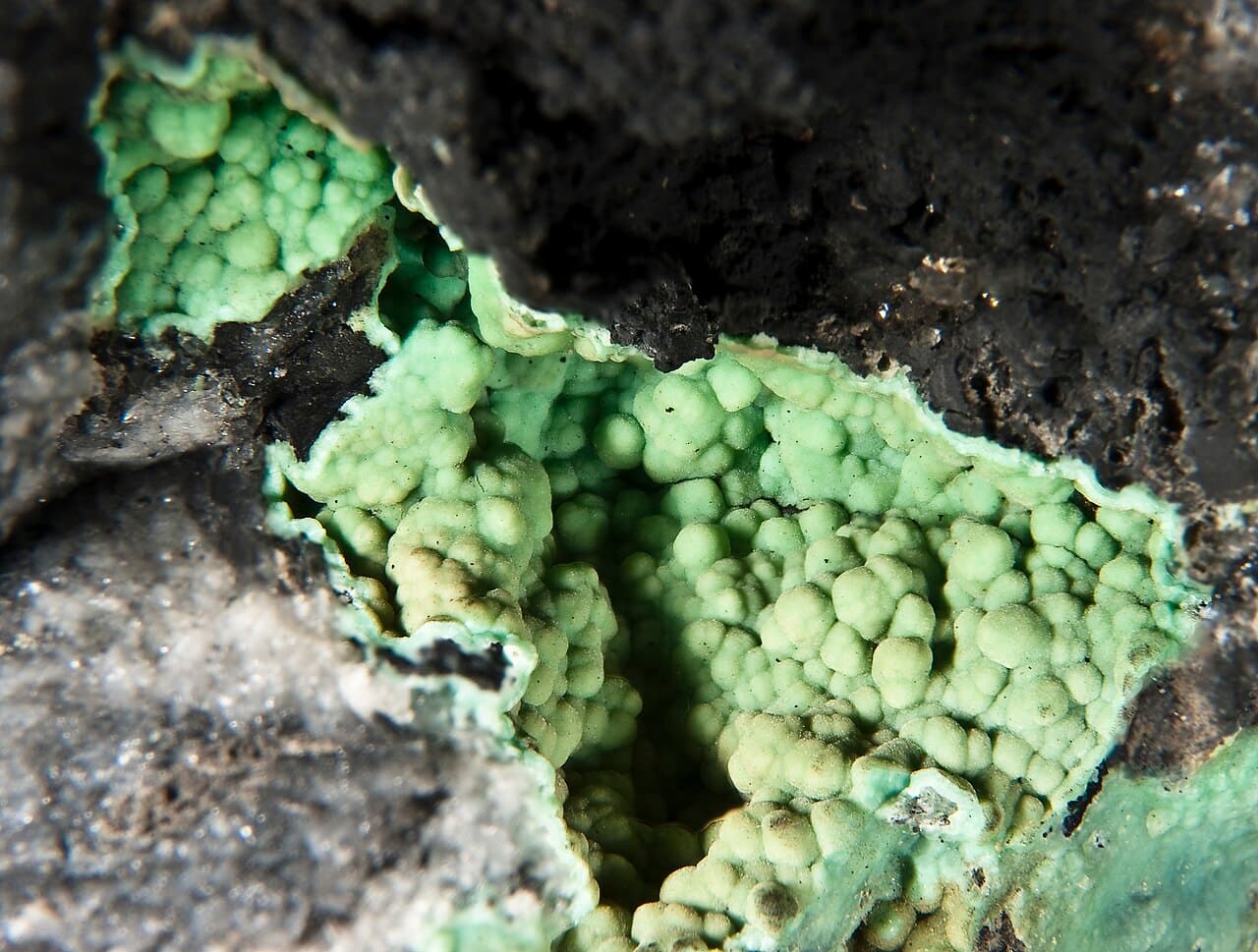
Variscite is a hydrated aluminum phosphate mineral best known for its soft, soothing apple-green to blue-green color, usually seen as opaque, waxy material rather than as sharp crystals. In nature it almost always forms as fine-grained masses, crusts, and rounded nodules that fill cracks and cavities in aluminum-rich rock, so the pieces that reach collectors and jewelers are typically cut as cabochons, beads, or polished slabs. A great deal of variscite is laced or rimmed with a webby brown, gray, or white matrix — host rock and associated minerals woven through the green — and that veined pattern is part of its charm and a useful clue to its identity.
The single most important thing to know about variscite is that it is a classic turquoise look-alike: same general formula family (both are hydrated aluminum phosphates), same nodular habit, often the same kind of dark matrix veining, and frequently sold side by side in the same cases. The two main giveaways are color and hardness. Variscite leans distinctly green where turquoise leans blue, and variscite is a softer stone (about 3.5 to 4.5 on the Mohs scale) than turquoise. Most variscite on the market is genuinely from a small number of deposits, with classic American material coming from Utah and Nevada, and it is prized precisely for green tones that good turquoise rarely reaches.
Variscite at a glance
- Classification
- Mineral — phosphate (hydrated aluminum phosphate)
- Composition
- AlPO₄·2H₂O
- Hardness
- 3.5–4.5 (Mohs)
- Luster
- Waxy to vitreous, often dull on natural surfaces
- Streak
- White
- Colors
- Apple-green, emerald-green to blue-green and teal, often with brown, gray, or white matrix veining
- Crystal system
- Orthorhombic
- Transparency
- Translucent to opaque (almost always opaque in jewelry material)
How to identify it
Start with color and texture: variscite is the stone that looks like green turquoise. Look for an opaque, waxy-to-slightly-glassy green — anywhere from pale apple-green to a deeper emerald or blue-green teal — usually in a smooth, even body rather than as visible crystals. Most pieces carry a network of brown, tan, gray, or white matrix veining running through or around the green, much like turquoise's matrix, and many come as rounded nodules or as material cut from nodules. If you are holding a green, waxy, matrix-veined cabochon or bead that reads as 'turquoise but green,' variscite should be your first guess.
Hardness and a few simple checks separate it from its look-alikes. Variscite is fairly soft, about 3.5 to 4.5 on the Mohs scale, so it can be scratched by a steel knife and leaves a white streak; it is noticeably softer than the translucent green chalcedony chrysoprase, which will not scratch so easily. It is not magnetic, and as a phosphate it does not fizz in household acid the way a carbonate would. Because color and habit overlap so heavily with turquoise, the most reliable distinction in practice is simply that variscite is greener and softer — and, where it matters, a gemologist can confirm it by its optical and density properties.
Colors and varieties
Variscite's signature is green: most stones range from a pale, milky apple-green through vivid spring-green to a richer emerald or forest tone, and some grade into blue-green and teal where the color edges toward turquoise. The green comes from trace chromium and vanadium substituting in the aluminum phosphate structure. The most sought-after material is an even, saturated green with a smooth, waxy surface and minimal dead spots, while paler or patchy pieces are more common and more affordable.
The other defining variety feature is matrix. Many of the most distinctive stones — often sold as variscite with matrix, and sometimes under regional trade names such as amatrice — show a striking spiderweb or patchwork of brown, gray, black, or white host rock and associated minerals threading through the green, producing landscape-like patterns that collectors prize. Material from the classic Utah deposits and from Nevada is especially known for these patterns. Because of all this, variscite is frequently sold under the broad 'turquoise' umbrella in casual settings even though it is a distinct mineral, so the green color and any matrix pattern are your best at-a-glance variety cues.
Meaning and properties
In modern crystal-working traditions variscite is treated as a gentle, calming green stone, associated with encouragement, hope, and emotional balance, and often described as soothing for stress and helpful for clear, calm communication. Its soft green color naturally links it in these practices to ideas of renewal, the heart, and quiet reassurance, and people keep or wear it as a steadying, comforting stone.
These associations are cultural and spiritual rather than scientifically established medical effects. Variscite is a lovely stone to collect and wear for its color and its calm symbolism, but it is not a treatment for anxiety or any physical or emotional health condition and should not replace advice or care from a qualified professional. Enjoy it for its beauty and its meaning rather than as medicine.
What it's worth
Variscite is a collector and lapidary favorite, and its value tracks color, pattern, and source. The most prized material shows an even, saturated green (the very best rivaling or exceeding fine turquoise in desirability among those who love green stones), a smooth waxy polish, and either a clean body or an attractive, well-defined matrix pattern. Stones from the famous classic deposits with distinctive spiderweb or landscape matrix command the strongest interest, while pale, chalky, or heavily pitted material is much more modest.
Because top variscite can be genuinely desirable, the practical money issue is honest identity: making sure you are buying natural variscite and knowing whether a stone has been stabilized (impregnated with resin to harden porous material, a common and generally accepted treatment that should be disclosed) or, less acceptably, dyed or reconstituted. As always, value follows honest identity — confirm what the stone actually is and how it has been treated, and the price should make sense for the quality in front of you.
Real vs. fake
The most common confusion with variscite is not an outright fake but a mix-up with turquoise — the two are easily swapped in casual sales, and a 'green turquoise' may in fact be variscite (or vice versa). Beyond that, the things to watch for are treatments and imitations. Porous variscite is often stabilized with resin to make it durable enough to cut and wear; this is usually acceptable when disclosed, but it should be disclosed. Dyed material — including dyed howlite or dyed magnesite tinted green to imitate green stones — is a cheaper imitation, and dye often rubs off on a cotton swab dipped in acetone, pools darker in cracks, and sits on a stone that is softer and chalkier than natural variscite.
To check a suspect stone, lean on color, hardness, and surface behavior. Genuine variscite is green to blue-green with a natural waxy luster and, often, real host-rock matrix that looks geologically integrated rather than painted on; reconstituted or block material can look too uniform, with an artificial, plasticky matrix. The acetone-swab test will lift dye but not natural color, the hardness check (variscite is a soft 3.5 to 4.5 and scratches with steel) helps rule out harder green stones like chrysoprase, and glass or plastic imitations often show bubbles, mold seams, or a too-perfect color. When in doubt, buy from a seller who clearly states the species and any treatment, and get costlier pieces confirmed by a gemologist.
Care
Variscite needs gentle care because it is relatively soft and often porous. At about 3.5 to 4.5 on the Mohs scale it scratches and chips more easily than harder gemstones, so store it separately from harder stones and metal, and treat rings or bracelets as occasional wear rather than everyday rough use. Because untreated material can be porous, it can also absorb oils, perfumes, and lotions, so put variscite jewelry on after applying cosmetics and wipe it down after wear.
Clean variscite only with a soft, barely damp cloth and dry it promptly; avoid soaking it, and keep it away from solvents, household chemicals, and prolonged heat or strong sunlight, all of which can dull the surface or, in dyed or stabilized pieces, affect the color and resin. Skip ultrasonic and steam cleaners, which can be too harsh for a soft, porous, sometimes-treated stone. Treated kindly, variscite keeps its soothing green and waxy polish for many years.
Variscite look-alikes
Frequently asked questions
Is variscite the same as turquoise?
No, but they are close cousins and constantly confused. Both are hydrated aluminum phosphates that form as matrix-veined nodules, which is why they look so similar. The simplest difference is color — variscite is green, while turquoise is sky-blue to blue-green. Variscite is also a distinct mineral species in its own right and is prized for green tones that turquoise rarely reaches, so a green stone sold loosely as 'turquoise' may actually be variscite.
How can I tell variscite from chrysoprase?
Use hardness and look. Chrysoprase is a green chalcedony (a form of quartz), so it is hard (about 6.5–7 on the Mohs scale) and will not scratch with a steel knife, and it is usually more translucent and glassy, often with no matrix. Variscite is much softer (about 3.5–4.5), so steel scratches it; it tends to be more opaque and waxy, and it frequently shows brown, gray, or white matrix veining.
Is variscite a rare stone?
Fine variscite is fairly uncommon and prized by collectors, especially top-color material with attractive matrix. It comes from a limited number of deposits, with classic American sources in Utah and Nevada. Plenty of pale or chalky variscite exists and is affordable, but evenly saturated green stones with clean color or striking spiderweb matrix are the scarcer, more sought-after grades.
Is variscite ever treated or stabilized?
Yes. Because much variscite is porous and soft, it is often stabilized — impregnated with a clear resin to harden it enough to cut and wear. Stabilization is common and generally accepted as long as it is disclosed. Less acceptable are dyeing and reconstituting (binding ground material together). A reputable seller should tell you whether a stone is natural, stabilized, or treated, so ask before you buy.
Is yours variscite? Find out from a photo
Photograph your mineral in good light and get an identification with an honest confidence level, the look-alikes to rule out and the at-home tests that confirm it.
Identify my mineral freeOn Android? Get the free rock identifier app
Related
More minerals in the field guide
Keep exploring
More on minerals: how to identify a mineral, the streak test and the full list of crystal types.
Last updated 2026-06-25. Identification guidance is educational — confirm important results with the diagnostic tests described or a qualified expert.