Pumice
Also known as: Pumice stone, Volcanic froth, Pumicite (when powdered)
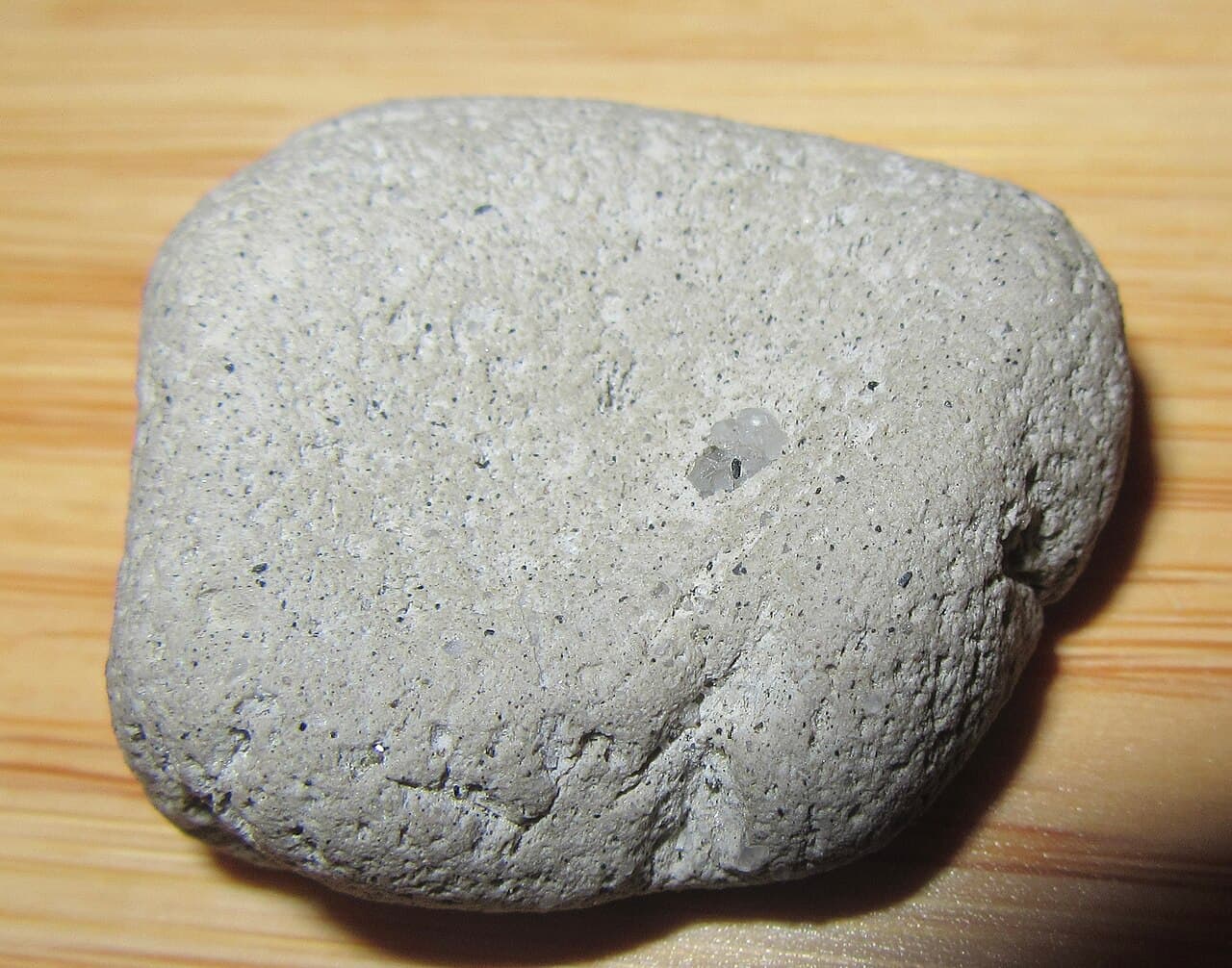
Pumice is a pale, frothy volcanic rock so riddled with gas-bubble holes that it is light enough to float on water. It is, in effect, a solidified foam: when gas-charged molten rock erupts and chills almost instantly, the countless bubbles trying to escape are frozen in place, leaving a rock that is mostly empty space. The thin glassy walls between those holes give pumice its characteristic spongy, abrasive feel and its usual white, cream or light-gray color. Pick up a fist-sized piece and the first surprise is the weight — or rather the lack of it; pumice feels far too light for its size, which is the single most useful clue to its identity.
Geologically, pumice is a volcanic glass rather than a mass of interlocking crystals. The lava that produces it cooled so fast that its atoms never organized into a crystal lattice, exactly as happens with obsidian — the difference is simply that pumice was full of expanding gas while it froze, and obsidian was not. The result is a rock built almost entirely of tiny, thin-walled vesicles (the technical name for those gas cavities). That extreme porosity is why pumice is both remarkably light and pleasantly rough, and it is the reason the same stone shows up in your bathroom as a callus scrubber, in your garden as a soil additive, and in lightweight concrete blocks.
Pumice at a glance
- Classification
- Igneous rock — felsic, extrusive (volcanic); a vesicular volcanic glass
- Rock type
- Igneous
- Composition
- Mainly silica (SiO₂) glass, rich in aluminum, sodium and potassium
- Hardness
- About 6 on the glass walls, but the rock as a whole is so porous it crumbles easily
- Luster
- Dull to slightly glassy on the thin bubble walls
- Colors
- Usually white, cream or light gray; sometimes pale yellow, pink or brown
- Texture
- Highly vesicular (full of gas holes); glassy, frothy and porous
What type of rock is pumice?
Pumice is an igneous rock — it solidified from molten rock. More precisely it is an extrusive, or volcanic, igneous rock, meaning the melt erupted and cooled at the Earth's surface rather than slowly underground. It is not sedimentary (it is not made of cemented grains or fragments) and it is not metamorphic (it was not reshaped from a parent rock by heat and pressure). It formed in a single, fast volcanic event, and its whole character comes from how quickly that happened.
Within the igneous family, pumice has two defining qualities. First, it is felsic — built from silica-rich (high-silica) magma, the same family of melt that produces granite and rhyolite. Second, it is a volcanic glass: it cooled so fast that no crystals had time to grow, so unlike granite there are no visible interlocking grains. What makes pumice unique among volcanic glasses is that it froze while saturated with gas, so it is a foamed glass — essentially the bubbly cousin of obsidian, which is the same kind of glass without the froth.
How pumice forms
Pumice forms during explosive eruptions of gas-rich, silica-rich (felsic) magma. This kind of magma is thick and sticky, so dissolved gases such as water vapor and carbon dioxide cannot escape gently the way they do from runny basaltic lava. Instead the pressure builds until the magma erupts violently, and as it bursts into the open the trapped gas suddenly expands, whipping the melt into a froth of bubbles. Because the same eruption blasts that froth into the cool air, it chills almost instantly — far too fast for crystals to grow — locking the foam solid as a glass before the bubbles can escape or collapse.
The outcome is a rock that is mostly holes: a fragile lattice of thin glassy walls surrounding the frozen gas cavities. So much empty space is sealed inside that fresh pumice is light enough to float, and great rafts of it can drift across the ocean for months after an undersea or island eruption before slowly waterlogging and sinking. Pumice is closely related to two other products of the same eruptions: scoria, the darker, denser, basaltic foam that forms from gas-poorer lava, and volcanic ash and tuff, which are the finer fragments thrown out alongside the pumice. All are pieces of the same explosive volcanic story, differing mainly in composition and bubble content.
How to identify pumice
Start by weighing it in your hand and testing whether it floats. Pumice is astonishingly light for its size because it is mostly air, and a genuinely fresh, dry piece will usually float on water — a quick, decisive test that almost no other rock passes. Then look at the surface: pumice is pale (white, cream or light gray) and covered in a mass of small holes, giving it a frothy, sponge-like or pitted appearance, and it feels gritty and abrasive against the skin. Light color plus extreme lightness plus a bubbly texture is the core signature of pumice.
Use texture and color to separate it from its look-alikes. The closest is scoria, which is also a bubbly volcanic rock but is darker (red, brown or black), denser and heavier, with larger, rounder holes — scoria generally will not float, while pumice will. Do not confuse pumice with obsidian: obsidian is the same glassy chemistry but solid and dense, with a shiny, mirror-smooth surface and sharp curved (conchoidal) edges, nothing like pumice's dull froth. And although pumice and basalt are both volcanic, basalt is a heavy, fine-grained, dark, solid rock with at most a few scattered gas holes, never the all-over foamy lightness of pumice.
What pumice is used for
Pumice's combination of hardness and lightness makes it a natural abrasive, and that is its most familiar role. As a pumice stone it is used to rub away dead skin, calluses and rough patches, and ground into powder it appears in exfoliating soaps and scrubs, heavy-duty hand cleaners, toothpaste-style polishes, and the fine abrasives used to smooth and finish wood, metal and leather. The denim industry has long used pumice for 'stonewashing' jeans, tumbling the fabric with pumice to soften it and produce a faded, worn look.
Beyond abrasives, pumice is valued precisely because it is so light and full of holes. Crushed pumice is mixed into lightweight concrete and building blocks, reducing weight while adding insulation, and it is widely used in horticulture, where its porous grains loosen and aerate soil, improve drainage, and hold moisture for plant roots — making it a staple in potting mixes, succulent and cactus blends, and hydroponic media. The same porosity makes it useful as a filter medium and a carrier for chemicals, so this humble volcanic froth quietly turns up in everything from skincare shelves to garden centers to construction sites.
Pumice look-alikes
Frequently asked questions
What type of rock is pumice?
Pumice is an igneous rock — specifically an extrusive (volcanic) one that erupted and cooled at the surface. It is a felsic, silica-rich volcanic glass that froze while full of expanding gas, which is why it is so full of holes. It is not sedimentary or metamorphic.
How can I identify pumice?
Lift it and try to float it: pumice is extremely light for its size and a fresh, dry piece usually floats on water. Look for a pale (white, cream or gray) color and a frothy, sponge-like surface full of small holes that feels gritty and abrasive. Light color, extreme lightness and a bubbly texture together point to pumice.
What is the difference between pumice and scoria?
Both are bubbly volcanic rocks, but pumice is pale, silica-rich and so full of fine holes that it floats, while scoria is darker (red, brown or black), denser, heavier and made from gas-poorer basaltic lava, so it usually sinks. Color and weight are the quickest ways to tell them apart.
What is pumice used for?
Pumice is used as a natural abrasive — pumice stones for skin, plus exfoliating scrubs, hand cleaners and polishing powders — and famously to stonewash denim. Its lightness and porosity also make it valuable in lightweight concrete and building blocks and in horticulture, where it aerates soil and improves drainage.
Is yours pumice? Find out from a photo
Photograph your rock in good light and get an identification with an honest confidence level, the look-alikes to rule out and the at-home tests that confirm it.
Identify my rock freeOn Android? Get the free rock identifier app
Related
More rocks in the field guide
Keep exploring
More on rocks: how to identify a rock, what kind of rock is this and the Mohs hardness scale.
Last updated 2026-06-25. Identification guidance is educational — confirm important results with the diagnostic tests described or a qualified expert.