Slate
Also known as: Metamorphosed shale, Roofing slate
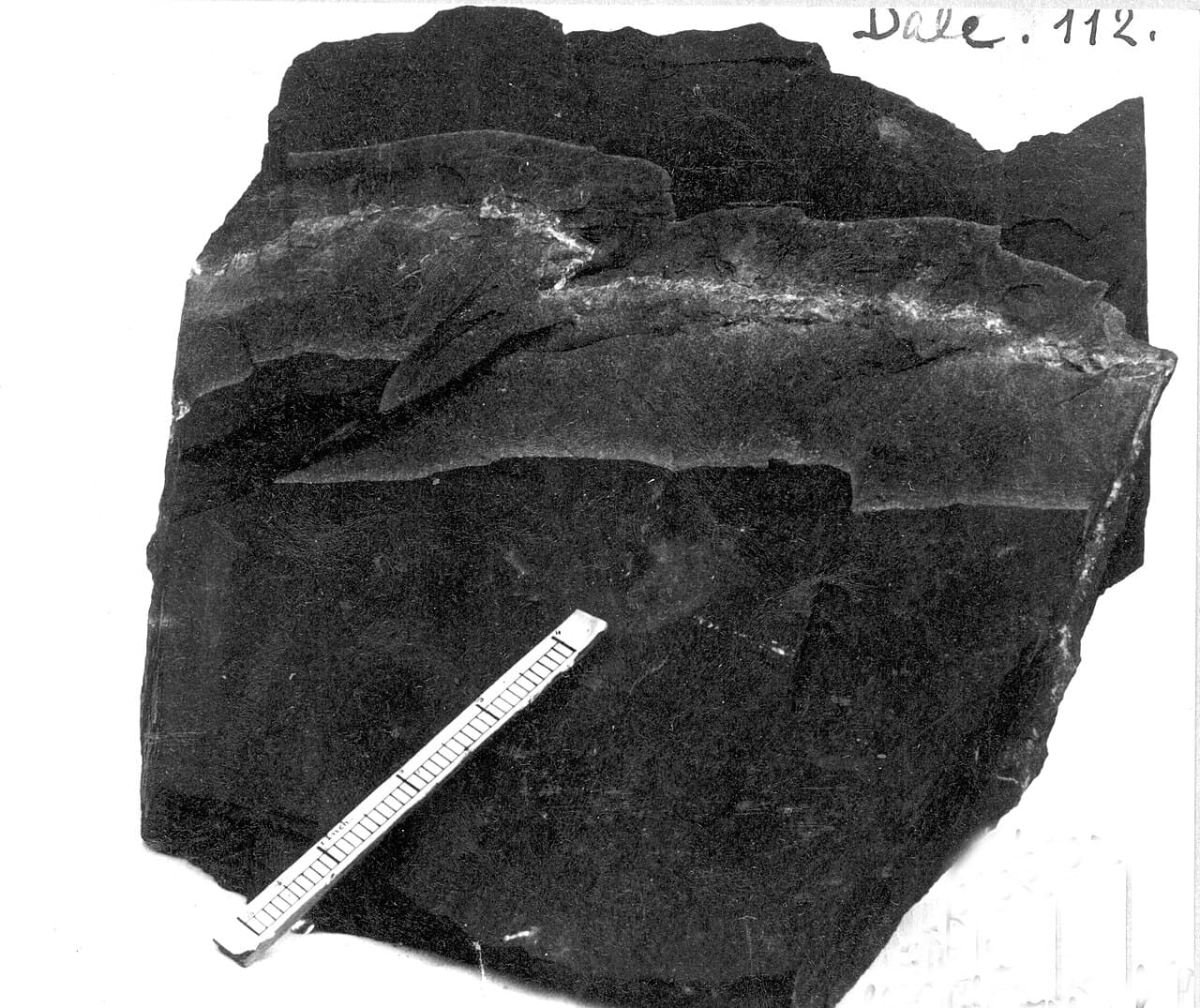
Slate is a fine-grained, low-grade metamorphic rock formed when shale or mudstone is gently compressed and heated deep within the Earth. Its single most important property is slaty cleavage: slate splits readily into flat, smooth, thin sheets along closely spaced parallel planes, which is what allows it to be cleaved into roofing tiles, flagstones and the dark writing boards that gave us the word "slate." The individual mineral grains are far too small to see with the naked eye, so a fresh surface looks dense and even, with a dull to faintly silky sheen rather than the obvious sparkle of coarser rocks.
Most slate is gray to black, but it also occurs in green, purple, red and blue-gray tones depending on its mineral content. Because it forms at the lowest grade of metamorphism, slate still resembles its sedimentary parent in being fine-grained and layered, but it is harder, more compact and far less crumbly than shale, and crucially it splits along its cleavage rather than along the original bedding. (Note that the word "slate" is also used for an online magazine, a color, paint shades and even a make of electric truck — this page is strictly about the rock.)
Slate at a glance
- Classification
- Metamorphic rock — foliated, low grade (defined by slaty cleavage)
- Rock type
- Metamorphic
- Composition
- Mainly clay minerals, mica and quartz (with chlorite, etc.)
- Hardness
- About 2.5–4 on the Mohs scale — moderately soft, but compact
- Luster
- Dull to faintly silky on cleavage surfaces
- Colors
- Gray to black, also green, purple, red and blue-gray
- Transparency
- Opaque
- Texture
- Very fine-grained (aphanitic); splits into flat sheets along slaty cleavage
- Magnetic
- Not magnetic
What type of rock is slate?
Slate is a metamorphic rock. Among the three rock families — igneous (cooled from molten rock), sedimentary (built from cemented grains or fragments) and metamorphic (an existing rock changed by heat and pressure) — slate is metamorphic. It did not crystallize from a melt and it is no longer a simple cemented sediment; it is the product of an existing sedimentary rock being squeezed and warmed until a new internal structure developed. So the answer to whether slate is igneous, sedimentary or metamorphic is metamorphic, specifically a low-grade one formed at relatively modest temperatures and pressures.
The parent rock of slate is shale, or the closely related mudstone — fine-grained sedimentary rocks made mostly of clay and silt. When shale is buried and compressed during mountain-building, the platy clay minerals begin to recrystallize into tiny micas and chlorite and, under directed pressure, align themselves perpendicular to the squeezing force. That alignment creates slaty cleavage, the set of parallel planes along which slate splits. Slate is the first step in a metamorphic sequence: with further heat and pressure, slate grades into phyllite, then schist, and eventually gneiss, each coarser and more strongly recrystallized than the last.
How slate forms
Slate forms by the low-grade metamorphism of shale or mudstone, typically in the outer parts of mountain belts where sedimentary rocks are folded and compressed but not strongly heated. As the clay-rich rock is squeezed, the tiny flaky minerals within it slowly recrystallize and rotate so that their flat faces line up in the same direction, all roughly at right angles to the main direction of pressure. This pervasive parallel alignment of microscopic platy grains is what produces slaty cleavage and the rock's ability to split into thin, flat, smooth sheets.
A key point about slate is that its cleavage is usually not parallel to the original sedimentary bedding. The bedding records how the mud was first deposited, while the cleavage records the later squeezing, and the two often cut across each other at an angle. That is why a slab of slate can show faint color banding (relict bedding) running in one direction while it splits cleanly in another. Because slate forms at low temperatures, it remains very fine-grained, with no visible individual crystals — a feature that distinguishes it from the coarser, micaceous metamorphic rocks that form at higher grades.
How to identify slate
The defining identification test for slate is its cleavage. Slate splits into thin, flat, smooth sheets along closely spaced parallel planes, and a struck slab often gives a clean, ringing break. The surfaces are flat and even, with a dull to faintly silky luster, and the rock is so fine-grained that you cannot pick out individual mineral grains even with a hand lens. The rock is moderately soft but compact and not crumbly, and it is commonly gray to black, though green, purple and red slates exist. Tap a piece: good roofing slate tends to ring rather than give a dull thud.
Use texture to separate slate from rocks on either side of it in the metamorphic sequence. Its sedimentary parent, shale, is softer, more crumbly and breaks unevenly along its bedding rather than along smooth cleavage planes, and it may smell earthy when damp. One step up in grade is phyllite, which looks like slate but has a distinct silky to satiny sheen because its micas have grown slightly larger. A further step up is schist, which is coarser still and shows clearly visible, sparkly mica flakes. If the rock splits into smooth, dull, flat sheets with no visible grains and no satiny shine, it is slate rather than crumbly shale or shinier phyllite and schist.
What slate is used for
Slate's ability to be split into thin, flat, durable, water-resistant sheets has made it a classic roofing material for centuries: roofing slates shed rain, resist weathering and can last for generations on a building. The same cleavage and durability make slate a favored flooring and paving stone, and it is widely used for wall cladding, hearths, windowsills, steps and garden flagstones. Larger, smooth slabs were traditionally used as billiard and pool table beds, where the flatness and stability of the stone are prized.
Historically, slate was the material of the writing slate and the classroom blackboard, both relying on a smooth, dark surface that takes chalk well — the origin of the everyday word "slate." It has also been used for tombstones, electrical panels and laboratory bench tops. In each case the value comes from the same combination of properties: a fine-grained, durable rock that splits cleanly into flat sheets and stands up to weather and wear. (Outside geology the word "slate" attaches to many unrelated things, from a magazine to a paint color, but those have nothing to do with the rock described here.)
Slate look-alikes
Frequently asked questions
What type of rock is slate?
Slate is a metamorphic rock. It forms by the low-grade metamorphism of shale or mudstone, so it is not igneous and is no longer simply sedimentary, even though its parent rock (shale) is sedimentary. The squeezing creates slaty cleavage, the set of planes along which slate splits.
How can I identify slate?
Look for slaty cleavage: slate splits into thin, flat, smooth sheets along closely spaced parallel planes and often rings when tapped. It is very fine-grained with no visible crystals, has a dull to faintly silky luster, is moderately soft but compact, and is usually gray to black (sometimes green, purple or red).
What is the difference between slate and shale?
Shale is the soft, crumbly sedimentary parent that splits unevenly along its bedding and may smell earthy when wet. Slate is the metamorphosed version: harder, more compact, and able to split into clean, flat, smooth sheets along slaty cleavage rather than along the original bedding.
What is slate used for?
Slate is used for roofing tiles, flooring, paving, wall cladding and flagstones because it splits into flat, durable, water-resistant sheets. It was also the material of writing slates and blackboards and is used for billiard table beds, windowsills and hearths.
Is yours slate? Find out from a photo
Photograph your rock in good light and get an identification with an honest confidence level, the look-alikes to rule out and the at-home tests that confirm it.
Identify my rock freeOn Android? Get the free rock identifier app
Related
More rocks in the field guide
Keep exploring
More on rocks: how to identify a rock, what kind of rock is this and the Mohs hardness scale.
Last updated 2026-06-24. Identification guidance is educational — confirm important results with the diagnostic tests described or a qualified expert.