Sphalerite
Also known as: Zinc Blende, Blende, Ruby Blende, Ruby Jack, Black Jack
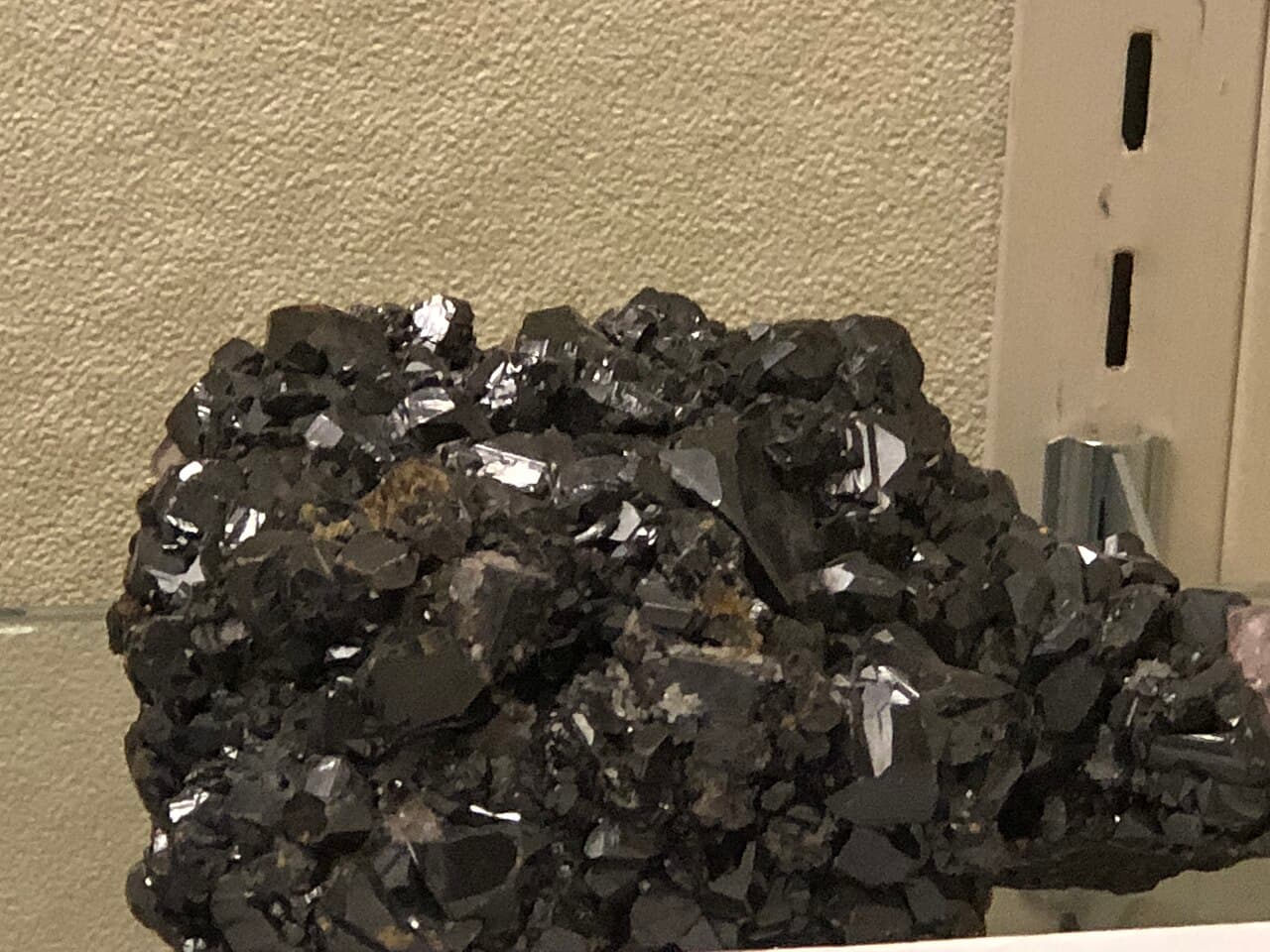
Sphalerite is zinc sulfide, the single most important ore of zinc and one of the most common sulfide minerals on Earth. Despite that industrial role, it is a tricky and rewarding mineral to identify because it is a chameleon: it can be brown, black, yellow, green, orange, or a deep gemmy red, and its luster ranges from resinous and waxy to nearly adamantine. The old miners' names tell the story. Zinc blende and blende come from a German word meaning to deceive or blind, because the mineral so often fooled prospectors who mistook it for galena or other ores, while the red, gemmy material earned the nicknames ruby blende and ruby jack.
What rescues identification is a set of unusually strong clues. Sphalerite has six directions of perfect cleavage, more than almost any other common mineral, so broken pieces split into complex, many-faced fragments that glint from numerous angles. It is fairly soft at 3.5 to 4, and it leaves a pale yellow to brown streak that can give off a faint smell of sulfur when scratched, a hint of the rotten-egg odor of hydrogen sulfide. On top of that, transparent gem-cut sphalerite has extreme dispersion, splitting light into more fire than diamond, which makes faceted stones a spectacular curiosity even though they are too soft for everyday jewelry.
Sphalerite at a glance
- Classification
- Sulfide mineral (zinc sulfide)
- Composition
- ZnS (often with iron substituting for zinc)
- Hardness
- 3.5 to 4 (Mohs)
- Luster
- Resinous to adamantine, sometimes greasy or submetallic in dark iron-rich material
- Streak
- Pale yellow to brownish, sometimes with a faint sulfur smell
- Colors
- Brown, black, yellow, green, orange, and red (ruby blende); also colorless to pale in pure material
- Crystal system
- Isometric (cubic)
- Transparency
- Transparent to translucent or opaque
How to identify it
The most powerful clue is the cleavage. Sphalerite has six directions of perfect cleavage, an unusually high number, so when a crystal breaks it shatters into chunky fragments bounded by many flat, shiny faces that catch the light from numerous angles. Combine that with a resinous to almost adamantine luster, a luster that looks like hardened tree sap or, in the best material, nearly like a gemstone, and you already have a strong case. Hardness narrows it further: sphalerite is fairly soft at 3.5 to 4, so a steel knife scratches it, ruling out harder look-alikes like garnet and cassiterite.
Two tests seal the identification. The streak is pale yellow to brown rather than the dark gray of metallic ores, and scratching or powdering a specimen can release a faint sulfur smell, the tell-tale whiff of a sulfide mineral. Color alone is unreliable because sphalerite ranges from honey yellow and green to red and black, so always read color together with the six-direction cleavage, the resinous luster, the soft hardness, and the pale streak. That bundle of traits is distinctive: few other minerals are soft, multiply cleaved, resinous-lustered, and pale-streaked all at once.
Colors and varieties
Sphalerite is famous for its color range, and the cause is mostly iron substituting for zinc in the crystal. Iron-poor, nearly pure sphalerite can be pale yellow, honey, orange, or green and quite transparent, while increasing iron content darkens the mineral toward brown, deep red-brown, and finally a near-opaque black with a submetallic look, sometimes called black jack by old miners. The clearest, most saturated material is what gem cutters chase, and it can show a brilliant internal fire because sphalerite has very high dispersion.
Several named varieties are worth recognizing. Ruby blende, or ruby jack, is the gemmy red to orange-red transparent material, among the most prized for collectors and faceting. Cleiophane is a rare, very iron-poor, pale yellow to nearly colorless variety. Honey-yellow and green transparent crystals are also popular with collectors. Because the same mineral can look so different from one specimen to the next, treat color as a clue to iron content rather than as proof of identity, and confirm with the diagnostic six-direction cleavage, resinous luster, soft hardness, and pale streak.
Meaning and properties
Sphalerite is overwhelmingly an industrial and collector's mineral rather than a traditional gemstone or healing stone, but it does turn up in crystal-lore writing, where it is sometimes described as a grounding or balancing stone. Any such associations come from spiritual, cultural, and personal belief systems rather than from scientific evidence, and sphalerite should not be relied upon to treat, diagnose, or cure any condition. Its true significance is economic and geological: as the chief ore of zinc, it is the source of a metal used in galvanizing steel, batteries, and countless alloys.
There is also a practical safety note. Sphalerite is a sulfide and frequently contains traces of other metals, and freshly broken or powdered material can release a faint sulfurous smell, so avoid inhaling dust, do not lick or taste specimens, and do not make elixirs from it. Wash your hands after handling powdery pieces. If you appreciate the symbolic side of minerals, treat sphalerite as a display and collection stone, and for any health concern consult a qualified healthcare professional rather than depending on a crystal.
Value and what affects price
Common brown and black sphalerite is inexpensive and abundant, valued mainly as ore and as study or display material. Collector value climbs with crystal quality, transparency, and color: sharp, lustrous crystals with good form, especially gemmy honey-yellow, green, orange, and red ruby-blende material, are far more desirable than dull massive chunks. Aesthetic specimens, such as bright sphalerite crystals perched on contrasting matrix or associated with minerals like galena and calcite, draw the most interest.
Faceted sphalerite is a special case. Transparent gem-grade stones, cut from clean ruby-blende or honey-colored material, are prized by gem collectors precisely for their extreme dispersion, which throws more fire than diamond. However, sphalerite is soft (3.5 to 4) and has perfect cleavage in six directions, so cut stones are fragile and unsuited to everyday wear, which keeps them a connoisseur's curiosity rather than a mainstream jewelry gem. As always, judge a specimen on its actual color, clarity, crystal quality, luster, and condition rather than on a name, and value gemmy transparent crystals well above ordinary ore-grade material.
Real vs. fake: avoiding misidentification
Sphalerite is rarely faked outright; the real challenge is telling it apart from other minerals, which is exactly why old miners called it blende, the deceiver. The classic confusion is with galena, but galena is much denser and heavier in the hand, lead-gray with a metallic luster, and breaks along cubic cleavage into right-angled steps, while sphalerite is lighter, often resinous and colorful, and cleaves in six directions into many-faced fragments. Dark sphalerite can also resemble siderite and cassiterite, but those are harder or denser and lack sphalerite's pale yellow-brown streak.
Use the diagnostic package to avoid mistakes. Sphalerite is soft enough to be scratched by a knife (3.5 to 4), shows a resinous to adamantine luster, leaves a pale yellow to brown streak that may smell faintly of sulfur, and splits along six perfect cleavage directions. Garnet, by contrast, is much harder (it scratches glass and resists a knife), has no cleavage, and breaks with a conchoidal fracture, so a hard red crystal with no cleavage is garnet, not ruby blende. When in doubt, the combination of softness, the six-direction cleavage, the pale streak, and the sulfur hint reliably points to sphalerite.
Care and cleaning
Sphalerite needs gentle handling because it is both soft and highly cleavable. At 3.5 to 4 on the Mohs scale it scratches easily, and with six directions of perfect cleavage a sharp knock can cause a crystal to part or fragment, so store specimens away from harder minerals and avoid letting them bump together. Clean it with a soft brush and lukewarm water with a little mild soap, then rinse and air dry. Avoid acids and harsh chemicals, since sphalerite is a sulfide and aggressive cleaners can damage or react with it.
Skip ultrasonic and steam cleaners, because vibration and heat can split sphalerite along its cleavage and harm fragile crystals and any faceted stones. Faceted sphalerite in particular should be treated as a delicate collector's gem, kept padded and separate from harder stones to prevent scratches and chips. Wash your hands after handling powdery pieces, keep dust away from food and drink, and store specimens in stable, moderate conditions. With careful storage and gentle cleaning that respects the easy cleavage, sphalerite keeps its lustrous faces and rich color intact.
Sphalerite look-alikes
Frequently asked questions
Why does sphalerite come in so many colors?
The color is controlled mostly by how much iron substitutes for zinc in the crystal. Iron-poor, nearly pure sphalerite is pale yellow, honey, orange, green, or even colorless, while more iron darkens it through brown and deep red toward near-opaque black. That is why the same mineral can appear as gemmy red ruby blende in one specimen and dull black jack in another, so color reflects iron content rather than identifying the mineral by itself.
How can I tell sphalerite from galena?
Heft is the quickest test: galena is much denser and feels heavy for its size, is lead-gray with a metallic luster, has a dark gray streak, and cleaves into right-angled cubic steps. Sphalerite is lighter, often resinous and colorful, leaves a pale yellow to brown streak (sometimes with a faint sulfur smell), and cleaves in six directions into complex, many-faced fragments rather than neat cubes.
Is gem-cut sphalerite good for jewelry?
Faceted sphalerite is spectacular to look at because it has extreme dispersion and throws even more fire than diamond, but it is a poor everyday jewelry stone. At only 3.5 to 4 on the Mohs scale and with six directions of perfect cleavage, it scratches and chips easily, so cut stones are best kept as protected collector's gems or worn only occasionally in earrings or pendants rather than in rings.
Does sphalerite really smell like sulfur?
It can. Because sphalerite is a sulfide, scratching, breaking, or powdering a specimen sometimes releases a faint smell of hydrogen sulfide, the rotten-egg odor associated with sulfur. The effect is subtle and not present in every sample, but a faint sulfurous hint when you test the streak, combined with the soft hardness and six-direction cleavage, is a helpful confirmation that you are looking at sphalerite.
Is yours sphalerite? Find out from a photo
Photograph your mineral in good light and get an identification with an honest confidence level, the look-alikes to rule out and the at-home tests that confirm it.
Identify my mineral freeOn Android? Get the free rock identifier app
Related
More minerals in the field guide
Keep exploring
More on minerals: how to identify a mineral, the streak test and the full list of crystal types.
Last updated 2026-06-25. Identification guidance is educational — confirm important results with the diagnostic tests described or a qualified expert.