Lepidolite
Also known as: Lithium mica, Lilalite
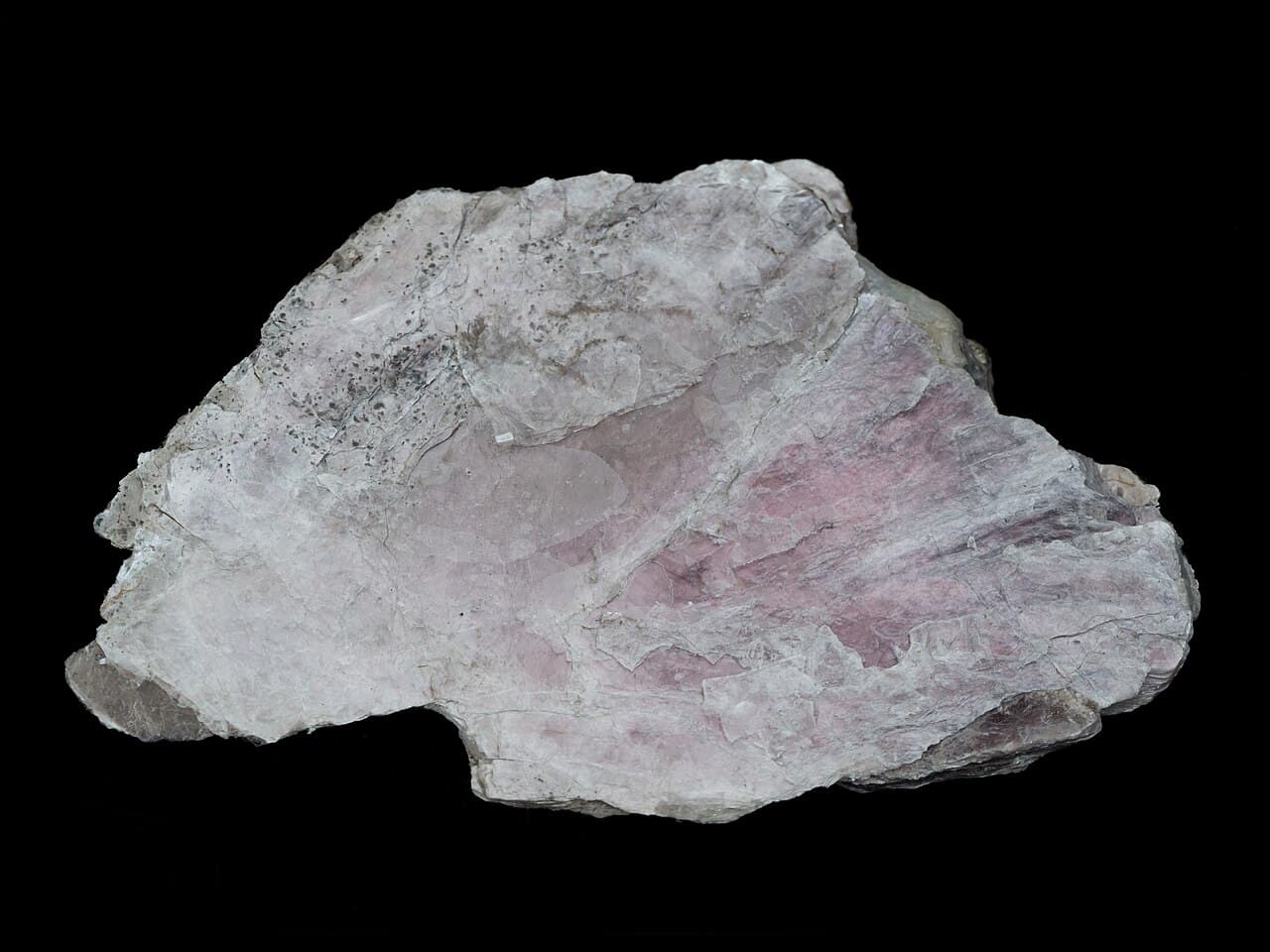
Lepidolite is a lithium-bearing mica — a member of the phyllosilicate (sheet silicate) family — and it is the soft, shimmering lilac-to-pinkish-purple stone most people picture when they think of "that flaky purple crystal." Because it is a mica, it grows in stacked, leaf-like layers, so a typical specimen looks like a little book of countless paper-thin plates or a sugary mass of glittering flakes rather than a single clean crystal. Its color comes mainly from manganese and the presence of lithium in its structure, and it ranges from pale lavender through rose-violet to deeper purple, often with a soft pearly sheen across the cleavage faces.
What makes lepidolite easy to recognize once you have handled it is how soft and platy it is: at only 2.5 to 3 on the Mohs scale it can be scratched by a copper coin or even the edge of a fingernail, and thin flakes can sometimes be peeled or flexed apart. It is genuinely a lithium ore, and it frequently grows in the same lithium-rich pegmatites as pink tourmaline, so you will often see lepidolite intergrown with slender pink tourmaline crystals — a striking and very characteristic pairing. (The lithium is a real part of its chemistry, mentioned here only as a mineralogical fact, not as anything that has a medical effect on a person.)
Lepidolite at a glance
- Classification
- Mineral — lithium-bearing mica (phyllosilicate / sheet silicate)
- Composition
- K(Li,Al)₃(Si,Al)₄O₁₀(F,OH)₂ (a lithium-rich mica)
- Hardness
- 2.5–3 (Mohs) — soft, scratched by a fingernail edge or copper
- Luster
- Pearly to slightly vitreous on cleavage faces
- Streak
- White
- Colors
- Lilac, lavender, pink-violet to purple; sometimes pale gray or colorless
- Crystal system
- Monoclinic (forms platy, micaceous books and flakes)
- Transparency
- Transparent in thin flakes to translucent or opaque in masses
How to identify it
Start with the look and the feel together, because lepidolite gives itself away on both. Visually it is a lilac-to-pink-purple stone with a glittery, scaly surface; in good specimens you can see it is built from stacks of tiny flat plates — "books" of mica — that catch the light with a soft pearly shimmer. Compact lepidolite that has been tumbled or carved looks more like a solid pinkish-purple mass, but a hand lens will usually still reveal the fine micaceous, flaky texture rather than a glassy interior.
The decisive test is hardness combined with its micaceous habit. Lepidolite is very soft, only 2.5 to 3 on the Mohs scale, so a copper coin or even a firm fingernail edge can scratch it, and a steel knife scratches it easily — most purple look-alikes are far harder. It also shows the perfect basal cleavage of all micas: thin sheets split off cleanly and the freshly exposed face is bright and pearly. A purple, sparkly, soft stone made of stacked flexible-to-brittle flakes, often sitting alongside pink tourmaline crystals, is almost certainly lepidolite.
Colors and varieties
Lepidolite's signature color is lilac to pinkish-purple, and the intensity is driven largely by manganese, so specimens run from a barely-tinted pale lavender through clear rose-violet to a richer grape purple. Some material is closer to pink, and lithium-poor or altered pieces can shade toward gray, cream or near-colorless. The mica structure means the color is usually spread evenly across the shimmering flakes, giving that characteristic soft, frosted-purple appearance rather than the sharp, gem-like color of a single transparent crystal.
In the trade you will often meet lepidolite as part of a combination stone. The most popular is lepidolite intergrown with pink tourmaline, where blades of pink tourmaline are embedded in the purple mica — both minerals crystallize in the same lithium-rich pegmatites, so the pairing is natural and common. "Lepidolite" is also sometimes used loosely for purple lithian-mica mixtures, and very fine, almost scaly varieties may be called lepidolite "books" or massive lepidolite depending on whether the plates are clearly stacked or matted together.
Meaning and properties
In modern crystal traditions, lepidolite is best known as a "calm" stone. Its gentle lilac color and its association with lithium have led many people to treat it as a stone for soothing stress, easing anxious or overwhelmed feelings, and encouraging restful sleep and emotional balance; it is frequently linked with the higher heart and third-eye chakras and used in meditation as a grounding, settling presence. People keep it nearby as a comforting pocket stone or by the bedside for its reputation as a peaceful, stabilizing crystal.
These meanings are spiritual and cultural rather than scientifically established medical effects. It is true that lepidolite contains lithium as part of its mineral structure, but that lithium is locked in an insoluble silicate and is not a medicine — holding or wearing lepidolite does not deliver any pharmaceutical dose, and the stone is not a treatment for anxiety, depression, insomnia or any other condition. Enjoy lepidolite for its beauty and the calm associations people attach to it, and rely on qualified medical and mental-health professionals for actual care.
Value
Lepidolite is relatively common and, for ordinary pieces, quite affordable, so its worth is driven mostly by color and form. An even, saturated lilac-to-purple tone with a bright, lively pearly shimmer is more desirable than a pale, grayish or dull piece, and well-defined "books" of clearly stacked mica plates appeal to collectors more than crumbly, low-grade material. Clean, attractively shaped specimens and nicely polished tumbles or carvings command more than fractured or muddy ones.
The strongest value usually lies in combination and matrix specimens — especially lepidolite richly studded with sharp pink tourmaline crystals, which can be prized display pieces. Because lepidolite is soft and flaky it is rarely cut as a faceted gem, so most of the market is mineral specimens, tumbled stones, spheres and carvings rather than jewelry stones. As always, there is no single fixed price; comparing like with like, the better color, better luster and better-preserved crystal form will be the more valuable piece.
Real vs. fake
Outright fakes of lepidolite are uncommon because the stone is inexpensive, so the bigger issues are dyeing and mislabeling. Be cautious of suspiciously vivid, uniform purple with no flaky structure, or color that pools in cracks — signs the piece may have been dyed. Pale or gray micas are sometimes sold as lepidolite when they are really ordinary muscovite or another lithian mica; a genuine lepidolite should still show the soft lilac tint and the characteristic stacked, pearly flakes rather than a glassy or fibrous interior.
Simple physical checks help confirm the real thing. Lepidolite is a true mica, so it has perfect basal cleavage — thin sheets peel or split off and the exposed face is bright and pearly — and it is very soft, scratched by a copper coin or fingernail edge. A purple "crystal" that is hard enough to scratch glass, that breaks with a curved glassy fracture instead of splitting into sheets, or that has the tell-tale round bubbles of molded glass is not lepidolite. When in doubt, the combination of softness, sheet cleavage, white streak and micaceous shimmer separates lepidolite from harder purple stones and from glass imitations.
Care
Lepidolite is one of the more delicate popular crystals, so treat it gently. Because it is soft (2.5–3) and splits along perfect cleavage, it scratches, flakes and chips easily — keep it away from harder stones, store it on its own or wrapped in a soft cloth, and avoid carrying it loose where it can be knocked or rubbed. Thin micaceous edges in particular can lift or crumble with rough handling.
Clean lepidolite only with a soft dry brush or a barely damp cloth and wipe it dry at once; avoid prolonged soaking, because water can work into the layered structure and between flakes and weaken the specimen over time. Skip salt, harsh chemicals, ultrasonic cleaners and steam, all of which can damage soft, cleaved material, and keep it out of prolonged harsh sunlight to protect its lilac color. Handled gently and kept dry, a lepidolite specimen will hold its shimmer and color for many years.
Lepidolite look-alikes
Frequently asked questions
What is lepidolite?
Lepidolite is a lithium-bearing mica — a soft, sheet-silicate mineral — that is lilac to pink-purple and grows in stacks of tiny shimmering flakes or in compact masses. It is only about 2.5–3 on the Mohs scale (a fingernail edge or copper coin can scratch it) and often grows alongside pink tourmaline in lithium-rich pegmatites.
How can I tell lepidolite from amethyst or purple fluorite?
Use hardness and structure. Lepidolite is very soft and made of stacked, peelable pearly flakes that split into thin sheets. Amethyst is hard (Mohs 7), scratches glass and forms pointed six-sided crystals. Fluorite is harder (Mohs 4), is usually glassy, and forms cubes that cleave into blocky shapes. If it is soft, flaky and shimmering, it is lepidolite.
Does the lithium in lepidolite have any health effect?
No. Lepidolite does contain lithium as part of its mineral structure, but that lithium is locked in an insoluble silicate and is not a medicine. Holding or wearing the stone delivers no dose of anything, and lepidolite is not a treatment for anxiety, sleep or any condition. Its calming reputation is cultural and spiritual, not medical — rely on qualified professionals for actual care.
Can lepidolite get wet?
Keep it dry. Because lepidolite is soft and built from layered flakes, prolonged soaking lets water work between the sheets and can weaken or crumble a specimen over time. Clean it only with a soft dry brush or a barely damp cloth, dry it immediately, and avoid salt, ultrasonic cleaners and steam.
Is yours lepidolite? Find out from a photo
Photograph your crystal in good light and get an identification with an honest confidence level, the look-alikes to rule out and the at-home tests that confirm it.
Identify my crystal freeOn Android? Get the free rock identifier app
Related
More crystals in the field guide
Keep exploring
More on crystals: the full list of crystal types, how to identify a crystal and crystals by color.
Last updated 2026-06-25. Identification guidance is educational — confirm important results with the diagnostic tests described or a qualified expert.