Petrified Wood
Also known as: Petrified Forest wood, Silicified wood, Fossil wood, Agatized wood
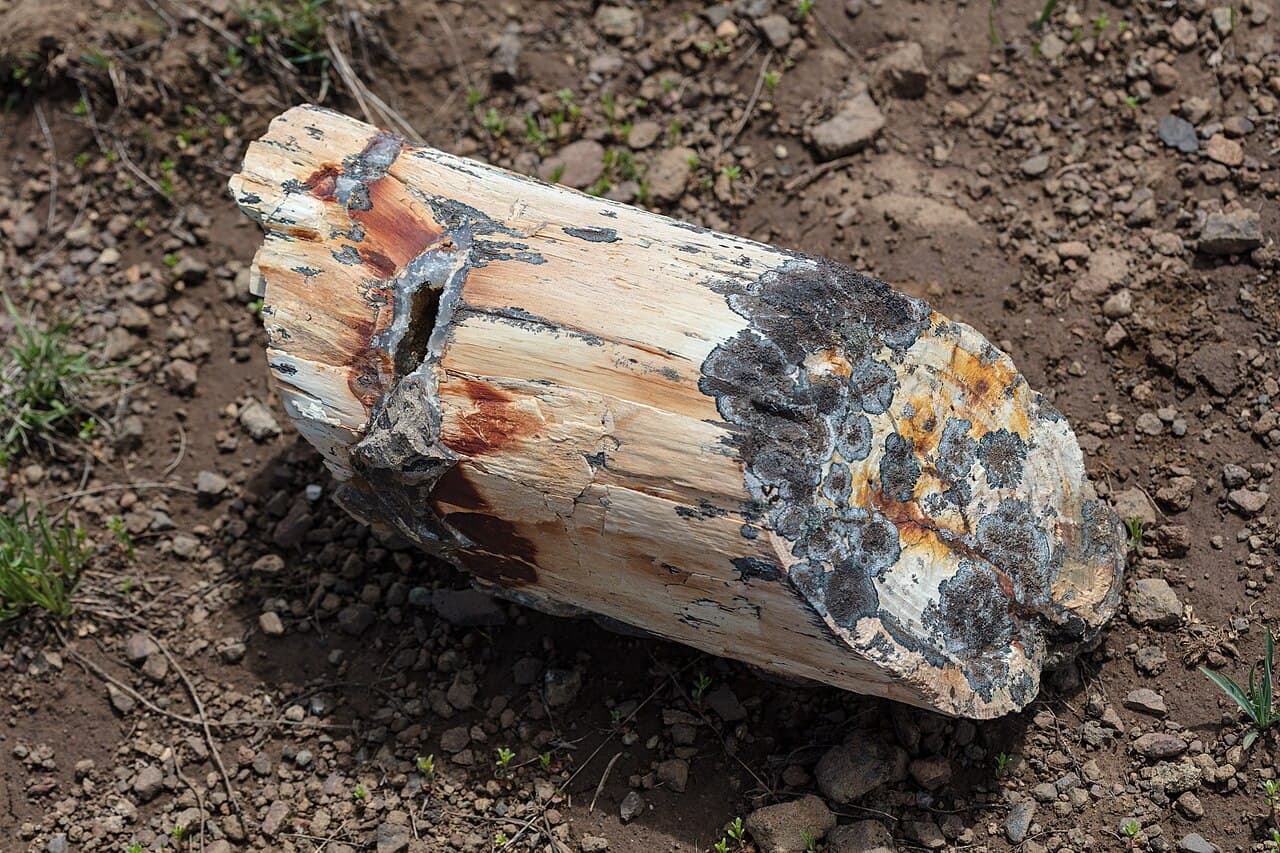
Petrified wood is ancient wood that has turned to stone. The word "petrified" comes from the Latin for "made into rock," and that is literally what happened: over millions of years, the original woody tissue of a fallen tree was gradually replaced and filled by minerals carried in groundwater, mostly silica, until the whole thing became a hard, heavy stone. The remarkable part is that this mineral takedown is so faithful it preserves the wood's original architecture — the growth rings, the run of the grain, the knots, and sometimes even the microscopic cell walls are still visible in the finished stone.
Because it is essentially fossilized quartz in the shape of a tree, petrified wood is both a fossil and a gem material. It can be sliced and polished to a glassy shine, and trace metals in the groundwater stain it in reds, browns, blacks, yellows and even blues, giving polished pieces their famous rainbow coloring. Arizona's Petrified Forest National Park is the most celebrated source in the world, where whole logs lie scattered across the desert, but petrified wood is found on every continent. A polished round on a shelf is a slice of a real tree that grew and fell tens of millions of years ago.
Petrified Wood at a glance
- Classification
- Fossil — permineralized (silicified) wood; mostly chalcedony/quartz
- Composition
- Chiefly SiO₂ (silica), with iron, manganese and other oxides as colorants
- Hardness
- About 6.5–7 (Mohs) when fully silicified — hard enough to scratch glass and take a polish
- Luster
- Vitreous to waxy or dull, depending on polish
- Colors
- Brown, red, orange, yellow, black, gray, cream; sometimes blue, green or pink from trace minerals
- Texture
- Stone preserving wood grain and growth rings; often agate-like or glassy where silicified
How to identify it
The single most telling clue is that petrified wood looks like wood but behaves like stone. Look closely at the surface and you should see the unmistakable signature of a tree: parallel grain running along the length of the piece, concentric growth rings on a cut end, and sometimes knots, bark texture or the radiating lines of wood rays. Yet when you pick it up, it is cold, dense and far heavier than any piece of real wood the same size, and it cannot be dented with a fingernail or cut with a knife. That contradiction — wood pattern, stone body — is what sets petrified wood apart at a glance.
Two quick tests confirm it. First, hardness: fully silicified wood is about 6.5–7 on the Mohs scale, so it will scratch glass and resist scratching by a steel blade, exactly like quartz. Second, look for the combination of features together — plain agate or jasper can show bands and swirls, but it will not show true, directional wood grain with growth rings. If you see a stone that has the color and glassy break of agate but is organized along the grain of a log, with rings and fibrous structure, you are almost certainly holding petrified wood rather than an ordinary banded chalcedony.
How it formed
Petrified wood forms through a process called permineralization. When a tree dies and is quickly buried by sediment, volcanic ash or mud, it is sealed away from the oxygen and microbes that would normally rot it. Groundwater then seeps through that buried wood, and where the water is rich in dissolved silica — often because volcanic ash nearby is breaking down — the silica precipitates inside the wood. It fills the empty spaces and pores first, and over very long spans of time it also replaces the organic cell walls molecule by molecule. Crucially, this happens slowly and gently enough that the original cellular template is copied in mineral, which is why the grain, rings and even fine cell structure survive.
The silica usually crystallizes as chalcedony or quartz, the same family as agate, which is why so much petrified wood is hard, glassy and capable of taking a high polish. The vivid colors come along for the ride: iron oxides tint the stone red, orange, brown and yellow, manganese can produce black, blue and purple tones, and combinations of trace elements give the rainbow logs of the American Southwest their banded hues. Most of the famous petrified wood, including the Arizona deposits, dates from the Triassic Period and is on the order of 200 million-plus years old, though petrified wood of many different ages is found around the world.
Types and varieties
Collectors and geologists distinguish petrified wood mainly by how it was preserved and how richly it is colored. The most prized material is "agatized" or "opalized" wood, in which the replacing silica is fine, translucent chalcedony or opal that polishes to a brilliant, gem-like finish — Arizona "rainbow" wood is the classic example. Plainer pieces, sometimes called simply silicified wood, are more opaque and earthy in tone but still show the grain clearly. Where the preserving mineral was something other than silica, you get rarer variants: wood permineralized with calcite, pyrite or other minerals exists, though silica-rich types are by far the most common in the trade.
Petrified wood is also categorized by the kind of tree it came from, because the underlying botanical structure is often identifiable. Many famous specimens are from ancient conifers (the Arizona logs are largely an extinct araucaria-type conifer), while others preserve palm, cycad or hardwood structure, each with its own internal pattern. For identification purposes, the practical varieties you will meet are: high-color polished rounds and slabs, rough limb casts and log sections, and small tumbled pieces — all united by the wood-grain-in-stone signature regardless of the species or the exact preserving mineral.
Value, and real vs. fake
Most petrified wood is affordable and widely available, from inexpensive tumbled chips and small slabs up to large, dramatic polished tabletops and bookend pairs. Value rises with strong, varied color, sharp and well-preserved grain and rings, a high polish, larger size, and identifiable species or a documented locality. Vivid Arizona-style rainbow rounds and finely figured slabs command the most, while gray or brown pieces with muddy grain are the most modest. Note that collecting petrified wood inside protected areas such as Petrified Forest National Park is illegal; reputable material on the market comes from private land and commercial claims.
Outright fakes are uncommon, because real petrified wood is cheap enough that copying it rarely pays, but a few traps are worth knowing. Some "petrified wood" sold as novelties is actually dyed plain agate, glass, resin or even concrete cast and stained to look woody — tell-tale signs are color that sits on the surface rather than running through the stone, a suspiciously light or warm feel (glass and resin feel different from quartz), visible mold seams or air bubbles, and grain that looks painted on rather than carved into the structure. Genuine petrified wood is hard (it will scratch glass), heavy, and shows wood grain and growth rings that continue consistently through the body of the piece, not just on the surface. A more common issue than fakes is ordinary fresh wood being mistaken for petrified wood; the stone test settles it instantly, since real petrified wood is rock-hard and far too heavy to be wood.
Petrified Wood look-alikes
Frequently asked questions
What is petrified wood?
Petrified wood is ancient wood that has turned to stone through a process called permineralization. Over millions of years, silica-rich groundwater filled and replaced the buried wood's tissue, usually with chalcedony or quartz, while faithfully preserving the original grain, growth rings and sometimes the cell structure. It is both a fossil and a hard, polishable gem material.
How did petrified wood form?
A tree was buried quickly by sediment or volcanic ash, sealing it from rot. Groundwater carrying dissolved silica then seeped through the wood, filling its pores and gradually replacing the cell walls with mineral, molecule by molecule. The silica usually crystallized as chalcedony or quartz, and trace metals like iron and manganese stained it the reds, browns, blacks and other colors seen in polished pieces. Much famous petrified wood, including Arizona's, dates from the Triassic and is over 200 million years old.
How can I tell petrified wood from ordinary wood or plain agate?
Against ordinary wood: petrified wood is cold, stone-heavy and hard enough to scratch glass, while real wood is light, warm and easily dented. Against plain agate or jasper: petrified wood shows true wood grain and concentric growth rings running through it, not just random bands. The combination of a wood pattern with a hard, heavy, glass-scratching stone body is the giveaway.
Is petrified wood worth money?
Most petrified wood is inexpensive and easy to find, but value rises with strong varied color, sharp preserved grain and rings, a high polish, larger size, and an identifiable species or documented locality. Vivid agatized 'rainbow' rounds and finely figured slabs command the most. Be aware that collecting it inside protected areas such as Petrified Forest National Park is illegal — legitimate material comes from private land and commercial sources.
Is yours petrified wood? Find out from a photo
Photograph your fossil in good light and get an identification with an honest confidence level, the look-alikes to rule out and the at-home tests that confirm it.
Identify my fossil freeOn Android? Get the free rock identifier app
Related
More fossils in the field guide
Related reading
Keep exploring
More on fossils: identify a fossil from a photo, how to identify a rock and the Mohs hardness scale.
Last updated 2026-06-25. Identification guidance is educational — confirm important results with the diagnostic tests described or a qualified expert.